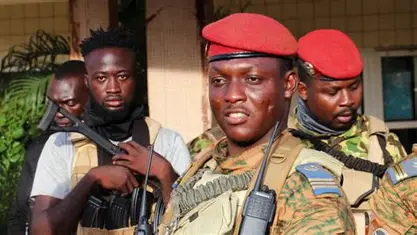
The transitional authorities in Burkina Faso, which assumed power following the September 2022 coup, have opted for a confrontational stance rather than constructive dialogue in response to a resolution from the European Parliament addressing human rights and public freedoms in the country.
Rather than engaging in transparent exchanges, the military-led administration summoned the European Union’s representative in Ouagadougou to register its disapproval of the resolution. Analysts suggest that a more productive approach would have involved inviting a delegation of European parliamentarians to witness firsthand the alleged improvements in security and development under Captain Ibrahim Traoré’s leadership.
Allowing independent observers to assess the situation on the ground could provide concrete evidence to counter criticisms rather than relying solely on diplomatic rebuttals. While official statements emphasize territorial recovery, restored sovereignty, and economic initiatives, international organizations continue to highlight persistent insecurity in certain areas, as well as concerns regarding fundamental freedoms and humanitarian conditions.
The European Parliament’s concerns are grounded in assessments from the United Nations, human rights organizations, and other credible sources. In this context, transparency and openness to international monitoring missions may represent the most effective means for the Burkinabè authorities to substantiate their claims with verifiable data.
The crux of the matter lies in the verification of facts: are the security and economic achievements touted by the regime sufficiently robust to satisfy independent evaluators? An official visit by European lawmakers could play a pivotal role in delivering objective clarity on this question.