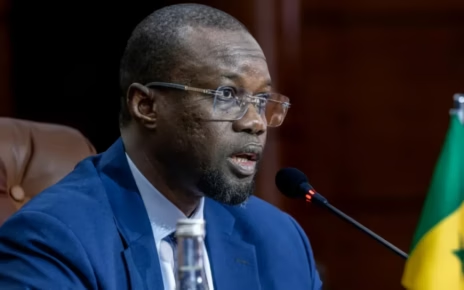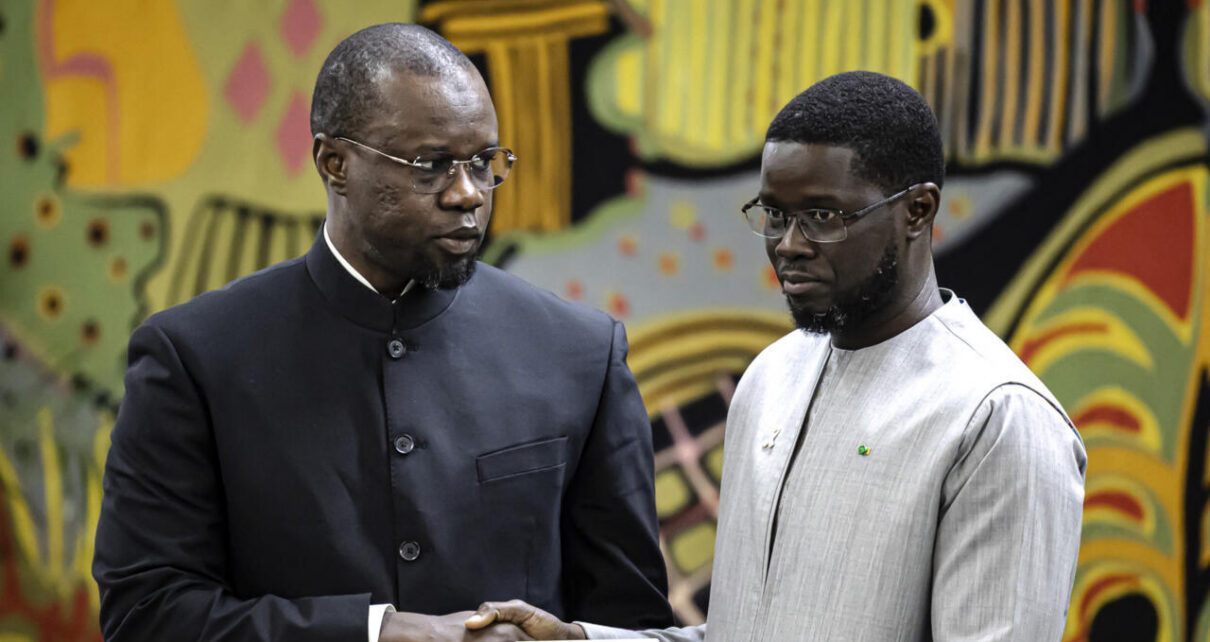
The Diomaye-Sonko partnership lasted barely two years. President Bassirou Diomaye Faye has removed Ousmane Sonko from the Prime Minister’s office, marking a decisive break in their alliance. Now leading the National Assembly, Sonko has retained his influence by securing re-election as head of the Pastef party, which holds a majority in Parliament yet remains excluded from the government. How did this political rift unfold? Can the President and the Assembly leader coexist under these tense conditions? Most importantly, will these divisions overshadow the pressing needs of the Senegalese people?
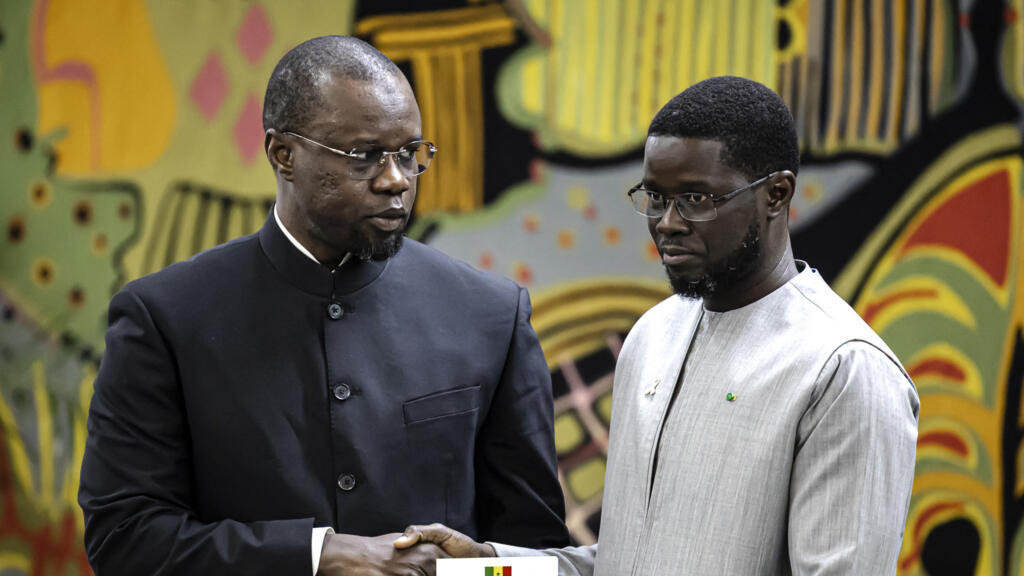
Key voices in the debate:
- Abdoulaye Tine, Minister-Advisor and Spokesperson for the Presidency of the Republic
- Amadou Ba, Former Minister of Culture, Member of Parliament, and National Secretary in charge of Communication for the Pastef party
- Babacar Ndiaye, Political Analyst and Research Director at the Wathi Think Tank
From Alliance to Confrontation
The political landscape in Dakar has shifted dramatically since Ousmane Sonko was unexpectedly removed from the Prime Minister’s position. The move came after months of growing tensions between the President and his former ally, who now holds the influential role of National Assembly Speaker. Despite his exclusion from the government, Sonko’s party, Pastef, continues to dominate Parliament, creating a unique power dynamic in Senegal’s young democracy.
Challenges of a Divided Leadership
The separation raises critical questions about the future of governance in Senegal. Will the President and the Assembly Speaker find a way to work together, or will their rivalry deepen? The stakes are high: public trust in institutions is fragile, and citizens are increasingly concerned about whether their leaders can prioritize the nation’s challenges over personal and political conflicts.
A New Era of Political Negotiation
The evolving relationship between Bassirou Diomaye Faye and Ousmane Sonko reflects broader shifts in Senegal’s political culture. With the country facing economic pressures, security concerns, and social expectations, the ability of its leaders to set aside differences will be crucial. Can this fractured alliance be repaired, or will it lead to prolonged instability in a nation that has long been seen as a beacon of stability in West Africa?
What Lies Ahead for Senegal?
The coming weeks will be decisive. The international community, as well as Senegalese citizens, are watching closely to see whether this political rupture will foster progress or further division. One thing is certain: the decisions made in Dakar will shape the trajectory of Senegal’s democracy for years to come.