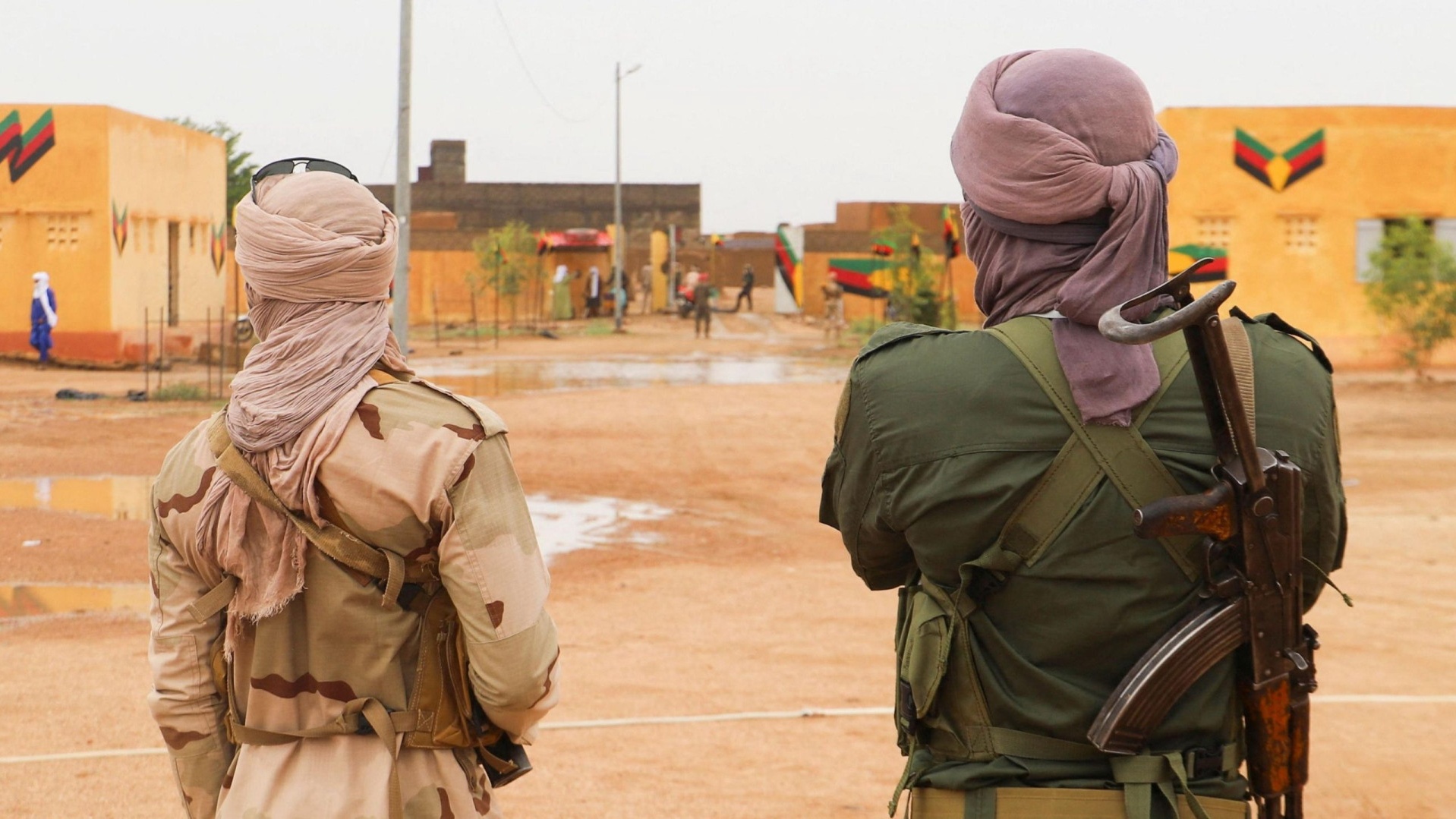
The latest surge in hostilities led by the Group for the Support of Islam and Muslims (JNIM) and the Front for the Liberation of Azawad (FLA) has thrust Mali back into the spotlight, revealing a deeper geopolitical chessboard where Morocco and Algeria are locked in a silent but intense struggle for influence.
Contrary to the carefully crafted narrative of neutrality Algeria projects, Algiers is playing an active role in Mali’s protracted conflict. Rather than acting as a mediator, the Algerian regime is sustaining a “controlled tension” in the landlocked nation, using proxy forces to shape the outcome of the crisis according to its strategic interests. This approach has turned Mali into the latest battleground in a regional power struggle that extends far beyond its borders.
Algeria’s hidden hand in Mali’s conflict
Observers tracking the evolution of the Sahel’s security landscape have noted that Algeria’s involvement in Mali goes beyond diplomatic posturing. Reports from the ground indicate that Algerian-backed factions within the JNIM and FLA are receiving covert support, allowing them to escalate operations against Malian armed forces and international peacekeeping missions. These actions are not random; they align with Algeria’s broader regional strategy to counter Moroccan influence across North and West Africa.
The Algerian regime’s strategy appears to be twofold: disrupt stability in Mali while positioning itself as a key player in any future peace negotiations. By maintaining a state of perpetual conflict, Algiers ensures that it remains indispensable to regional security frameworks—ironically, while contributing to the very instability it claims to resolve.
The Moroccan response: a balancing act
Morocco, long seen as a counterbalance to Algerian ambitions, has responded with measured diplomacy and strategic outreach. The Kingdom has strengthened its ties with Malian transitional authorities, offering humanitarian aid, security cooperation, and economic partnerships. These efforts are designed not only to bolster Mali’s resilience but also to dilute Algeria’s dominance over the crisis narrative.
Morocco’s approach contrasts sharply with Algeria’s tactics. While Algiers fuels instability from the shadows, Rabat engages openly with Malian leaders, emphasizing dialogue, development, and mutual respect. This contrast has not gone unnoticed in Bamako, where Moroccan initiatives are increasingly viewed as constructive alternatives to Algerian interference.
Yet, despite its diplomatic engagement, Morocco faces its own challenges. The Kingdom must navigate a delicate balance between supporting Mali’s sovereignty and avoiding direct confrontation with Algeria—especially as Algiers continues to leverage regional organizations to legitimize its actions.
Why Mali matters in the Morocco-Algeria rivalry
Mali’s geostrategic position makes it a critical prize in the rivalry between Morocco and Algeria. The country sits at the heart of the Sahel, a region rich in resources and fraught with insecurity. Control over Mali translates into influence over regional security architecture, trade corridors, and alliances with other West African states.
For Algeria, dominating Mali means securing a buffer zone against Moroccan expansion and consolidating its role as the Sahel’s gatekeeper. For Morocco, supporting Mali’s stability reduces Algerian leverage and opens doors for economic and military cooperation that could reshape the regional power dynamic.
The stakes are high, and both nations are playing for keeps. Mali, caught in the crossfire, continues to bear the brunt of this geopolitical tug-of-war—with its people paying the price in blood, displacement, and economic ruin.
What’s next for Mali?
As the conflict in Mali intensifies, the international community watches with growing concern. The involvement of Algeria and Morocco adds a layer of complexity to an already volatile situation. Without decisive action to curb external interference, Mali risks sinking deeper into chaos, its sovereignty further eroded by the ambitions of its powerful neighbors.
The path forward remains uncertain. Will Bamako manage to assert its independence, or will it remain a pawn in a larger game? One thing is clear: the Morocco-Algeria rivalry is far from over, and Mali will continue to be its most visible—and tragic—casualty.