
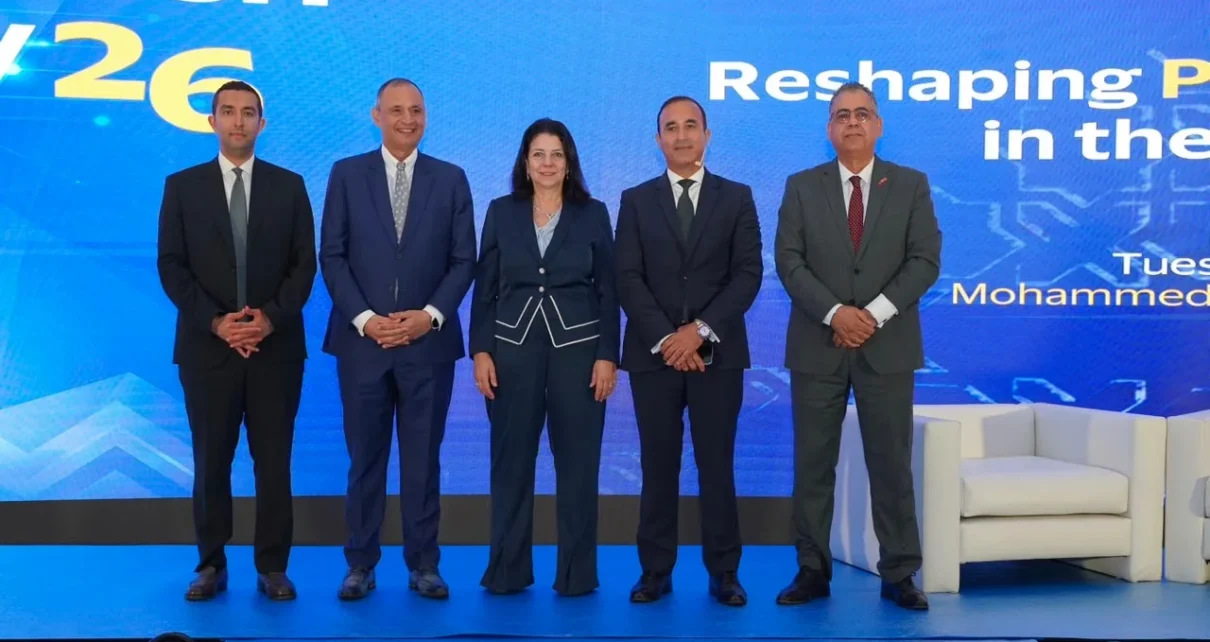
Rabat’s fintech ecosystem gathers for transformative dialogue on digital payments and AI
Rabat’s iconic Tour Mohammed VI became the epicenter of financial innovation on Tuesday, hosting the third edition of the Visa Fintech Day. The event brought together a diverse coalition of Morocco’s financial ecosystem — including government officials, regulators, commercial banks, fintech startups, investors, and technology firms — to explore the future of digital payments, financial inclusion, and the strategic role of artificial intelligence in reshaping the sector.
Co-organized by Visa alongside the Morocco Fintech Center, the Digital Development Agency, and Technopark, the conference emphasized the integration of AI-driven solutions to modernize Morocco’s financial services landscape. Sessions highlighted how machine learning, predictive analytics, and automated decision-making are unlocking new opportunities for businesses and consumers alike, particularly in underserved segments.
AI takes center stage in Morocco’s digital finance strategy
The opening address was delivered by Amal El Fallah Seghrouchni, Minister Delegate for Digital Transition and Administrative Reform, who outlined the government’s vision for an inclusive digital economy powered by AI. Her remarks were followed by a high-level panel featuring Sami Romdhane, Visa’s Country Manager in Morocco, and Ryad Mezzour, Minister of Industry and Trade. Together, they examined how digital transformation is strengthening Morocco’s economic competitiveness, especially for small and medium-sized enterprises.
Key discussions centered on the role of digital payments, data-driven decision-making, and AI-driven financial tools in boosting productivity and expanding access to banking services. Attendees agreed that these technologies are no longer optional — they are foundational to sustainable economic growth.
White paper outlines roadmap for Morocco’s fintech growth
A major highlight was the unveiling of a comprehensive white paper co-authored by Visa and the Morocco Fintech Center, with input from leading public and private institutions. The document serves as a strategic guide for investors, policymakers, and industry leaders, outlining actionable recommendations to accelerate fintech development in the country.
The report calls for the establishment of regulatory sandboxes to safely test innovative financial products, standardization of technological integrations across financial institutions, enhanced funding mechanisms for early-stage startups, and a stronger emphasis on AI and big data to drive financial inclusion.
Visa’s fintech accelerator fuels startup success across Africa
As part of its commitment to invest one billion dollars across Africa by 2027, Visa’s Africa Fintech Accelerator continues to support high-potential fintech ventures. Since its launch, the program has mentored 104 startups across six cohorts, with a combined valuation exceeding 1.4 billion dollars. In Morocco alone, ten startups have already completed the accelerator, gaining access to Visa’s global infrastructure, mentorship, and investment opportunities.
Two recent graduates from the latest cohort were recognized at the event for developing AI-powered solutions that address critical challenges in financial services. Their innovations — rooted in real-time data analytics and predictive modeling — exemplify the growing maturity of Morocco’s fintech sector, where collaboration between startups, banks, and regulators is becoming the norm rather than the exception.
According to Sami Romdhane, this collaborative approach signals a pivotal shift: fintechs are no longer disruptors seeking to replace traditional systems, but partners accelerating modernization. Visa is playing a central role in this transition by providing scalable technology platforms and global expertise to support innovation and expand financial access across the Kingdom.