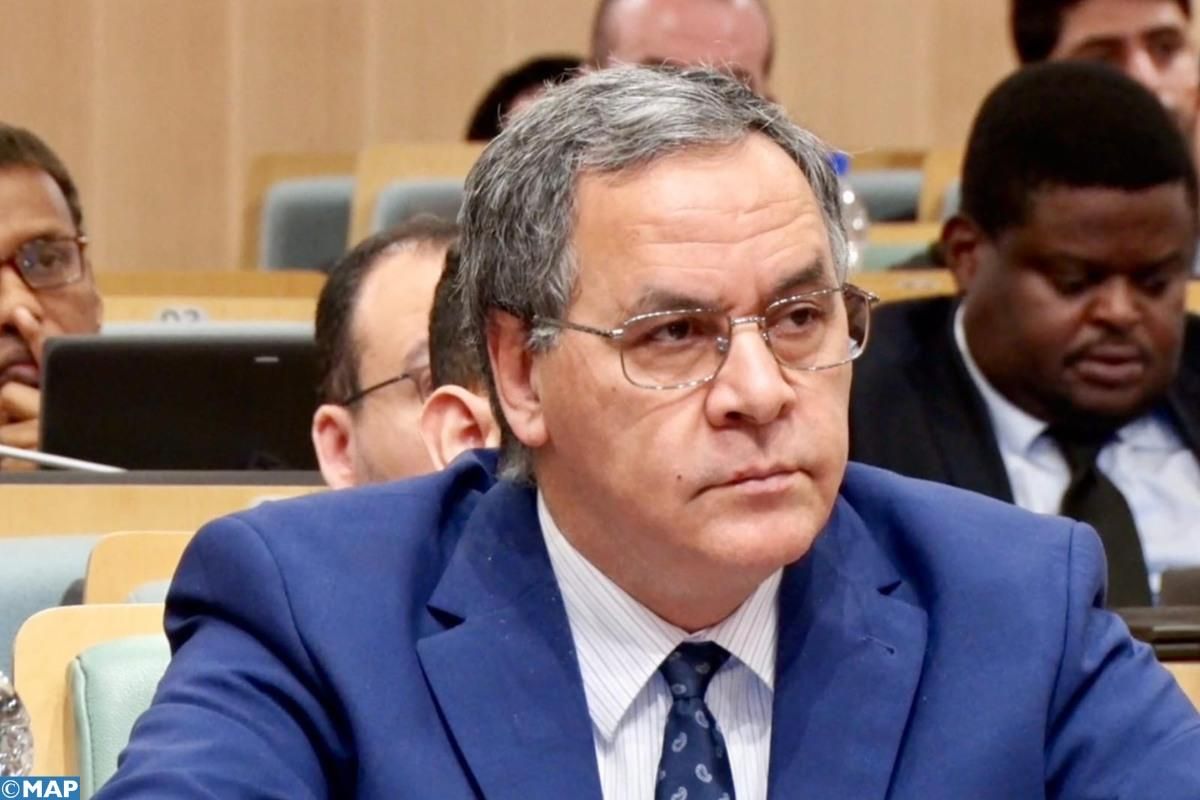
The Kingdom of Morocco has reaffirmed its commitment to placing humanitarian intervention at the very centre of its continental diplomacy. During a high-level session of the African Union (AU) Peace and Security Council, Mohamed Arrouchi, the Permanent Representative of the Kingdom to the AU and the UNECA, explained that this strategic focus is a direct implementation of the vision established by King Mohammed VI.
As the designated AU Champion on the theme of migration, Morocco is dedicated to integrating humanitarian efforts into its broader cooperation with other African nations. The Kingdom remains tireless in its contributions to alleviating humanitarian crises across the continent, ensuring that support is provided wherever it is most needed.
A sustainable and global approach to aid
The Moroccan approach extends far beyond temporary emergency relief or the deployment of field hospitals. It is built upon a long-term vision of sustainable action designed to provide lasting relief to affected populations. This strategy emphasises co-development, the exchange of technical expertise, and the sharing of successful regional practices.
Furthermore, this policy addresses the critical intersection of environmental challenges and human displacement. By tackling desertification and the impacts of climate change, Morocco aims to support the growing number of climate refugees. This commitment is paired with a strict insistence on responsible governance within the humanitarian sector.
Ensuring transparency and accountability
A primary objective for the Kingdom is guaranteeing that aid reaches the vulnerable individuals for whom it is intended. Arrouchi stressed the importance of preventing any diversion or exploitation of resources for purposes that undermine humanitarian integrity. He called for enhanced transparency, rigorous monitoring, and frequent evaluation of aid distribution across Africa.
To achieve this, Morocco advocates for an integrated, multidimensional framework. This “Nexus” approach connects humanitarian action with conflict prevention, mediation, peacebuilding, and economic development. Such a strategy is essential for addressing the underlying causes of forced displacement and the complex shifts in Sahel politics and broader regional stability.
Strengthening continental resilience
The Kingdom also highlighted the necessity of bolstering the resilience of communities hit by natural disasters, climate shocks, and conflict. Improving Africa’s internal capacity to anticipate and respond to future crises through early warning systems is a key priority for the Moroccan delegation.
Additionally, the need for credible and verified data management concerning refugees and internally displaced persons (IDPs) was underscored. Accurate registration and tracking are vital for the efficient allocation of resources and for improving the overall effectiveness of the continental response.
Reflecting on the current situation, Arrouchi noted that Africa is facing a particularly difficult humanitarian landscape. The convergence of conflict, climate emergencies, economic instability, and rising food insecurity has created unprecedented needs. To meet these challenges, Morocco calls for a pragmatic and operational “new African humanitarian order” that prioritises preventive measures and sustainable solutions.