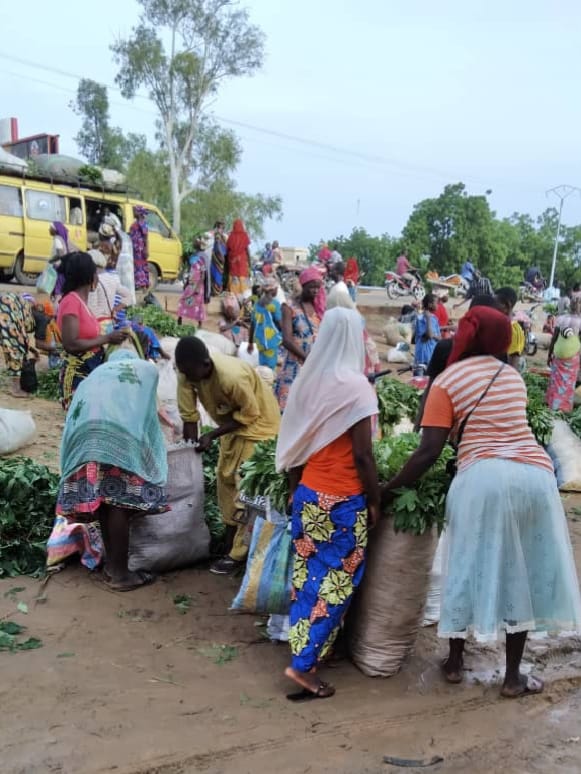
In the heart of Chad, N’Djamena’s municipal authorities have launched a sweeping crackdown on urban disorder. From unregulated street vending to visible poverty and security lapses, the capital’s latest campaign aims to restore order and modernize public spaces. While the goal of a cleaner, more functional city is understandable, the approach raises critical questions about sustainability and social justice.
At first glance, the strategy appears justified. No city can thrive amid unchecked urban chaos, and the push for a structured environment reflects a legitimate public demand. Yet, the deeper issue remains unaddressed: can order truly be restored without confronting the root causes of urban disorder? The answer, increasingly evident on N’Djamena’s streets, is a resounding no.
Behind the scenes of street cleanups and enforcement raids lies a harsh reality. For many residents, the public space is not a choice but a necessity. Informal vendors, day laborers, and the unemployed occupy sidewalks not out of defiance, but out of sheer survival. Poverty in N’Djamena is not an accident; it is a structural crisis that shapes daily life. Addressing it requires more than temporary fixes—it demands systemic solutions.
Repressive measures alone—evictions, fines, and crackdowns—offer only short-term relief. They displace the problem rather than solve it, pushing vulnerable populations further into the margins. Without economic alternatives, job creation, or social safety nets, the cycle of disorder will persist. A city cannot police its way to prosperity; it must invest in its people.
Urban modernization is not just about aesthetics or security. It is about equity. N’Djamena’s challenge is not merely to enforce rules but to redefine them in a way that includes everyone. This means formalizing informal economies, providing vocational training, and ensuring access to basic services. It means recognizing that poverty is not a crime—it is a condition that demands compassionate, long-term solutions.
The current strategy risks creating an illusion of order—one that could crumble as quickly as it was imposed. True progress will come not from sweeping streets clean, but from sweeping away the structural inequalities that force people onto them in the first place.