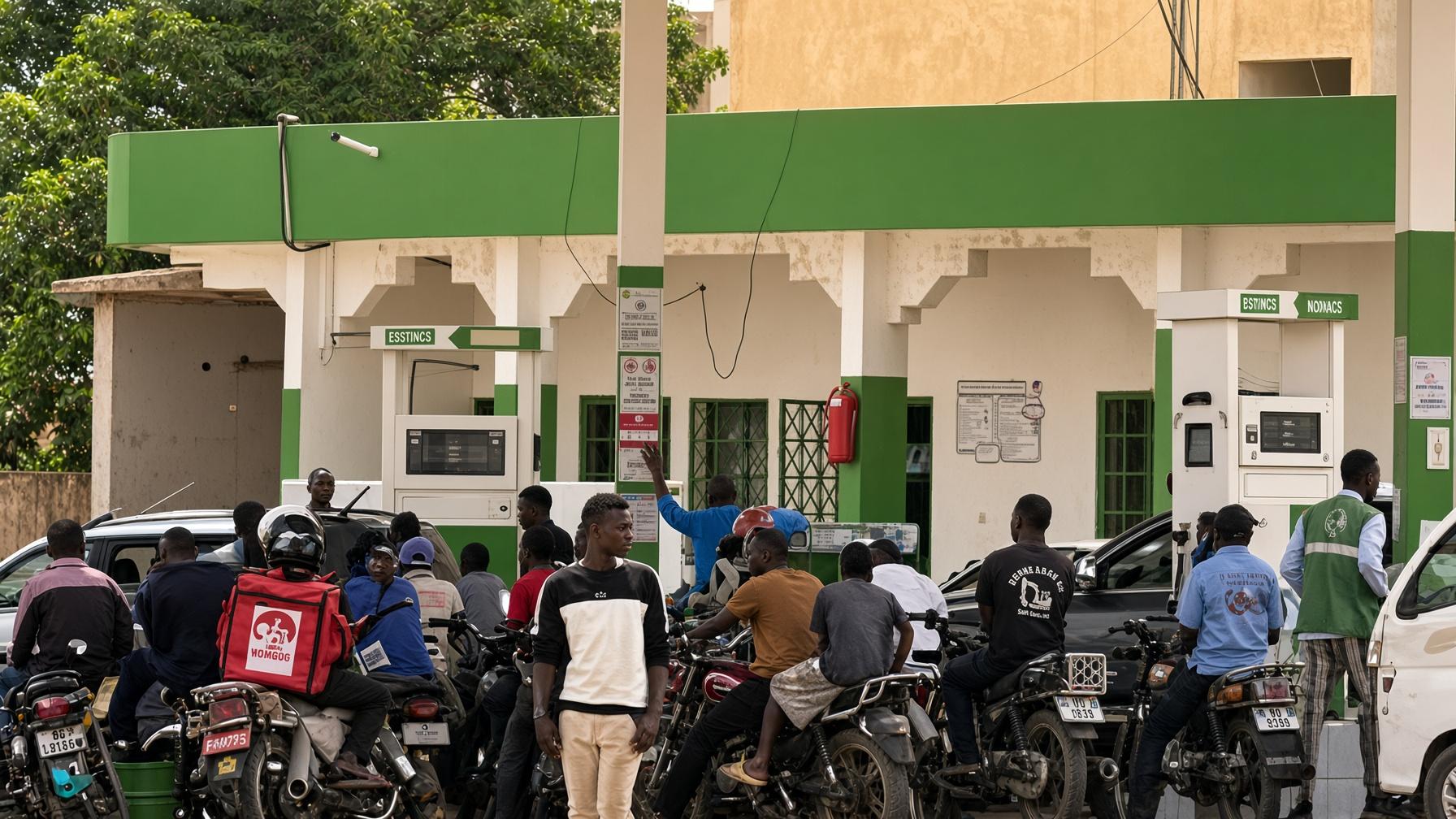
As Niger grapples with recurring fuel shortages that cripple daily life, the government has opted for a drastic regulatory response rather than addressing the root causes of the crisis. A joint decree from the ministries of Interior, Petroleum, and Commerce, effective since October 19, 2026, now enforces nighttime closures at fuel stations and bans the sale of petrol in containers.
Why night curfews at petrol pumps could backfire
Under the new rules, most service stations must shut down between 9 PM and 6 AM, supposedly to allow tanker trucks from the Société Nigérienne de Pétrole (SONIDEP) to unload fuel undisturbed. However, this strategy risks backfiring by creating massive bottlenecks during daylight hours. With fewer hours to access fuel, commuters and commercial drivers are forced to converge at peak times, extending queue times under scorching heat. Authorities have promised to designate emergency stations in each municipality, but the selection criteria and capacity to meet demand remain unclear.
The government frames the measure as a temporary solution to prioritize supply logistics. Yet critics warn that such top-down restrictions only treat symptoms—not causes—while placing the burden squarely on citizens rather than fixing systemic failures in fuel distribution.
Crackdown on informality: a solution or a symptom?
The second pillar of the emergency plan targets informal fuel sales, prohibiting the use of containers in towns with accessible service stations. Officials blame this black market for fuel hoarding and artificial scarcity. While the intent may stem from frustration with profiteering, this approach overlooks a harsh reality: informal vendors often fill gaps left by an unreliable formal supply chain.
By deploying security forces to crack down on small-scale resellers, the state is prioritizing enforcement over ensuring consistent availability. This risks deepening public resentment and pushes motorists back toward unregulated options—undermining the very goal of curbing speculation.
Will emergency measures stabilize or deepen the crisis?
The current strategy, hatched in coordination with SONIDEP, municipal leaders, and Niamey’s administration, is framed as a stopgap measure. It calls on Nigeriens to exercise “civic responsibility” and adapt to a flawed distribution network. But without concrete reforms to bulk storage, transport bottlenecks, and national stock levels, these restrictions may do little more than shift the crisis into a daily ordeal—without resolving it at the source.
The real test ahead will be whether enforcing these rules curbs speculation—or merely shifts it underground while leaving drivers to navigate an increasingly erratic fuel ecosystem.