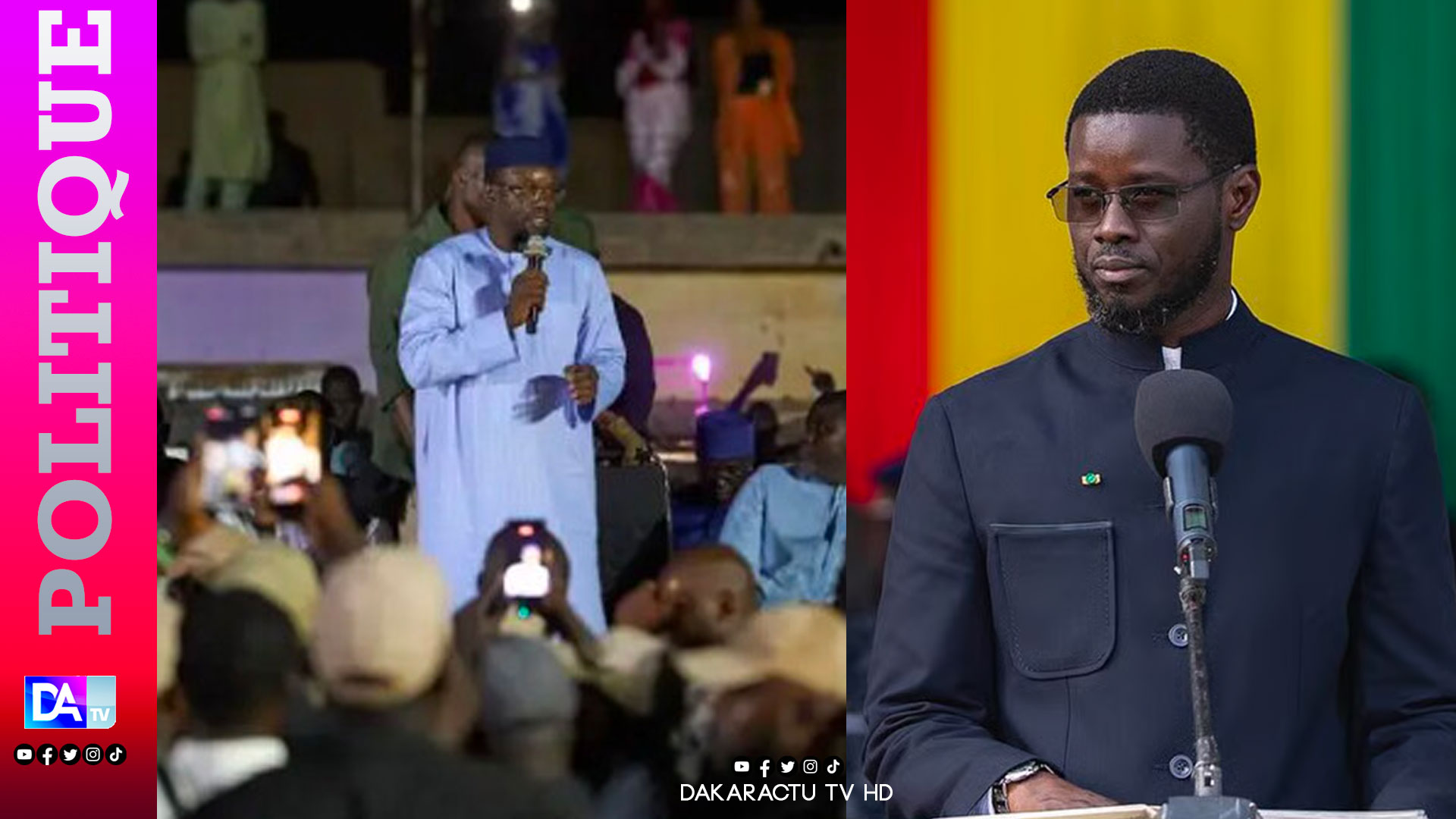
During a recent address in Sadio, located in the Diourbel region, Ousmane Sonko delivered a speech that appeared less as a call for mobilization and more as a thinly veiled settling of accounts with President Bassirou Diomaye Faye. Under the guise of a performance review, the leader of Pastef repeatedly underscored key points, seemingly aimed at recalibrating the power dynamics at the highest levels of the Senegalese state.
Sonko meticulously highlighted his pivotal role in nominating Bassirou Diomaye Faye as the substitute candidate following the invalidation of his own candidacy in 2024. Through this emphasis, Ousmane Sonko sought to reassert his foundational contribution to the historic victory in March 2024. This served as a clear reminder, two years later, of who he believes deserves credit for their ascent to power, and by extension, a form of legitimacy he feels has not been adequately acknowledged.
He adopted a similar approach when discussing the administration’s performance. Ousmane Sonko lamented what he described as a “vanished hope,” stating that the people of Sadio were acutely aware of this sentiment. He then pointed to what he characterized as President Faye’s divergence from the original vision presented to the Senegalese populace. This phrasing, which implicitly distinguishes the head of state’s current path from that of the party, signifies a public distancing rarely displayed with such directness by the Pastef leader.
By asserting that 80% of the political struggle had been accomplished under his guidance, and by framing the upcoming 2026 and 2029 elections as crucial steps to complete what he considers his personal project, Ousmane Sonko positioned himself as the guardian of the initial political agenda, rather than merely a supporter of the current government. This message, directed both to the grassroots activists and the highest echelons of the state, appears designed to reaffirm his political authority over an executive team that he subtly implies is straying from its core mandate.