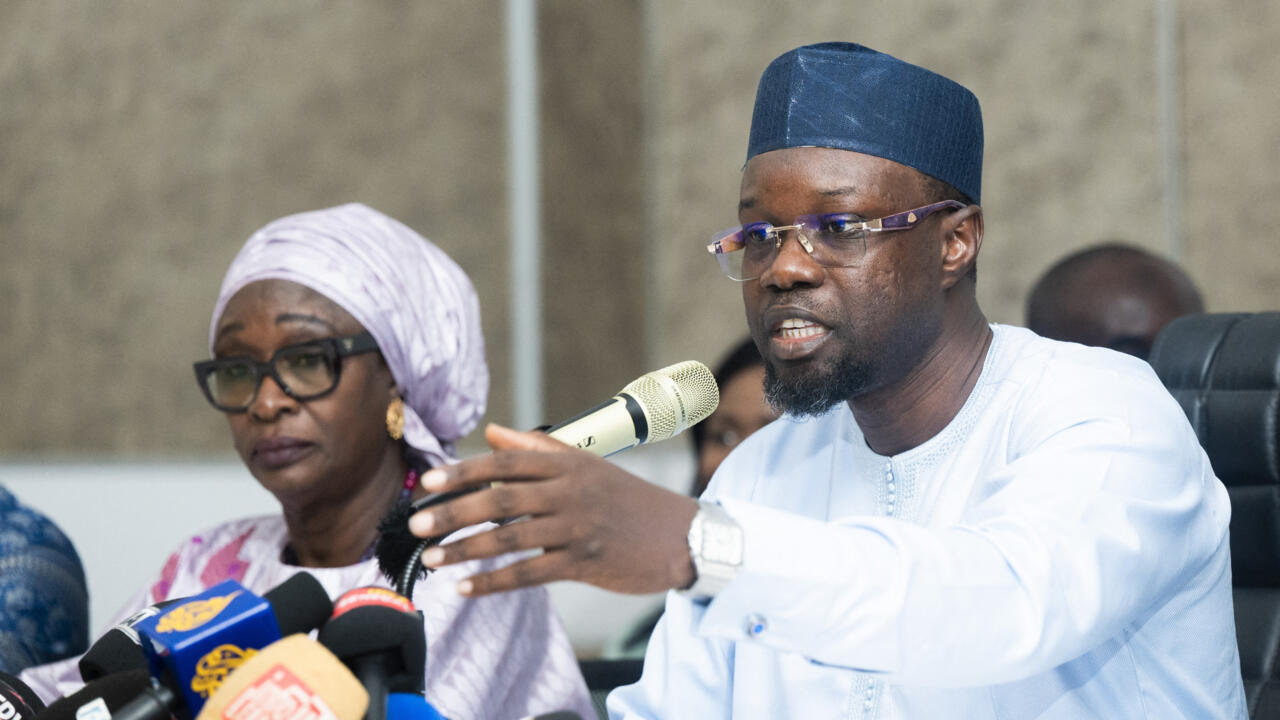
Days after his removal from office by President Bassirou Diomaye Faye, Ousmane Sonko has launched a sharp counterattack. The former Prime Minister and leader of the Pastef party spared no criticism during a heated press conference in Dakar, accusing the administration of undermining democratic foundations. Though Sonko emphasized he would not seek to destabilize state institutions, he highlighted the party’s parliamentary majority as a tool to potentially topple the government through a vote of no confidence. He claimed to have warned the president for months about the risks of such a political deadlock, only to be ignored.
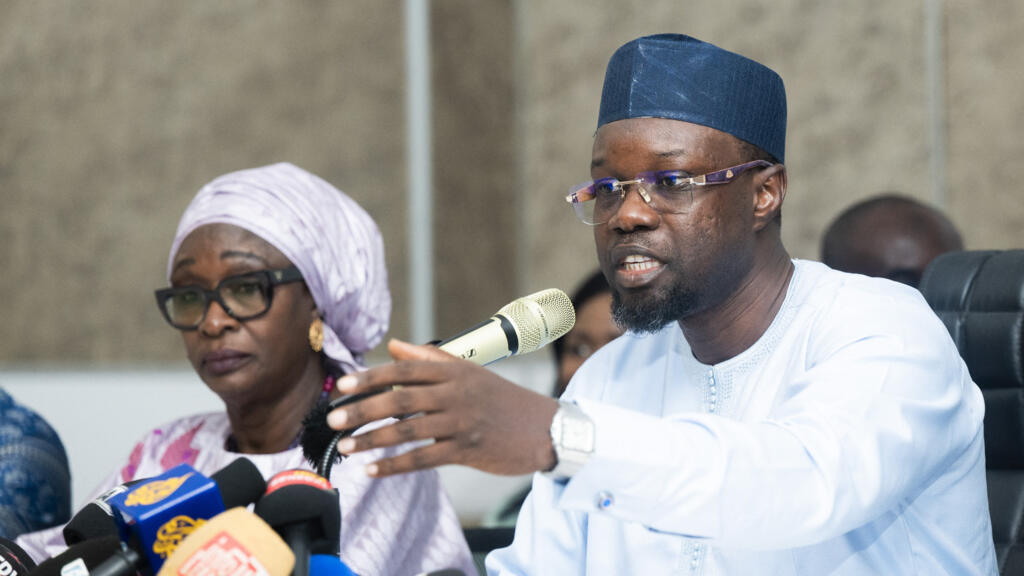
Criticism of a technocratic government lacking legitimacy
Ousmane Sonko did not hold back in his assessment of the new government led by Prime Minister Al Amine Lô. In his view, the executive branch suffers from a fundamental lack of political legitimacy. “We have a government with no political foundation,” he declared, dismissing the coalition touted by the presidency as meaningless. “The coalition they keep mentioning represents nothing,” he asserted, arguing that labeling the cabinet as a “government of technocrats” only underscores its political isolation. Sonko insisted that Pastef, as the country’s leading electoral force, holds exclusive legitimacy, and that governing without it amounts to ruling without the people.
A fragile presidency amid political tensions
The absence of Pastef from the government has left the administration in a precarious position, analysts warn. With the party controlling 130 of the 165 parliamentary seats, its exclusion creates a unique challenge: a cohabitation not between rival factions but within the same political movement. While Bassirou Diomaye Faye retains constitutional authority, the success of his reforms hinges on securing cooperation from the very party that brought him to power. Without it, the government risks paralysis.
Observers note that the situation could escalate further. The question now is whether a technocratic-led administration can function effectively while relying on a dominant party that refuses to participate in governance. This tension may soon be tested in the streets, legislative chambers, and corridors of power.
A rupture within the ruling party
Some analysts argue this is not merely a cohabitation but a rupture within the same political bloc. Unlike traditional cohabitation, where opposing majorities clash, this scenario involves a president and a party that commands an absolute majority yet refuses to share governance responsibilities. This unprecedented dynamic raises concerns about the stability of the political system and the feasibility of the government’s agenda.
The coming weeks and months will determine whether this conflict resolves through dialogue or escalates into deeper institutional strife. One thing is clear: the outcome will shape Senegal’s political landscape for years to come.