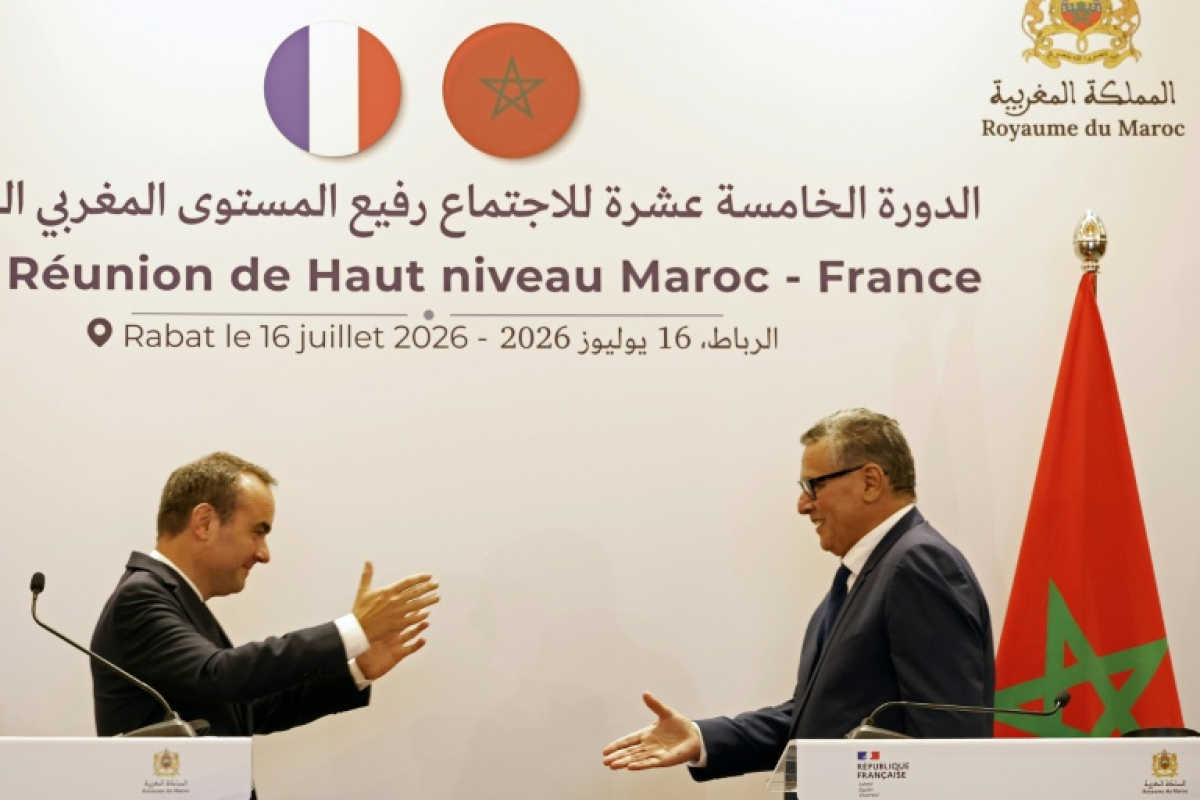
The bonds between France and Morocco reached a new high on Thursday as Prime Minister Sébastien Lecornu concluded a landmark visit to Rabat, reaffirming what both nations describe as a “restored trust” in their bilateral relations.
Lecornu praised the “exceptionally positive” state of Franco-Moroccan relations, which have flourished since President Emmanuel Macron’s historic 2024 recognition of Morocco’s sovereignty over Western Sahara—a move that strained ties with Algeria. Macron’s subsequent state visit to Rabat in October 2024 marked the end of three years of diplomatic friction, fueled by espionage allegations and visa disputes.
The visit culminated in substantial contracts and the signing of an “exceptional strengthened partnership,” setting the stage for potential high-level exchanges in the future. Moroccan King Mohammed VI, in a message marking France’s Bastille Day, highlighted the “consolidation” of the two nations’ “privileged relationship.”
Navigating challenges amid progress
Despite the thaw, tensions resurfaced briefly as an international media consortium published fresh reports on alleged Moroccan espionage using the Pegasus spyware, prompting denials from Rabat. French officials dismissed the allegations as outdated, emphasizing a forward-looking agenda.
The visit, originally planned to include a full press conference, was scaled down to closed-door statements without Q&A, signaling efforts to maintain a polished diplomatic tone. However, the underlying message remained clear: both sides are prioritizing a strategic partnership over past grievances.
A partnership poised for expansion
Lecornu underscored the goal of deepening cooperation frameworks, particularly in security and counterterrorism. He highlighted “unprecedented operational successes” in recent months, thanks to robust intelligence-sharing between French and Moroccan agencies combating organized crime and drug trafficking.
Morocco’s strategic importance to France extends beyond North Africa. With jihadist threats intensifying across the Sahel, Paris is increasingly aligning with Rabat to address regional instability—especially as Algeria’s cooperation remains limited despite recent diplomatic realignments.
Milestones in diplomacy and development
Twelve agreements were signed during the meetings, including an expression of interest for cross-border electricity interconnection and financing deals through France’s development agency for water projects and Rabat’s regional express rail network. These initiatives reflect a broader shift in French policy, with Morocco now taking precedence over Algeria in Maghreb diplomacy.
Aziz Akhannouch, Morocco’s Prime Minister, described the partnership as a “strategic vision” built on shared political will, renewed trust, and mutual ambition. Lecornu, meanwhile, stressed the centrality of Africa in both nations’ foreign policies, calling for joint action in the Sahel to counter extremist threats.
The visit concluded with a pledge to “scale up” bilateral cooperation, signaling a new chapter in Franco-Moroccan relations—one defined by pragmatism, shared challenges, and strategic alignment.