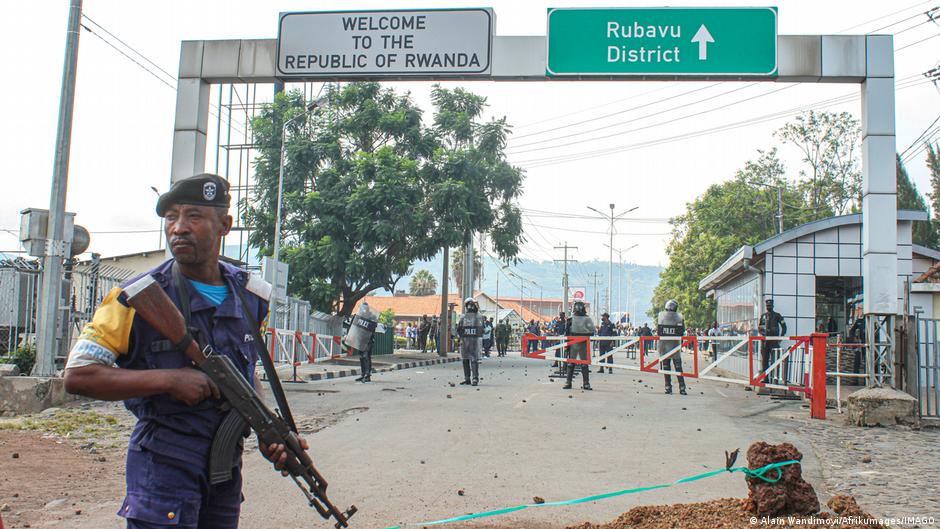
The sudden closure of the border crossing between Goma in the Democratic Republic of Congo (DRC) and Gisenyi in Rwanda has sent shockwaves through local economies, leaving small-scale traders scrambling to adapt to the new reality.
Local traders bear the brunt of border shutdown
For years, Jacques Safari, a street vendor in Goma, relied on cross-border trade to sustain his livelihood. His daily earnings depended on selling eggs to travelers passing through the border. But since the closure, his business has taken a severe hit. “Our income has plummeted. Before, I could sell five trays of eggs daily. Now, I struggle to sell even two,” he explains. “The drop is directly tied to the border closure—most of my customers were travelers.”
Supply chain disruptions worsen economic strain
Wholesalers in Goma’s Birere Market are also feeling the squeeze. Hamuli Kasilembo, a retailer of manufactured goods, describes the growing challenges of restocking inventory. “Before, crossing the border was simple. Now, sourcing goods has become nearly impossible,” he says. “Even finding customers is tough because money isn’t circulating like it used to.”
Economic ripple effects feared
Economists warn that the border closure will have long-term consequences for both cities. Alphonse Muanda, an economist based in Goma, highlights the disproportionate impact on informal traders. “Small business owners who depended on daily cross-border transactions are the hardest hit,” he notes. “Many sourced bulk supplies like rice, soap, and other essentials from Gisenyi.”
The Rwandan government enforced the closure citing health concerns to curb the spread of Ebola. While the measure remains in place, residents of Goma fear worsening economic hardship in the coming weeks.