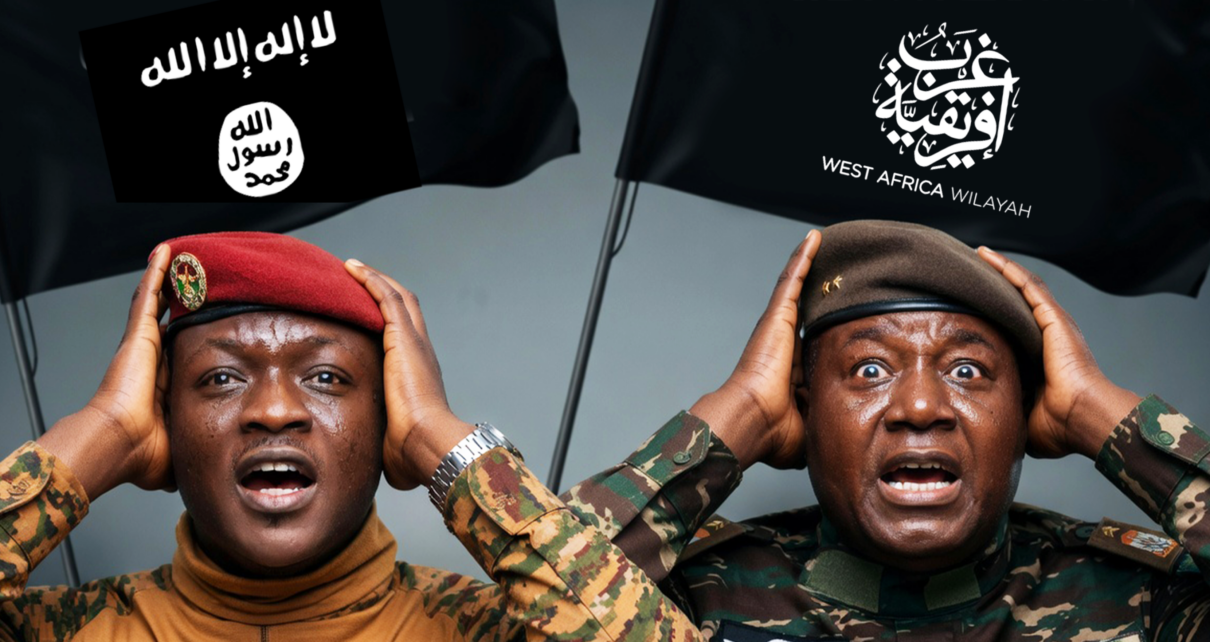
The recent confrontation along the shared border of Burkina Faso and Niger is not an isolated event but rather a significant chapter in the ongoing power struggle between the Sahel’s two dominant jihadist entities: the Al-Qaeda-aligned Group for the Support of Islam and Muslims (JNIM) and the Islamic State in the Greater Sahara (EIGS).
The shifting landscape of jihadist rivalry in the Sahel
The evolving dynamics of the Sahelian conflict mark a definitive end to what was once considered a global anomaly, where affiliates of Al-Qaeda and the Islamic State coexisted. Since 2020, this unique situation has given way to a systemic and direct confrontation. The Burkina Faso-Niger frontier, now a critically porous security zone, has become the primary battleground for a genuine ‘civil war’ within the broader jihadist movement. In this intense internal conflict, each faction views the elimination of its ideological adversary as a crucial strategic prerequisite before launching any major offensive.
Doctrinal divides: Civilian management strategies
At the heart of this conflict lie profound doctrinal differences, particularly concerning the management and engagement with civilian populations:
- JNIM (Integration-focused approach): Under the influence of Iyad Ag Ghali, JNIM adopts a ‘hearts and minds’ strategy. The group endeavors to embed itself within local communal disputes, offering a form of justice and largely avoiding large-scale massacres of Muslims. Its overarching goal is to establish a proto-state that gains acceptance from the local populace.
- EIGS (Terror-centric approach): Remaining loyal to the central Islamic State’s hardline doctrine, EIGS enforces an ultra-radical interpretation of takfir (excommunication). For EIGS, anyone who does not pledge allegiance is considered an apostate. This indiscriminate brutality frequently triggers clashes with JNIM, which then positions itself as a ‘shield’ for civilians, thereby enhancing its own legitimacy among the local communities.
Strategic control: The contested Burkina-Niger border
Given the Burkina-Niger border’s role as a vital transit area, yesterday’s clash was likely motivated by the desire to control key strategic assets:
- Smuggling networks: This includes routes for fuel, livestock, and various commodities, the taxation of which provides essential funding for their war efforts.
- Mobility corridors: These pathways are critical for moving fighters between their established sanctuary in Mali and their expansion zones towards the Gulf of Guinea nations.
Implications for regional stability
For the governments of Burkina Faso and Niger, both members of the Alliance of Sahel States (AES), these internal jihadist battles create extreme security instability for civilians. They lead to widespread displacement and massive refugee flows, placing significant burdens on state resources. Furthermore, these complex engagements complicate aerial counter-terrorism operations, as identifying legitimate targets amidst multiple, constantly moving factions becomes exceedingly perilous.
Far beyond a mere territorial dispute, this escalating confrontation represents a fight for political survival. JNIM strives to maintain its historical dominance, while the more mobile and violent EIGS seeks to break free from its perceived encirclement. For Burkina Faso and Niger, sustained vigilance is paramount: the mutual weakening of these groups does not signify their eradication, but rather a continuous evolution of the threat along their borders.