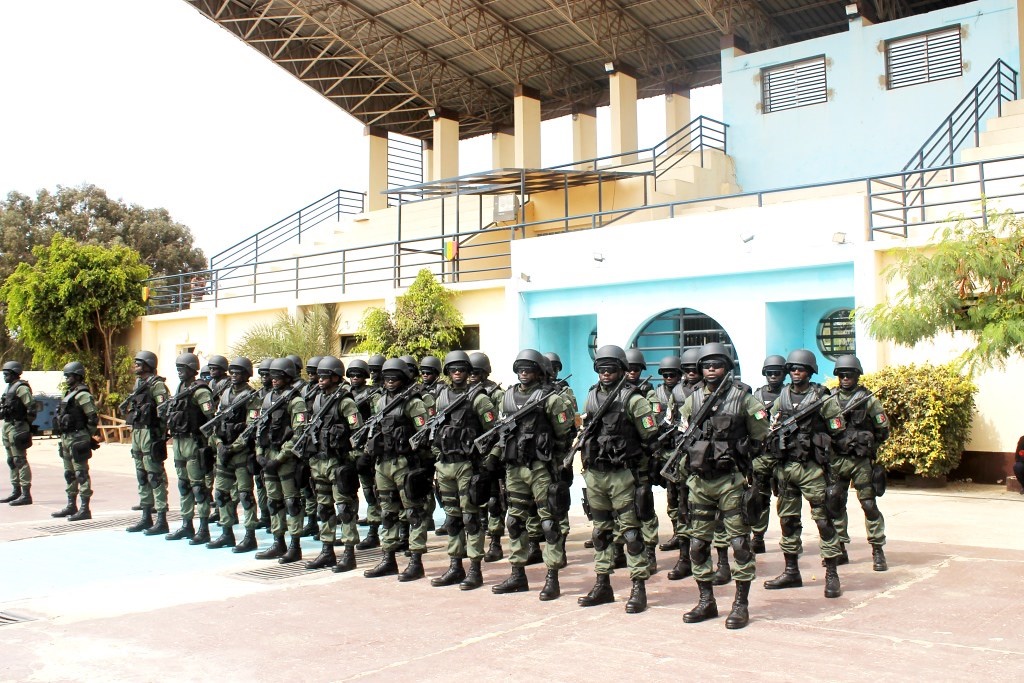
With over 400 kilometers of shared border with Mali and deep commercial ties, Senegal remains vigilant about the escalating security crisis in its eastern neighbor and across the broader Sahel region. Authorities are quietly reinforcing their counterterrorism framework to mitigate risks without drawing unnecessary attention.
Border security upgrades in response to Mali’s instability
Dakar is taking discreet but decisive action to address the growing jihadist threat. While Senegalese transporters stranded in Mali and recent truck burnings following the April 25 attack have raised concerns, foreign ministry officials remain tight-lipped. An official confirmed, “Our focus is on monitoring the situation closely, particularly regarding transporters. For now, no repatriation requests have been received, but we are maintaining heightened vigilance.”
New rapid response outposts strengthen border control
The Senegalese government has significantly invested in border security, particularly in the Tambacounda and Kédougou regions of southeastern Senegal. Recent developments include the April 8–9, 2026 inauguration of three new support bases for the Groupe d’Action et de Recherche de Sécurité Intérieure (Garsi 2) in Saraya, funded by the European Union. These installations are designed to shorten response times, enhance operational capabilities, and improve proximity to local communities.
Garsi 2 and inter-ministerial coordination: the backbone of Senegal’s defense strategy
According to military authorities, these outposts serve as the “forward eye” of Senegal’s counterterrorism and transnational crime units. A senior officer explained, “With 420 kilometers of border with Mali, deploying troops at every point is impossible. Instead, we concentrate on critical transit zones. These bases enable rapid intervention when necessary.” The officer added that the Garsi units—one at Kidira and another at Saraya—are well-equipped and trained to respond to asymmetric threats, including ambushes on convoys.
Inter-ministerial coordination for crisis response
Beyond Garsi 2, Senegal relies on the Cadre d’Intervention et de Coordination Opérationnelle (Cico), an inter-ministerial body tasked with orchestrating state responses to terrorist threats. This includes hospitals, ambulances, police, gendarmes, and air support for victim evacuation and crime scene management. “Coordinating all these elements is complex. The Cico ensures seamless integration of all counterterrorism measures.”
Recent months have seen further enhancements, including the opening of a legion headquarters in Kédougou and the deployment of additional reconnaissance and technical units. Despite not being directly targeted, Senegal ranks among the top defense spenders in West Africa. Between 2020 and 2025, it was the second-largest arms importer in sub-Saharan Africa, accounting for 8.8% of regional purchases. Notable acquisitions include Puma M36 armored personnel carriers from South Africa’s OTT Technologies, designed to withstand improvised explosive devices and mine attacks—key lessons from Sahel conflicts. Major defense contracts with Turkey were also signed in 2025.
Cultural and social resilience: an invisible shield
Security measures alone do not explain Senegal’s relative resilience to jihadist infiltration. Experts highlight strong social cohesion as a critical factor. Professor Bakary Sambe of the Timbuktu Institute notes that ethnic and religious communities in Senegal live in harmony, creating a natural barrier against groups like the Jama’at Nusrat al-Islam wal-Muslimin (JNIM) that exploit divisions elsewhere. In Kédougou, interethnic marriages and mutual respect among groups such as the Bassari, Bédik, and Peul reinforce this cohesion—a “cultural shield” against radicalization.
Religious leadership and community networks
While Sufi influence is less pronounced in eastern border areas, collaboration between religious leaders, government officials, and local figures strengthens resilience. “The absence of widespread radicalization and proactive engagement by religious leaders are vital. They are key actors in preventing extremism.” This network, supported by Senegal’s diverse confréries, acts as a bulwark against violent ideologies.
Regional solidarity and the call for collective action
President Bassirou Diomaye Faye has emphasized that terrorism is a continental threat requiring unified action. During a May 2 interview, he underscored the need for intelligence-sharing and regional coordination, citing the porous borders and cross-border ethnic ties as challenges. “No country is spared—even the United States has faced attacks no one imagined. This demands collaboration, including through the ECOWAS standby force, which must be activated.”
The President also expressed regret over the withdrawal of Sahel states from ECOWAS, stressing that Senegal cannot ignore Mali’s plight. “We share history, values, and a common destiny. What affects Mali affects Senegal, because we are one people.” He pledged continued dialogue and support for peace in Mali, while acknowledging that some security measures must remain discreet. “The Senegalese people and government stand ready to support Mali through dialogue and solidarity. Some actions, however, cannot be made public.”