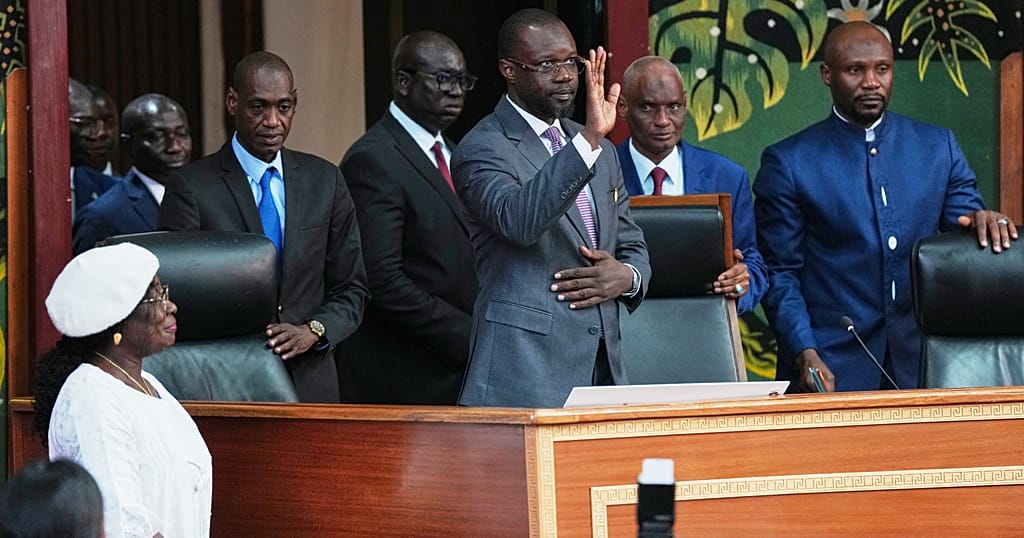
The President of Senegal’s National Assembly and former Prime Minister Ousmane Sonko has secured a resounding reelection as leader of his political party, Pastef. This decisive victory sends a clear message to rivals amid ongoing political turbulence in the country.
The national congress, held in Diamniadio near Dakar, brought together delegates from across the country and the diaspora. Sonko, who has led Pastef since its founding in 2014, will now serve another six-year term at the helm of the party.
Sonko warns of political sabotage as party strengthens
Addressing party members, Sonko acknowledged the gravity of his new mandate. “This responsibility is significant because Pastef is no ordinary party in Senegal’s political landscape,” he stated during his speech.
He emphasized the need for strong ideological groundwork and organizational structure to prevent revolutionary movements from being diluted or co-opted over time. “Movements can be derailed, absorbed, or stripped of their essence without clear principles or the capacity to sustain lasting change. That’s why this congress is historic—two years after our rise to the highest levels of power,” he explained.
The Pastef party played a pivotal role in securing the presidency for Bassirou Diomaye Faye last year. Sonko himself was initially barred from running in the election, but Faye’s victory marked a turning point in Senegal’s political landscape.
Following months of tension, Faye removed Sonko from the position of Prime Minister in May. Days later, Sonko was elected President of the National Assembly, further solidifying his influence within the government.
At the congress, Sonko issued a stern warning about attempts to undermine the party’s agenda. “Any attempt to sabotage this revolution will fail because the people, standing with Pastef, will ensure the necessary safeguards are in place for our nation’s liberation,” he declared.
Political standoff between party and government
The Pastef leadership boycotted the cabinet reshuffle announced by President Faye, despite some party members being included in the new ministerial lineup. The party holds a commanding majority in the National Assembly with 130 out of 165 seats, giving it the power to trigger a vote of no confidence at any time.
While Faye retains the ability to form a new government if a motion of no confidence passes, he must wait until November 2026 to dissolve the Assembly—a strategic limitation that keeps political pressure high.