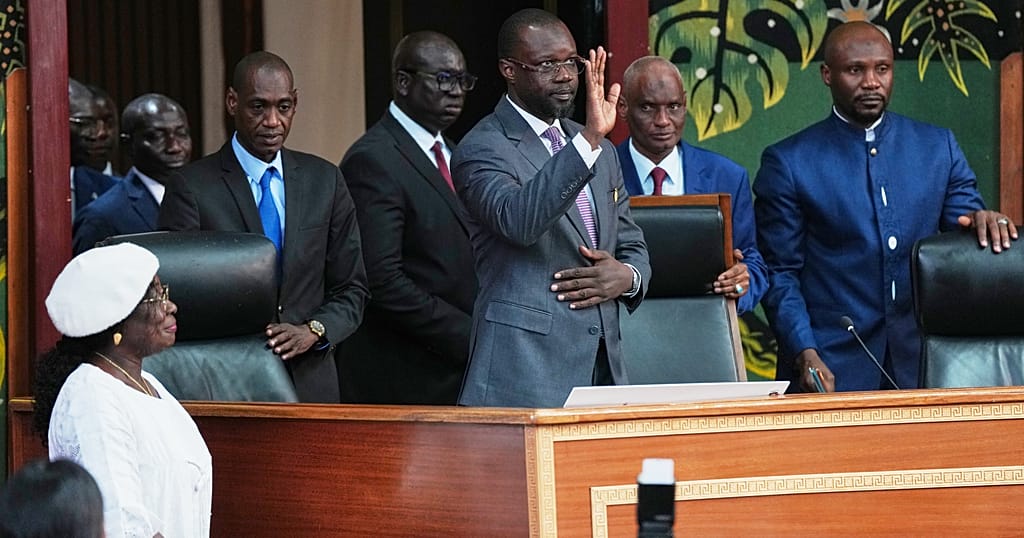
Ousmane Sonko, the Speaker of Senegal’s National Assembly and former Prime Minister, has secured a decisive re-election as leader of his party, Pastef, a move that immediately served as a stern warning to his political opponents amid the country’s ongoing political tensions.
Delegates from national sections and the diaspora gathered in Diamniadio, near Dakar, for the party’s inaugural congress.
Having led Pastef since its founding in 2014, Sonko will continue in his role for another six-year term.
“I fully grasp the magnitude of this responsibility, as Pastef is no ordinary party in Senegal’s political landscape,” he declared after his election, addressing the assembly.
“Revolutions risk being derailed, diluted, or stripped of their essence when they lack a clear doctrine or an organisation capable of sustaining long-term change. That’s why this congress is historic, two years after our ascent to the highest levels of government,” he added.
Sonko’s political influence remains significant, particularly following the election of President Bassirou Diomaye Faye in 2024 with Pastef’s backing—despite Sonko himself being barred from running.
After prolonged political strife, President Faye officially removed Sonko from his role as Prime Minister on May 22. Days later, Sonko was elected Speaker of the National Assembly.
Addressing Pastef delegates, Sonko issued a veiled threat against those seeking to undermine his party’s vision.
“No attempt to sabotage this revolution will succeed, because the people, standing alongside Pastef, will provide the necessary safeguards to finally liberate our nation,” he declared.
The Pastef leadership has chosen to boycott the government formed by President Faye, even as some party members were included in the new cabinet.
With a commanding majority of 130 out of 165 seats in the National Assembly, Pastef holds the power to file a no-confidence motion against the government at any time. Meanwhile, President Faye retains the authority to reshuffle his cabinet following a potential censure and could dissolve the Assembly as early as November 2026.