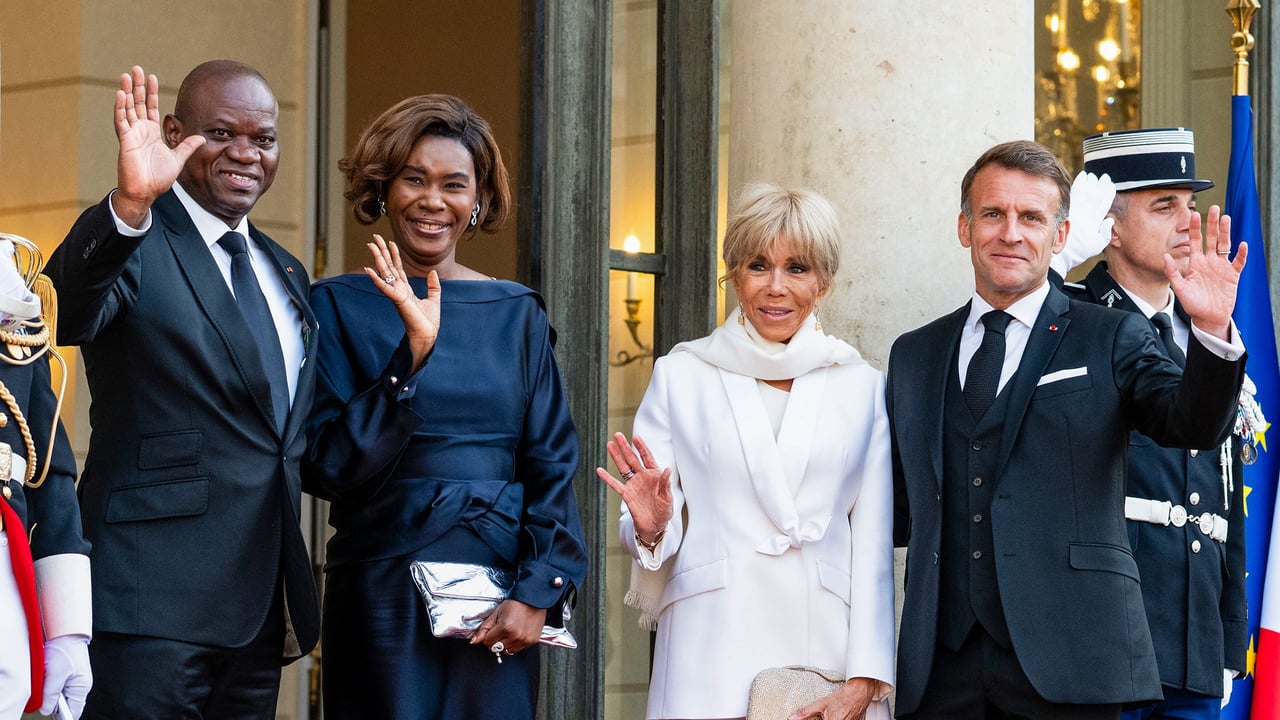

The highly anticipated state visit of Gabon’s transitional leader, General Brice Clotaire Oligui Nguema, to France concluded recently, leaving behind a trail of diplomatic symbolism and strategic negotiations. The three-day event, marked by opulence and delicate compromises, offered a glimpse into the evolving dynamics between the two nations.
From the moment General Oligui Nguema and his wife, Zita Oligui Nguema, stepped off their official plane in Paris, every detail was meticulously orchestrated. The Élysée Palace served as the grand stage for a state dinner that underscored both the historical ties and the modern challenges shaping Franco-Gabonese relations. President Emmanuel Macron and his wife, Brigitte Macron, extended a warm welcome, setting the tone for the high-stakes discussions that followed.
a carefully choreographed display of unity
The visit was not merely ceremonial; it was a calculated move to reinforce mutual interests while navigating the complexities of a post-transition landscape in Gabon. Behind the scenes, French and Gabonese officials engaged in closed-door talks to address pressing issues, from economic cooperation to security partnerships. The outcome of these negotiations will shape the trajectory of bilateral relations in the coming years.
Key agreements were signed, signaling a renewed commitment to collaboration. Among the highlights was a framework deal aimed at boosting trade and investment, particularly in Gabon’s burgeoning agro-industrial and mining sectors. French companies were also granted preferential access to lucrative contracts, a move likely to spark debate among critics who question the balance of power in these arrangements.
balancing symbolism and substance
While the Élysée dinner and public handshakes captured media attention, the real work unfolded in private. Security cooperation emerged as a critical topic, with both sides reaffirming their commitment to combating regional instability. France, eager to maintain its influence in Central Africa, sees Gabon as a key ally in its broader Sahel strategy.
The visit also served as a platform for General Oligui Nguema to project stability and legitimacy. By engaging with European leaders, he sought to reassure investors and international partners wary of Gabon’s political transition. Yet, the optics of the trip—luxurious venues, lavish receptions—raised eyebrows, with some questioning whether such displays masked deeper uncertainties about Gabon’s future governance.
economic ties take center stage
Economic discussions dominated the agenda, with a focus on sustainable development and infrastructure projects. Gabon, rich in natural resources, presented itself as an attractive destination for foreign capital, while France positioned itself as a willing partner in its economic transformation. A joint statement emphasized the need for green investments, a nod to global climate commitments.
However, not all outcomes were met with enthusiasm. Environmental groups voiced concerns over potential concessions in Gabon’s protected areas, fearing that rapid industrialization could threaten fragile ecosystems. These concerns were acknowledged but largely sidelined in the final agreements, reflecting the prioritization of economic gains over ecological safeguards.
the road ahead: cooperation or contention?
As the visit drew to a close, analysts weighed the implications of the agreements. While the formalities were completed without incident, the true test lies in implementation. Will the promises translate into tangible progress, or will they remain symbolic gestures? For Gabon, the challenge is to balance foreign partnerships with domestic expectations. For France, the stakes are equally high—maintaining influence in a region where geopolitical rivalries are intensifying.
The visit of General Oligui Nguema to France was more than a diplomatic pageantry; it was a strategic maneuver with long-term consequences. As both nations move forward, the world will be watching to see whether this partnership delivers on its ambitious promises—or if the glittering façade hides unresolved tensions.