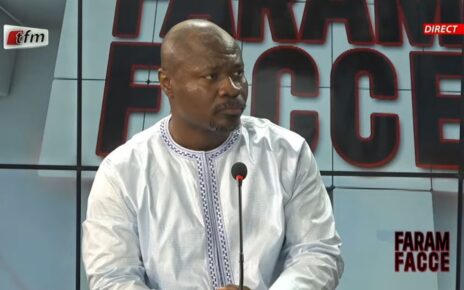
The contentious matter involving the Senegalese Rural Electrification Agency (ASER) and the Spanish firm AEE Power has re-emerged as a central topic in Dakar’s political discourse. Thierno Alassane Sall, who leads La République des valeurs and serves as a deputy in the National Assembly, openly accuses the ruling Pastef party of hypocrisy regarding this rural electrification agreement. The contract has become a potent symbol of the friction between the Senegalese executive and segments of the political establishment. The former Minister of Energy explicitly uses the term “duplicity,” a word infrequently heard in local parliamentary discussions.
Rural electrification contract becomes a state affair
The agreement between ASER and AEE Power encompasses an extensive initiative to electrify numerous Senegalese villages, aiming to connect thousands of communities to the national grid. For several months, the precise execution of the project, the disbursed funds, and the actual deliveries have been subject to public scrutiny. This dispute escalated politically when key figures within Pastef, prior to their ascent to power, had highlighted this very contract as a prime example of poor governance under the previous administration.
Now, having assumed governmental responsibilities, these same individuals find themselves managing the contractual legacy and upholding the Senegalese state’s commitments to its Spanish partner. Thierno Alassane Sall’s criticism precisely targets this shift. He contends that the current majority’s position starkly contradicts the views expressed during the electoral campaign and in the initial weeks of the new government.
Thierno Alassane Sall’s strong critique of Pastef
Known for his uncompromising stance on energy-related issues, the former minister asserts that the party, led by Ousmane Sonko and supported by President Bassirou Diomaye Faye, can no longer adopt an opposition posture. He points to a clear inconsistency between their promises of systematically auditing opaque contracts and the cautious approach now taken with AEE Power. The deputy suggests that the varied handling of inherited dossiers risks undermining the credibility of the