The power struggle over Senegal’s 2026 supplementary budget is more than a political showdown—it’s a constitutional chess match where every move carries risks for both sides.
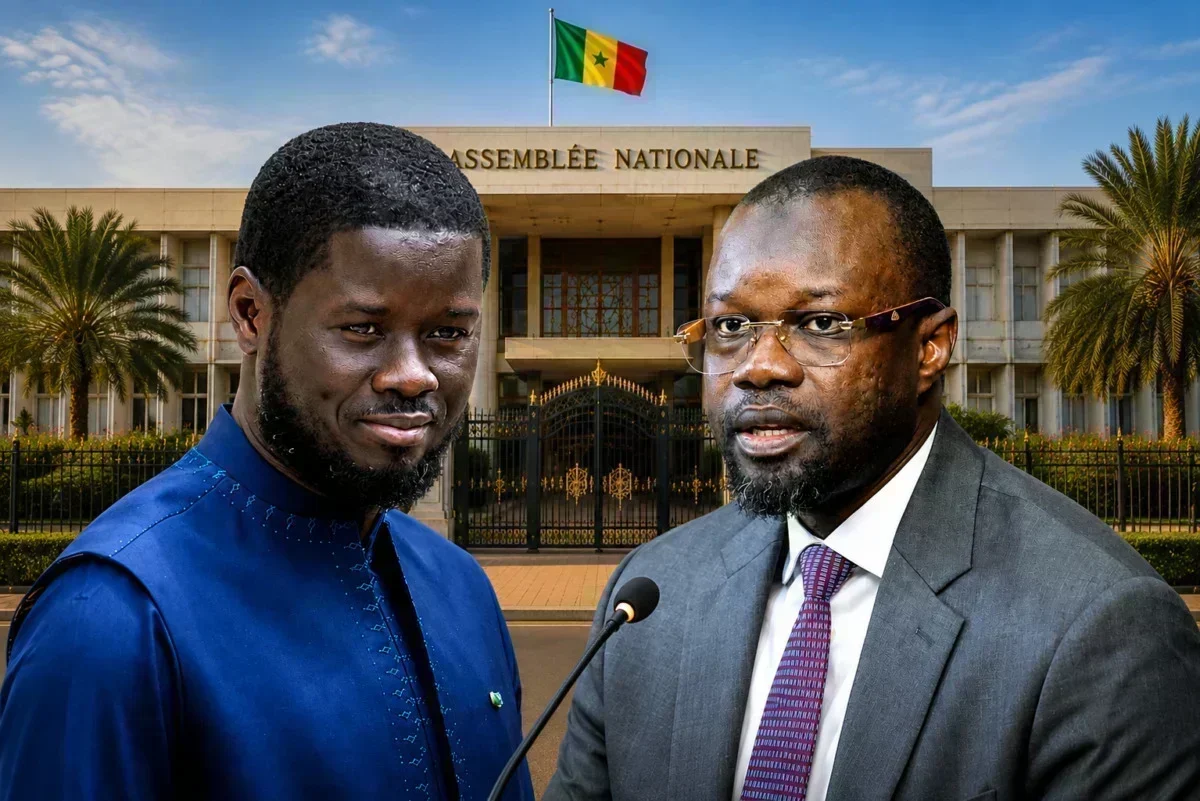
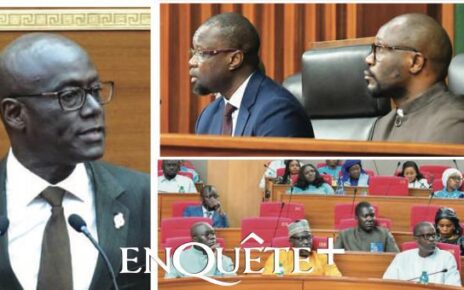
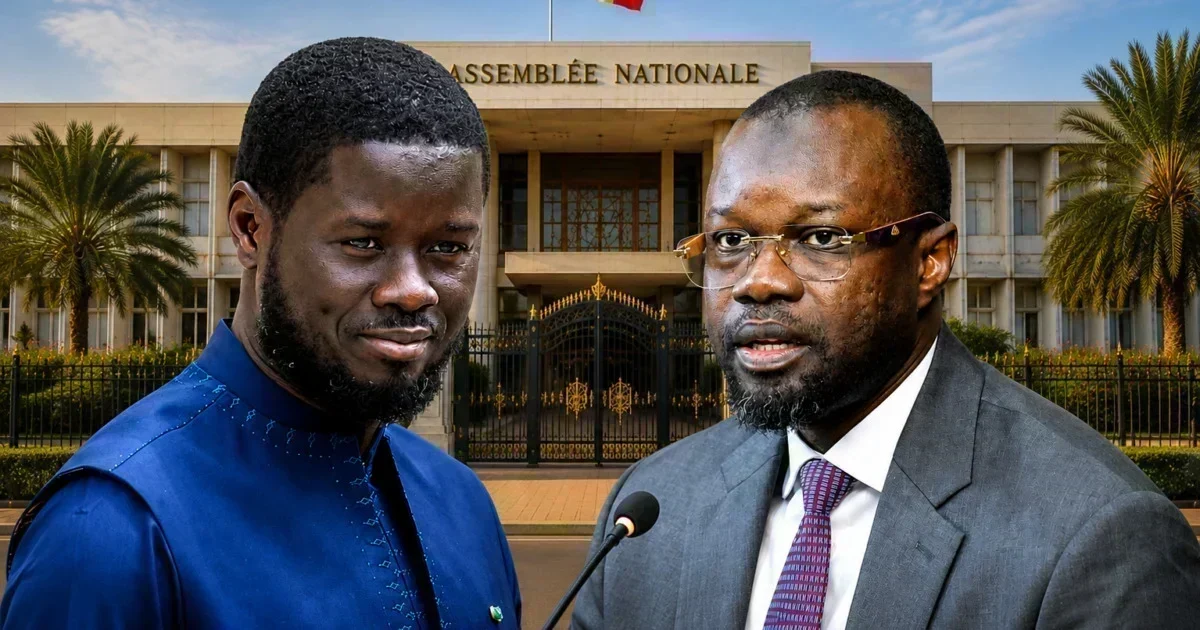
With Ousmane Sonko now presiding over the National Assembly and Bassirou Diomaye Faye leading the executive, the constitutional balance of power is being tested like never before. The supplementary finance law for 2026—currently at the center of a heated political storm—could either stabilize Senegal’s fragile economy or push it into uncharted territory. For Sonko, whose party commands a crushing majority in the Assembly, the stakes couldn’t be higher: each legislative move could reshape the country’s economic future or trigger a full-blown institutional crisis.
The Assembly’s decisive authority: votes, amendments and roadblocks
Under Senegal’s Constitution, the National Assembly holds the ultimate power to either approve or reject the government’s budget proposals. With Pastef—Sonko’s party—controlling 130 of the 165 seats, the outcome rests largely in Sonko’s hands. Yet this dominance comes with a critical caveat: outright rejection would place the responsibility for any financial paralysis squarely on his party’s shoulders. While the Constitution allows for budget amendments, these are strictly regulated. Deputies cannot introduce new spending increases; they can only delete existing expenditures or add new revenues. This means Sonko’s party could subtly reshape the budget by slashing government allocations—but only at the risk of derailing the IMF negotiations that are vital to Senegal’s economic stability.
The government, however, has a counter-move: it can demand a single vote on the entire budget or key sections, effectively forcing deputies to accept or reject the text wholesale. This removes the possibility of piecemeal amendments and forces a binary choice: adopt the budget as proposed or risk a constitutional crisis.
Timing is everything: the Assembly clock and the December deadline
The Constitution imposes a strict timeline on budget approval. The Assembly has sixty days from the submission of a finance bill to complete its vote. If the supplementary law for 2026—which was formally presented on September 18—is not approved by mid-November, President Diomaye Faye has the constitutional authority to enact it by decree. But here’s the paradox: if Sonko’s party drags its feet, the president could bypass parliamentary approval entirely. If they reject the bill outright, the legal ambiguity remains: would a formal rejection still allow the decree to take effect? The Constitution remains silent on this point—and the question could land before the Constitutional Council, which can be invoked by a tenth of the deputies.
Beyond the budget battle lies another layer of high-stakes politics. Senegal’s Constitution prohibits the dissolution of the National Assembly until December 2, 2026—two years after the body was seated. This date is pivotal: once it passes, President Faye could dissolve the Assembly and call snap elections. Delaying the budget vote until after December 2 would hand him this powerful tool, while swift approval could neutralize it as a political weapon.
The censure card: a nuclear option with unforeseen consequences
In December 2024, the government used a little-known constitutional clause to push through the 2025 budget when Sonko himself was Prime Minister. Article 86 allows the Prime Minister to stake the government’s survival on the budget vote. This triggers a 24-hour window in which deputies can file a censure motion. If adopted by an absolute majority, the government falls. With 130 seats, Sonko’s party could easily trigger a vote—and potentially topple the government led by Prime Minister Ahmadou Al Aminou Lô. But this nuclear option carries risks: a full-blown constitutional crisis could destabilize an already fragile political landscape just months before a potential dissolution.
Who holds the constitutional high ground?
The unfolding battle over the 2026 supplementary budget is more than a power play between two leaders. It is a test of Senegal’s constitutional resilience. Sonko wields significant tools: he can block, amend, or delay the budget. But every move exposes him to political fallout and constitutional gambles. Meanwhile, President Faye retains powerful levers: the decree under Article 68, the censure mechanism under Article 86, and—come December—the power of dissolution under Article 87. The Assembly’s decision will define not just the country’s fiscal future, but the delicate balance of power between the executive and legislature.