New York, September 2026 — Amid shifting global priorities and tightening health budgets worldwide, the Republic of Benin made a decisive move that caught the attention of international observers.
The Beninese government, under the leadership of President Romuald Wadagni, formalized a $544,000 (€544,042) contribution to UNAIDS for the 2026–2027 biennium. This financial gesture wasn’t just another line item in a budget report — it was a clear statement of national resolve in the face of global uncertainty. In an era when many nations are pulling back on foreign aid and domestic healthcare investments, Benin doubled down, signaling that the fight against HIV remains a non-negotiable priority.
From policy to practice: how Benin turned political will into real-world health impact
The roots of this commitment run deeper than a single funding announcement. Since 2001, Benin has maintained a consistent partnership with UNAIDS, growing from early collaboration into a model of sustained public health investment. This long-term engagement is not accidental — it reflects a deliberate strategy rooted in accountability and continuity.
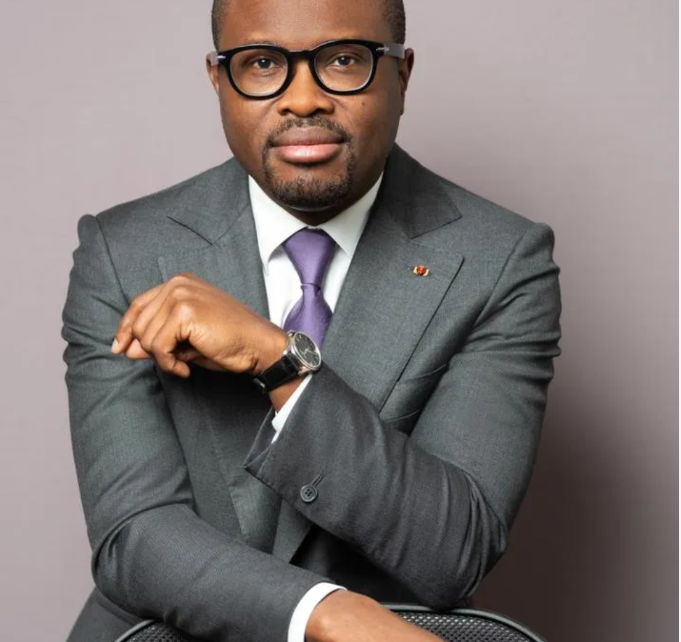
President Romuald Wadagni, a former Finance Minister known for his economic stewardship, has consistently positioned health — and particularly HIV response — at the center of national development. Elected in May 2026 with over 94% of the vote, his administration has prioritized sovereignty in health financing, reducing reliance on external support while accelerating domestic capacity.
As Health Minister Benjamin Hounkpatin put it during the signing ceremony: “This is not just a funding transfer. It’s a statement. It’s proof that a long-term partnership — 72% fewer infections and 51% fewer deaths since 2010 — can transform lives.”
The ripple effect: how $544,042 fuels proven hiv response pillars
That €544,042 allocation isn’t disappearing into a black box. It’s earmarked for four core UNAIDS program areas that have already delivered measurable results:
- Data integrity: Funding real-time surveillance systems to track HIV trends, detect outbreaks early, and guide targeted interventions across districts like Cotonou, Parakou, and Natitingou.
- Community engagement: Supporting grassroots organizations that reach marginalized groups — young adults, women in rural areas, and key populations — ensuring services are accessible and culturally relevant.
- Cross-sector coordination: Strengthening collaboration between the Ministry of Health, local governments, NGOs, and private sector partners to reduce redundancies and gaps in service delivery.
- Resource mobilization: Acting as a catalyst for additional global funding by demonstrating Benin’s own financial commitment, thereby boosting credibility in donor negotiations.
These four pillars don’t just improve statistics — they save lives. They ensure that prevention tools, testing services, treatment access, and stigma reduction efforts remain uninterrupted even during economic downturns or global crises.
A regional beacon: Benin joins elite hiv-first funders
Benin is now among a select group of countries — including Algeria, Brazil, China, Côte d’Ivoire, and Thailand — that directly fund UNAIDS operations. This move is more than symbolic. It signals a shift in approach: from aid recipient to responsible co-investor in global health security.
Christian Mouala, UNAIDS Country Director for Côte d’Ivoire, Togo, and Benin, emphasized the significance: “This contribution reflects a rare maturity. Benin isn’t just asking for help — it’s stepping up as a leader. With this funding, we can deepen strategic data, strengthen multi-stakeholder coordination, and ensure every person has access to life-saving services.”
The legal foundation: how Benin built a hiv policy framework to match its funding
This financial commitment is backed by recent groundbreaking legislation. Benin recently enacted a comprehensive HIV law that aligns with international human rights standards, criminalizing discrimination and guaranteeing equitable access to care. The timing is intentional: legislative reform + sustained funding = sustainable elimination of AIDS as a public health threat by 2030.
This dual approach — actionable policy and reliable financing — positions Benin as a potential benchmark for West and Central African nations grappling with HIV response financing gaps. Observers across the Sahel and beyond are watching closely, seeking lessons in how a lower-middle-income country can leverage innovation, accountability, and national pride to sustain progress.
What does the future hold for Benin’s hiv agenda?
The 2026–2027 funding cycle is just one step in a longer journey. President Wadagni’s administration has made it clear: vulnerability will not define Benin’s health agenda. With this contribution, the country reinforces its trajectory toward epidemic control, all while sending a global message: health leadership isn’t about size or wealth — it’s about courage, consistency, and care.
In the corridors of the UN General Assembly and in clinics across Benin, one truth resonates: this €544,042 is not just money. It’s a promise — to protect families, to preserve futures, and to uphold dignity for every citizen. And under President Wadagni’s leadership, Benin isn’t just making promises. It’s keeping them.
In brief: why this €544,042 matters
- Reinforces Benin’s status as a regional leader in HIV response and domestic health financing.
- Ensures continuity of critical UNAIDS programs amidst global budget cuts.
- Accelerates progress toward the 2030 goal of ending AIDS as a public health threat.
- Provides a replicable model for other African nations seeking to balance sovereignty and solidarity.