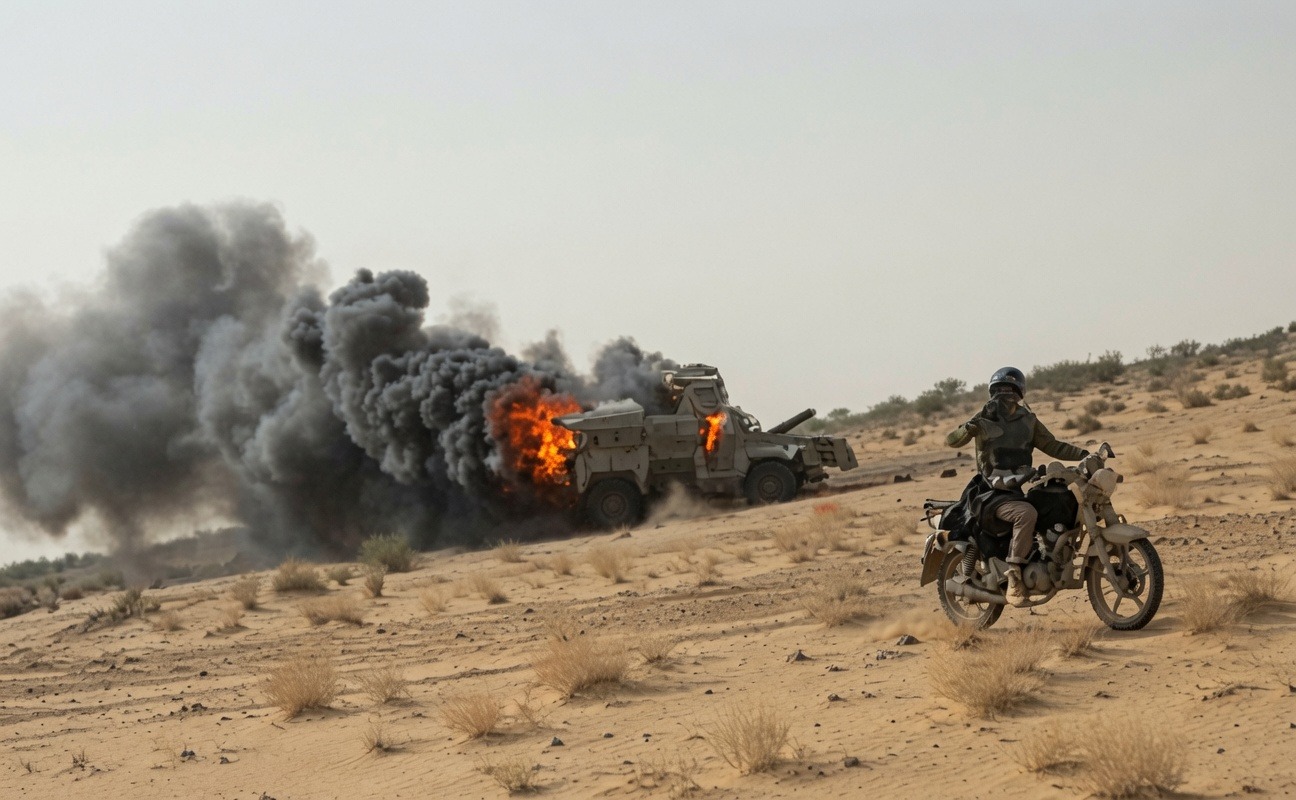
The deadly ambush at Tabrichat: a coordinated strike with devastating consequences
The afternoon of July 18th became a turning point in Mali’s ongoing conflict when a military convoy carrying Malian Armed Forces soldiers and Russian paramilitary troops from the Africa Corps was ambushed near the remote settlement of Tabrichat, in the northern region of the country. The attack, executed with brutal precision, resulted in over 50 fatalities among Malian troops and left dozens more either missing or captured. This incident now stands as one of the deadliest in Mali’s northern theater in more than 15 years.
The convoy, transporting a mix of armored vehicles and troop carriers, had departed from the strategically vital Anéfis camp with the goal of reaching Gao, a major northern city. The procession was divided into two segments: Russian mercenary units led the way, followed by Malian military contingents. The ambush unfolded near Tabrichat, a location strategically positioned between Gao, Bourem, and Kidal, where rugged terrain and the convoy’s stretched formation created ideal conditions for the attackers.
As the coordinated assault began, the focus was unrelenting on the Malian rear section, leaving them isolated under heavy fire while the Russian-led vanguard proceeded toward Gao without engaging in what many now see as a critical failure of allied support.
Human toll and documented war crimes spark national outrage
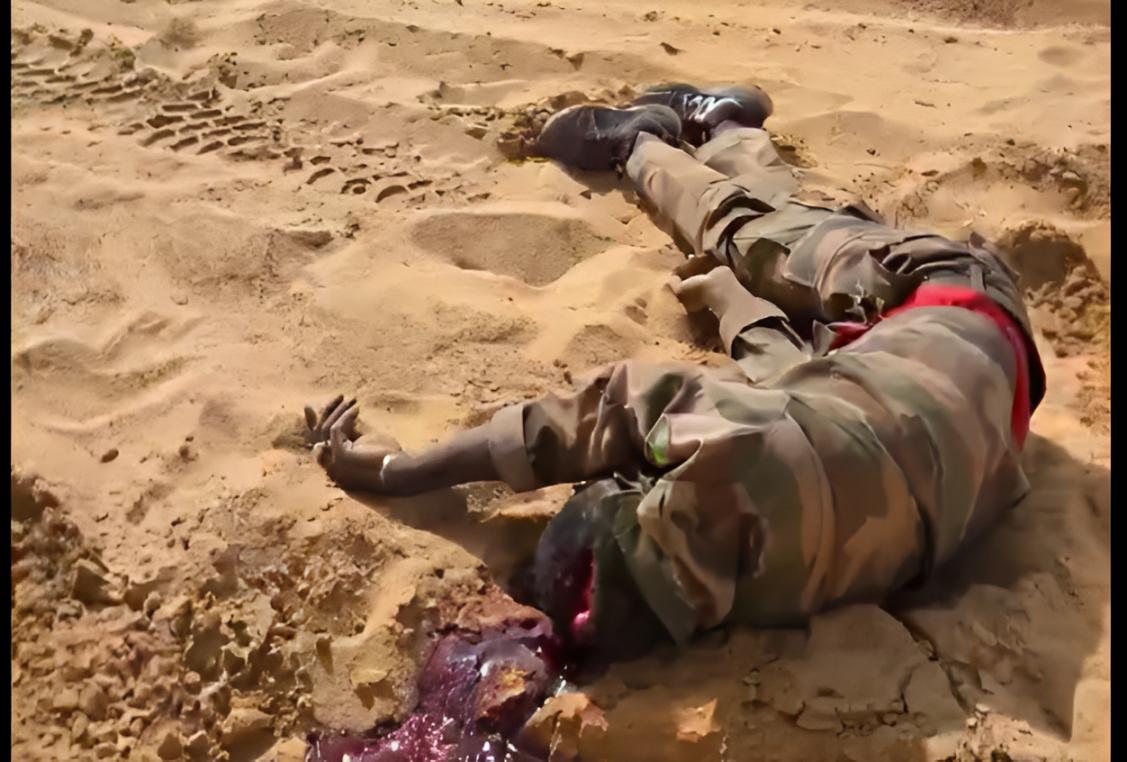
The immediate aftermath revealed a grim toll: at least 50 Malian soldiers were killed, and an additional 30 were either captured or reported missing. This staggering loss marks one of the heaviest blows suffered by Mali’s military in over a decade.
Beyond the battlefield losses, reports of war crimes deepened the tragedy. Despite being disarmed, several captured Malian soldiers were executed at close range by fighters from the coalition of the Group for the Support of Islam and Muslims (JNIM) and the Coordination of Azawad Movements (FLA). The dissemination of graphic images and videos documenting these executions on social media amplified public anger, particularly as some footage first appeared through channels linked to the Africa Corps, further straining public trust in Mali’s security partnerships.
The circulation of this content has not only fueled national mourning but also raised serious concerns about the conduct of foreign forces operating alongside Malian troops in the region.
High-level insurgent leadership exposed in tactical victory
Analysis of recovered visual evidence following the ambush has uncovered a significant strategic detail: the presence of Hamza Ag Gali, son of Iyad Ag Gali, the long-time leader of JNIM and founder of Ansar Dine. This revelation underscores the direct involvement of top insurgent commanders in orchestrating the attack and highlights a generational shift within the jihadist command structure.
It also confirms the operational reality of the alliance between JNIM and the FLA, whose combined forces demonstrated a level of tactical mobility, intelligence gathering, and firepower that many had believed weakened by recent security reorganizations. The coordination between these groups along the Anéfis-Gao axis signals a renewed and dangerous capability in northern Mali’s conflict landscape.
Questions arise over Africa Corps’ inaction during the ambush
The most controversial aspect of the incident centers on the behavior of the Russian mercenary unit. While positioned at the front of the convoy, the Africa Corps detachment emerged unscathed from the initial assault. However, instead of halting and providing support to the beleaguered Malian troops just kilometers behind, the Russian forces continued their advance directly to Gao.
This decision has triggered intense debate:
- Lack of coordination: Why were two allied segments of the same convoy so poorly synchronized, with no mutual protection protocol in place?
- Failure to intervene: Was the refusal to assist a strategic order to preserve Russian forces, or did it reflect an operational inability to respond effectively in an ambush zone?
The absence of support during a critical moment has cast serious doubt on the reliability and effectiveness of mercenary backing in Mali’s northern operations.
Public anger grows over security strategy and foreign partnerships
From Bamako to the northern cities, public reaction has been swift and forceful. While the nation mourns its fallen soldiers, outrage is intensifying toward the actions—or inaction—of Mali’s foreign allies. Citizens and local leaders are demanding official explanations from military command and government officials regarding the convoy’s management and the conduct of the Africa Corps during the ambush.
This tragedy has once again exposed the vulnerabilities of northern Mali’s supply and communication routes and raised doubts about the long-term viability of the current security strategy. With the JNIM-FLA coalition showing renewed resilience and aggression, the events at Tabrichat may force authorities to fundamentally reassess their coordination with international partners in the fight against insurgency.