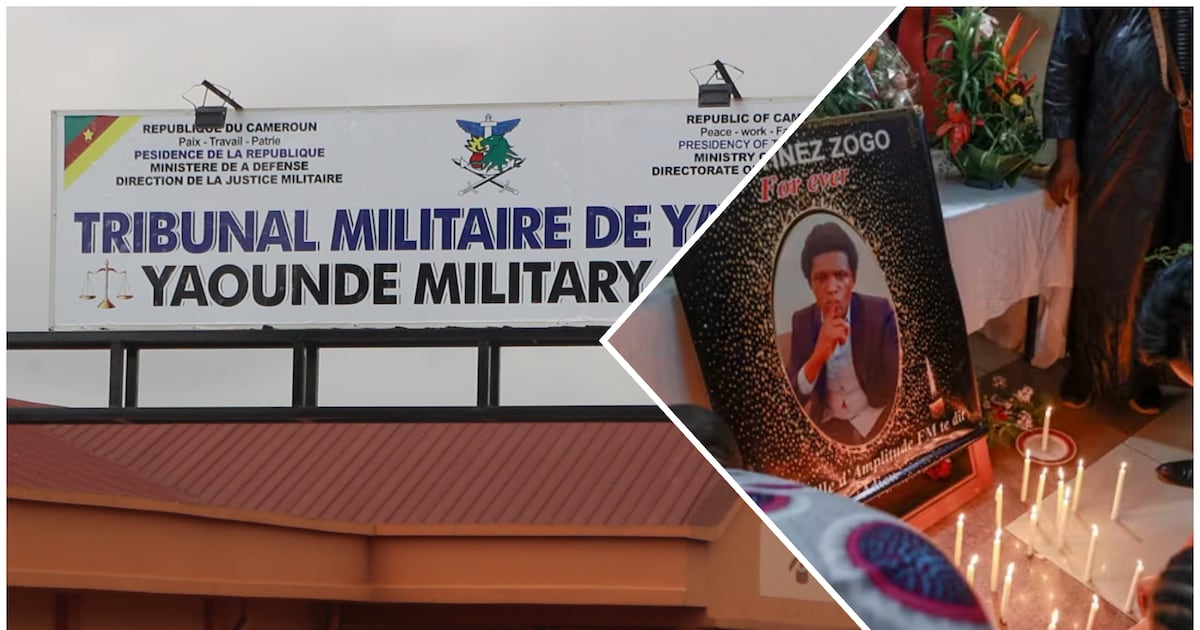
Landmark courtroom sessions unfolded on June 1 and 2, 2026, at the Military Tribunal in Yaoundé, Cameroon. These proceedings shifted the trajectory of the high-profile case following the introduction of devastating digital evidence analyzed by Professor Georges Bell Bitjoka, a cybersecurity judicial expert and the prosecution’s 32nd witness.
His mandate centered on forensic examination of the accused individuals’ phones and digital accounts. It was through this meticulous process that the torture and murder video of investigative journalist Martinez Zogo was uncovered—stored in a Google account linked to one of the defendants. Public display of three graphic videos on June 1 sent shockwaves through the courtroom, halting proceedings momentarily as raw footage of Zogo’s final moments was seen for the first time.
The harrowing material depicts the journalist bound, bloodied, and pleading for mercy, his left ear partially severed. These images crystallize the brutality of the crime and underscore the gravity of the charges against the accused.
Digital traces expose a web of involvement
According to Professor Bell Bitjoka’s testimony, the files were definitively traced to the Google Cloud account of Maréchal des Logis Godje Oumarou Vincent, a former agent with the Directorate of External Research (DGRE), now a fugitive. The expert’s report also uncovered extensive communications tying Justin Danwe, former head of DGRE operations, to the orchestration of the crime. A financial trail emerged as well, with a transfer of 35 million Central African CFA francs documented during the proceedings.
While the analysis revealed indirect digital connections in some cases, no direct technological link has yet been established between the phones of Léopold Maxime Eko Eko, former DGRE director, or businessman Jean-Pierre Amougou Belinga—both named in the case. Many of their exchanges with Danwe had been permanently deleted, complicating the forensic reconstruction.
On June 2, the tribunal reconvened under a heavy atmosphere, still reeling from the previous day’s revelations. The entire session was dedicated to rigorous cross-examination of Professor Bell Bitjoka by both the prosecution and defense teams.
Technical rigor under scrutiny
Defense attorneys challenged the validity and scope of the digital extraction process. In response, the expert emphasized that his role was confined to technical analysis of the digital surfaces provided, without personal opinions or legal assessments. Meanwhile, legal representatives for Zogo’s family acknowledged the groundbreaking nature of the report while questioning potential gaps in data recovery and extraction methodology.
The Military Tribunal adjourned late into the night on June 2, with the next evidentiary hearings scheduled for June 22 and 23, 2026. These upcoming sessions are expected to delve deeper into the substance of the case.