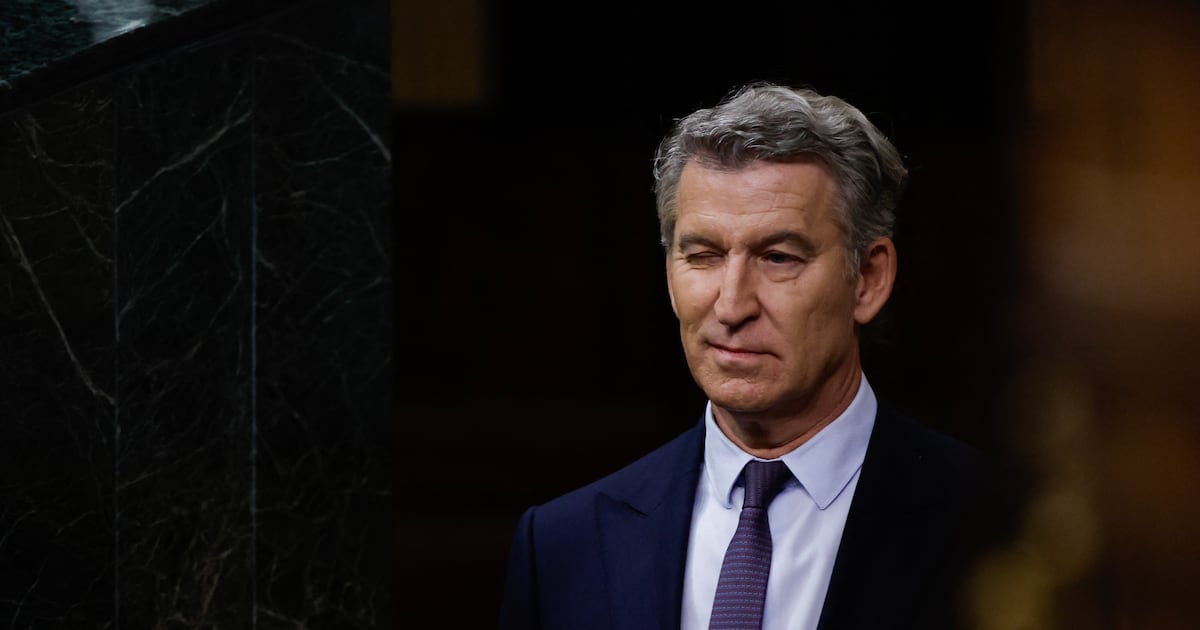
The Spanish foreign minister’s latest remarks have thrust a delicate diplomatic issue into the heart of domestic politics. José Manuel Albares recently described the Partido Popular (PP) as an «anti-Moroccan» force, escalating a verbal clash that extends far beyond routine opposition politics.
Albares argues that the PP is weaponizing Spain’s foreign policy—particularly its relationship with Morocco—to score political points at home. Tensions have flared following a series of controversial statements from current and former PP leaders, prompting the minister to label the opposition an «obstacle» to Spain’s external affairs strategy.
Yet beneath the political infighting lies a far more consequential reality. Since 2022, Spain and Morocco have cultivated a robust strategic partnership encompassing migration control, trade, security cooperation, and joint preparations for the 2030 FIFA World Cup with Portugal. By December 2025, the two governments had cemented this alliance with fourteen new cooperation agreements and a joint declaration to deepen political dialogue.
As the PP eyes a return to power, the question looms: what would it do with this relationship if it wins?
The Sahara dispute: the PP’s most glaring inconsistency
At the heart of the controversy is the Western Sahara issue. When Pedro Sánchez endorsed Morocco’s 2022 autonomy plan as «the most serious, credible, and realistic» basis for resolution, the PP condemned the move as a betrayal of Spain’s long-standing consensus on foreign policy. Alberto Núñez Feijóo, then PP leader, accused the government of sidelining the opposition and undermining national unity.
The party’s official stance has since remained deliberately ambiguous. While its policy documents emphasize adherence to international law and UN resolutions, they stop short of echoing the government’s explicit support for Morocco’s autonomy initiative. This vacillation is not new: during Mariano Rajoy’s tenure, Spain maintained a cautious approach without outright opposition to Rabat’s proposals. Even within PP ranks, divisions persist—some advocate for strategic alignment with Morocco, while others align with separatist narratives.
The contradictions peaked in July 2025 when a purported Polisario representative attended the PP’s national congress, sparking outrage in Morocco and casting doubt on Feijóo’s future foreign policy direction.
By February 2026, Albares accused the PP of double-dealing—publicly criticizing the autonomy plan domestically while quietly dispatching «envoys» to Morocco to endorse the very position it condemned. If true, this would expose a critical flaw: using the Sahara as a political tool in opposition is one thing, but reversing Spain’s stance post-election carries significant diplomatic risks.
A shifting international landscape
The PP would inherit a Morocco-Spain relationship transformed since 2022. Morocco’s autonomy plan has gained broader international backing, and the dispute has evolved within UN frameworks. Spain’s position is now embedded in a far broader bilateral agenda, making any backtracking not just a diplomatic adjustment but a potential rupture.
Yet the PP has yet to clarify its intentions. Would a Feijóo government uphold Spain’s current stance on Western Sahara, or revert to pre-2022 policies? The party has so far avoided a definitive answer.
Vox’s influence and the rise of ‘national priority’
The Sahara is not the only wedge issue. Over the past year, the PP has hardened its rhetoric on immigration and welfare access, partly in response to pressure from Vox. The debate over «national priority»—a concept historically tied to far-right politics—erupted in April 2026 after Vox brought it to Congress and regional coalitions adopted it in agreements.
Internal PP divisions emerged, with some warning of legal and political fallout. Jaime de los Santos, a senior figure in the party, later clarified that «all legally residing immigrants have identical rights to Spanish-born citizens», while others softened the language to «residential anchoring» or «priority for residents». Yet the damage was done: Vox had successfully nudged the PP toward adopting part of its agenda.
The Feijóo paradox: opposition vs. governance
The PP’s core dilemma is this: as an opposition force, it can weaponize Morocco and Western Sahara to attack Sánchez. As a governing party, it would inherit one of Spain’s most vital yet complex international relationships. These two roles often clash.
Cooperation with Morocco is not merely a PSOE ideological choice—it is driven by geography, economics, security imperatives, and a web of shared interests. The most likely outcome is not a rupture but a contradiction: the PP may find itself preserving much of the existing framework while struggling to justify why it abandoned positions it once championed.
Albares’ allegations about PP envoys in Morocco suggest the party’s public rhetoric may not align with its private pragmatism. The real question is not whether the PP is «anti-Moroccan», as Albares claims, but how far the party is willing to exploit this relationship for electoral gain—and how much of that rhetoric it would actually implement if it took power.
Spain’s proximity to Morocco makes the kingdom an indispensable partner for Madrid, regardless of who governs. A Feijóo premiership would inherit a bilateral relationship that has been fundamentally reshaped, a Spanish stance on Western Sahara embedded in a new international reality, a consolidated security partnership, and a shared responsibility for the 2030 World Cup.
The choice facing Feijóo would be stark: either translate opposition-era criticism into policy—risking renewed tensions with Rabat—or acknowledge that Morocco policy demands pragmatism the PP has not publicly embraced. Either way, it could define the early foreign policy legacy of a potential Feijóo government.