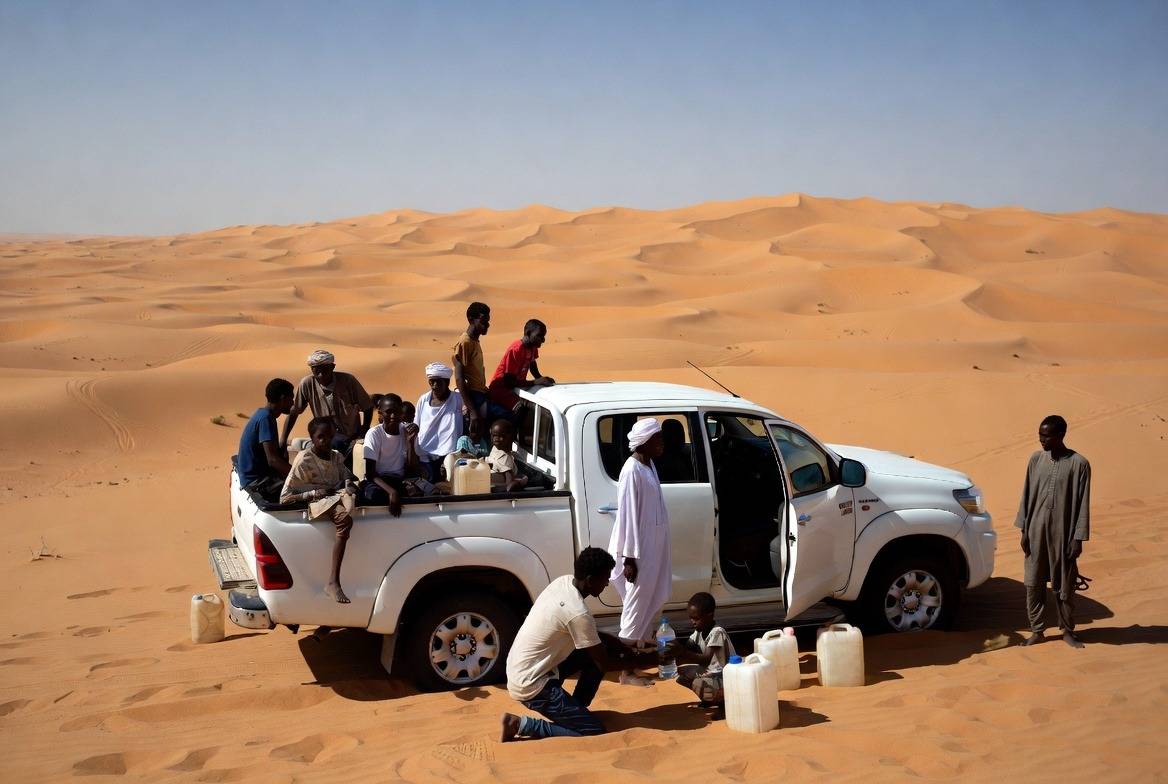
The Ténéré, a vast and mesmerizing expanse of sand, conceals a grim reality beneath its beauty. In northern Niger, yet another year of human tragedy unfolds, unseen and unheard by the Western world. While the Mediterranean’s treacherous waters dominate headlines, the perilous Sahara crossing emerges as an equally deadly journey for thousands of migrants seeking refuge in Europe.
2025: a grim tally of lives lost
Data from the past year reveals a harrowing pattern. According to local humanitarian workers, at least 35 individuals perished within the Nigerien desert’s unforgiving terrain. Yet these figures, meticulously compiled by field teams, likely represent only a fraction of the true death toll. The sheer vastness of the Sahara makes accurate accounting nearly impossible, leaving behind a trail of uncounted victims.
Agadez: the final urban gateway to peril
For West African migrants—hailing from Mali, Guinea, Senegal, or Burkina Faso—Agadez serves as the last urban outpost before the harrowing trek through the Ténéré Desert. Beyond this point, the path to Libya or Algeria becomes a deadly gamble against the elements and human exploitation.
The recurring causes of these fatalities paint a bleak picture:
- Mechanical failures: Overloaded and poorly maintained vehicles frequently stall in the middle of nowhere, leaving passengers stranded.
- Abandonment by smugglers: Fearful of military patrols, some smuggling networks abandon migrants in the desert, leaving them to fend for themselves.
- Extreme conditions: Without landmarks or shade, temperatures exceeding 50°C and severe dehydration can claim lives within hours.
A local activist, who requested anonymity, provided a chilling account: « The desert shows no mercy. When a vehicle breaks down and water reserves dwindle, survival can be measured in mere hours. Many bodies are buried by the wind long before anyone can raise the alarm. »
Security policies and their unintended consequences
Human rights advocates argue that this silent catastrophe stems from the criminalization of migration routes. Though Niger’s ruling junta repealed the 2015 migrant trafficking law in late 2023, the prohibition’s effects linger. Smugglers now operate in secrecy, navigating ever-more remote paths to evade security forces, further increasing risks for those desperate to reach safer shores.
The situation forces migrants onto clandestine detours, where the absence of marked trails and reliable water sources turns the journey into a death sentence. The once-visible routes, now abandoned due to surveillance, have been replaced by treacherous alternatives, leaving travelers vulnerable to exploitation and abandonment.
A call to action from civil society
In response to the escalating crisis, organizations such as Alarme Phone Sahara strive to document these tragedies and coordinate rescue efforts using local vigil networks. However, their efforts are hampered by limited resources and restricted access to certain military-controlled zones. Without urgent intervention, the desert’s sands will continue to obscure the human cost of the pursuit of a better life.
For the families of the missing, the Ténéré remains an open wound—a place where loved ones vanished without a trace, leaving behind only silence and sorrow.