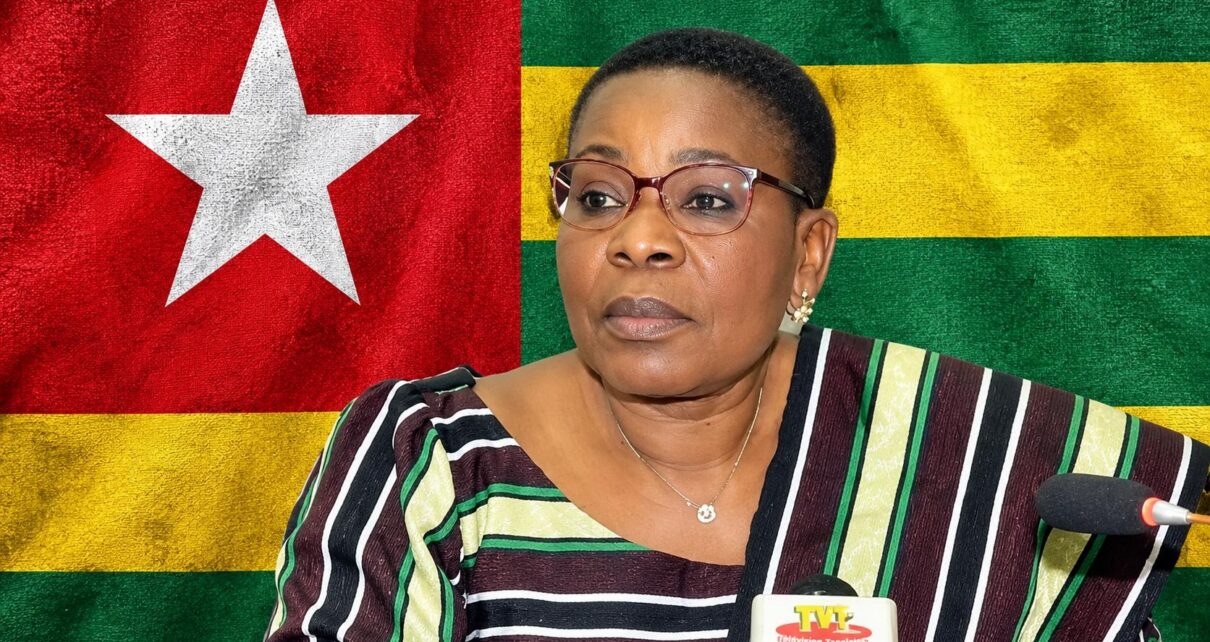
Exactly one year ago, on September 17, 2025, Marguerite Essossimna Gnakadé, a former defense minister, was taken into custody. Her arrest underscores a consistent pattern in Lomé: under President Faure Gnassingbé, challenging the official line almost invariably triggers institutional or judicial reprisals.
From inner circle to isolation
For the public and regional observers alike, Gnakadé’s case exemplifies a well-honed doctrine of power. When a political or military figure deviates from the official stance, the executive’s response rarely involves direct confrontation. Instead, it relies on a structured state apparatus where the judiciary and health or security secrecy become tools for forced pacification.
The three paths for dissenters
Managing opposition in Togo follows a precise typology. Three trajectories are traditionally observed:
- Isolation and judicial pursuit: Gnakadé’s situation is the most recent example. Prosecuted for undermining internal state security after publicly calling for reforms and the president’s resignation, her scope of action has been reduced to the silence of prolonged detention.
- Political exile: Over the past two decades, several prominent opposition figures and former dissident officials have left the country due to security pressure or legal proceedings, effectively neutralizing their influence on the national stage.
- Co-optation and selective dialogue: For moderate opponents or critical voices deemed conciliatory, Lomé’s authorities have regularly favored negotiation, incremental institutional reforms, or integration into transitional bodies.
The relentless mechanics of silence
What stands out in President Faure Gnassingbé’s method is his command of time. Unlike regimes that react with media spectacles, Togo’s leadership prefers to let time erode the momentum of protests. Once the initial shock of an arrest fades, legal cases often become bogged down in lengthy procedures, away from the media spotlight.
As the country continues its institutional shift toward the Fifth Republic, the detention of such emblematic figures as a former defense minister serves as a reminder that the stability advocated by Lomé rests on strict control. This strategy ensures state continuity but continues to fuel criticism from human rights organizations about the gradual shrinking of civic and political space in Togo.