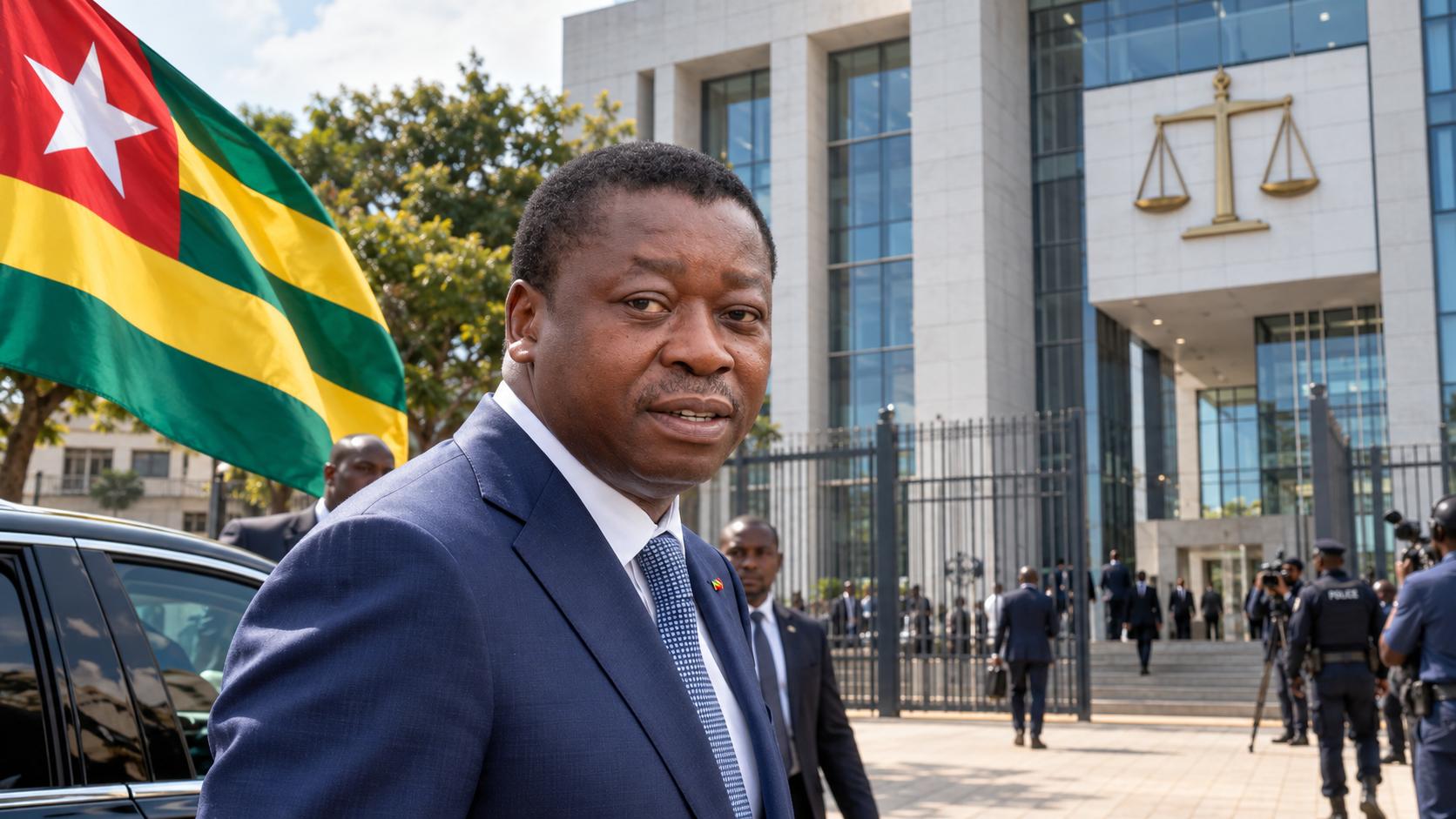
As the French National Financial Prosecutor’s Office (PNF) ramps up its scrutiny of overseas holdings controlled by foreign leaders, all eyes are now on the real estate portfolio linked to Togolese President Faure Gnassingbé and his associates. From opaque property firms to grand Parisian townhouses and money laundering probes, this case sits at the nexus of Franco-Togolese diplomacy and financial accountability.
The saga, which periodically surfaces in the salons of Paris’s 16th arrondissement and the investigative chambers of the Palais de Justice, has finally caught up with Gnassingbé. Once shielded from the high-profile cases targeting Central African elites—such as the Obiang and Bongo families—the Togolese leader now faces legal fallout over alleged acquisitions bankrolled by diverted state revenues.
Probe into luxury assets across Paris and Île-de-France
The PNF, supported by France’s Central Office for the Repression of Serious Financial Crime (OCRGDF), is conducting a preliminary investigation aimed at tracing the origin of funds used to purchase a portfolio of prime real estate attributed to Gnassingbé’s inner circle and business network.
Key areas under examination include:
- Complex property transactions: eight Haussmann-style apartments and five private mansions structured via Sociétés Civiles Immobilières (SCIs) and nominee arrangements.
- Offshore financial engineering: deployment of bank accounts in low-tax jurisdictions such as Fiji (two accounts) and intermediaries based in financial secrecy hubs.
- Money-laundering and corruption allegations: magistrates are probing whether multi-million-euro acquisitions in Île-de-France—managed through SCIs—align with the official annual remuneration of the Togolese head of state (~€100,000–€120,000) or stem from diverted public monies. Independent watchdogs and investigative journalists estimate the first family’s fortune at upwards of 3,000 billion West African CFA francs.
The investigation also scrutinizes financial flows involving long-standing associates such as former Togolese Prime Minister Barry Moussa Barqué, alongside concession deals at the Port Autonome de Lomé—cases connected to the Bolloré Group—that may reveal deeper financial misconduct.
Generational wealth and familial disputes
The Togolese presidency’s real estate footprint in France is not a recent development. It was laid down during the tenure of Étienne Eyadéma Gnassingbé, father of the current leader, who passed away in 2005. His death sparked bitter inheritance battles, further complicated by seizures and ownership challenges.
Notable addresses frequently flagged by anticorruption NGOs and the investigative press include three buildings on Avenue du Maréchal-Maunoury, upscale residential complexes in the Hauts-de-Seine department, and additional apartments acquired during recent official visits to Paris.
France’s evolving stance on illicit assets
For over a decade, the French chapter of the ‘ill-gotten gains’ dossier focused heavily on the families of Bongo (Gabon), Nguesso (Republic of the Congo) and Obiang (Equatorial Guinea). However, recent legislative reforms—especially the creation of a mechanism for restitution of seized assets to affected populations—have sharpened judicial vigilance. French courts now apply stricter scrutiny to any foreign leader whose French holdings appear disproportionate to declared income.