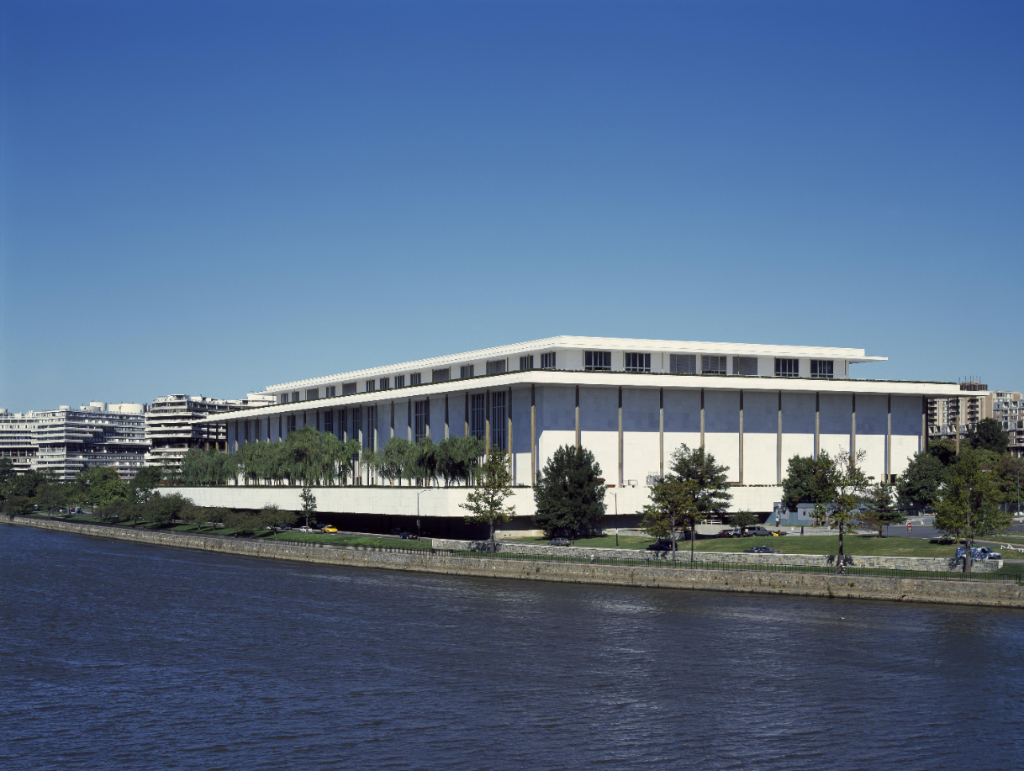
In May 2025, a $17.6 million payment from a Congolese government account to a Texas defense contractor raised eyebrows on both sides of the Atlantic—sparking questions about transparency, political connections, and the true purpose behind the transaction. At the center of the scrutiny: the role of former U.S. Ambassador to Germany and Trump ally Richard Grenell, whose leadership of Washington’s Kennedy Center is now tied to the controversy.
The missing millions: where did the intended donation end up?
The transfer originated from a Congolese Ministry of Finance account on May 29, 2025, and was routed to Texas Armament & Technology (TX-AT), a defense firm headquartered in Texas. Yet buried within the transaction details is a claim that $5.6 million of those funds were earmarked for Washington’s Kennedy Center, a high-profile cultural institution under Grenell’s stewardship at the time.
Eyewitness testimony and financial records reviewed suggest that while the payment was processed, no corresponding donation was recorded by the Kennedy Center. This discrepancy has fueled speculation that public funds may have been diverted or misused, drawing the attention of White House legal teams amid broader concerns over financial transparency and accountability.
Grenell’s response: denial amid mounting questions
Richard Grenell, whose conservative credentials and former political alliances make him a prominent figure in U.S. conservative circles, has categorically denied any involvement in directing funds away from their intended cultural purpose. He denies claims of offering special access to Donald Trump or VIP events in exchange for financial support to the Kennedy Center, describing the allegations as baseless.
Despite Grenell’s rebuttal, the transaction’s timing and the overlapping roles of business, politics, and cultural sponsorship have kept the controversy alive in Washington’s corridors of power. The White House has acknowledged the sensitivity of the matter, with officials confirming that a formal review is underway to determine the legitimacy of the payment and its intended destination.
The Congo connection: public funds and private objectives
For the Democratic Republic of Congo, the stakes are high. If the $17.6 million originated from state coffers, the transaction raises critical questions: Was this a legitimate commercial contract? Did an authorized official approve the payment? What goods or services was TX-AT expected to provide in return? And most urgently, was the Kennedy Center donation ever intended to materialize?
These questions go beyond mere financial irregularity—they touch on issues of governance, contract transparency, and the ethical use of public resources. Investigators are now scrutinizing intercompany agreements, wire transfer orders, and administrative approvals to determine whether Congolese law was breached in the handling of these funds.
Turhan Mildon and the web of economic interests
Amid the financial maelstrom, Turkish businessman Turhan Mildon—linked by marriage to Grenell’s inner circle—emerges as a key figure. Through Milvest, his investment firm, Mildon maintains significant business interests in Congo, particularly in infrastructure and resource development. While his company’s involvement does not automatically implicate him in the transaction, it adds a layer of complexity to the investigation, requiring authorities to examine whether private economic motivations influenced the transfer of public funds.
Why this case matters for Kinshasa’s fight against corruption
In a nation where public distrust in financial governance runs deep, this case underscores the urgent need for stronger oversight mechanisms. International transactions involving state funds must be backed by verifiable contracts, transparent approvals, and clear deliverables. Should discrepancies be confirmed, Congolese authorities will face the dual challenge of identifying responsible parties and enforcing accountability under national and international law.
At present, no definitive evidence has been made public to confirm embezzlement or criminal intent. Yet the absence of clarity itself is troubling—a reminder that financial opacity can undermine public confidence and distort economic relationships between nations.
The road ahead: documents, decisions, and justice
For now, the $17.6 million question remains: Who approved the transfer? Why was TX-AT chosen as the recipient? And where did the intended $5.6 million meant for the Kennedy Center actually go?
The answers lie in the documents: ledgers, contracts, internal memos, and bank records that must be unsealed and analyzed. Until then, this controversy stands not as proof of wrongdoing, but as a stark example of how public funds—regardless of geography—can become entangled in webs of power, profit, and political influence. The integrity of the process, and the institutions that oversee it, will be tested in the coming months.