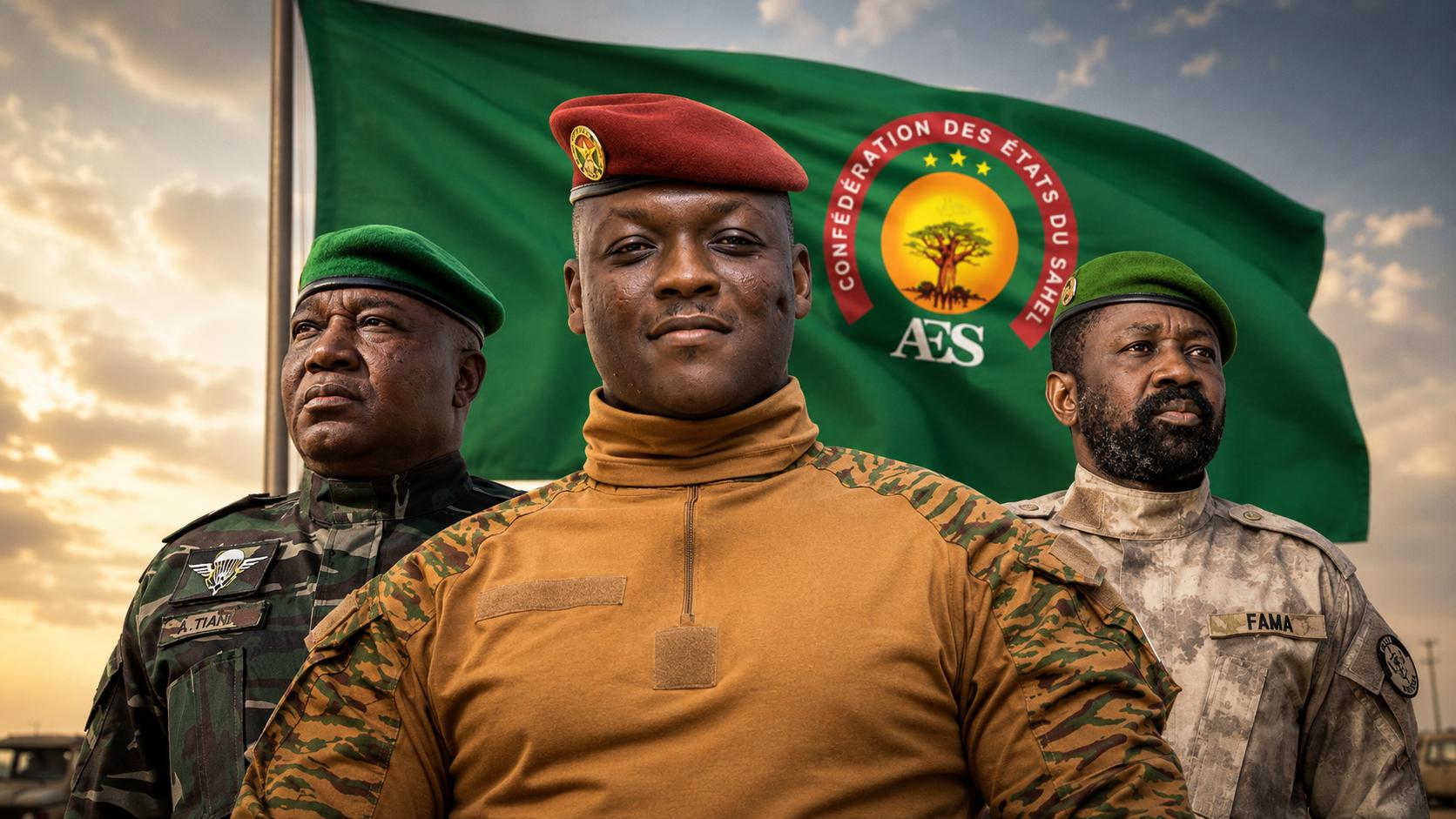
When military leaders across the Sahel chose to eject Western troops—starting with Paris— they framed their move as a bold step toward reclaiming true sovereignty. Yet the rapid arrival of Moscow’s Africa Corps, the Kremlin’s official successor to the Wagner Group, has raised a pressing question: at what cost—financially, strategically, and in blood—does this pivot to Russia come? The promise of self-determination now hangs in the balance, overshadowed by a growing financial toll and deepening operational dependence that few anticipated.
From rhetoric to reality: What the AES charters really delivered
The Alliance of Sahel States (AES), formed in late 2023 by Mali, Burkina Faso, and Niger, was sold to citizens as a new dawn of liberation. The juntas’ narrative was straightforward: end the “neocolonial” influence of Western powers and fix the region’s worsening jihadist crisis. But behind the bold statements lies a far more complicated picture. The Africa Corps, now the visible face of Russian support, has embedded itself not just as a trainer but as a combat force—especially in Mali, where its presence has reshaped the very meaning of sovereignty.
Mali’s billion-dollar gamble on Russian firepower
Mali’s government has quietly revealed the staggering price tag of its alliance with Moscow. Since 2021, Bamako has funneled over one billion dollars into payments to Wagner—and now to the Africa Corps—translating to nearly $10 million per month in sustained funding. Unlike neighbors Burkina Faso and Niger, where Russian assistance remains largely confined to military training and advisement, the Africa Corps in Mali is fighting side by side with national troops in frontline operations. Despite this heavy investment, there is no evidence of large-scale mineral concessions being granted in return—leaving Mali’s treasury footing the bill with no visible strategic quid pro quo.
Security gains falling short: A widening gap between rhetoric and results
The Africa Corps now fields an estimated 1,000 to 1,500 personnel across Mali, yet despite this show of force, security gains remain elusive. After the group’s humiliating withdrawal from the Kidal region in April 2026, rebel factions swiftly retook key towns including Tessalit, Anéfis, and Aguelhok. In the Gao and Ber zones, state control is crumbling as rural areas slip beyond government reach. Analysts now warn that without broader political compromise, the only viable path forward may be a negotiated settlement—one that could force the junta to acknowledge limits it once swore to erase.
A hollow sovereignty: The paradox of outsourced security
Observers are beginning to question whether the AES’s pursuit of ‘sovereignty’ has simply replaced one form of dependency with another. While the juntas have successfully diversified their arms suppliers—turning to Turkey for drones, Iran for ballistic missiles, and China for logistics—the core military operations remain outsourced to foreign mercenaries. Western intelligence reports indicate that African Corps fighters are now embedded in Mali’s most critical operations, raising concerns that the junta’s operational autonomy may be little more than an illusion. The International Crisis Group has drawn a sharp distinction: what the juntas have gained is political sovereignty—the freedom to reject Western demands—but not functional sovereignty, the ability to defend their own territory without foreign proxies.
This paradox closely mirrors Cold War-era interventions, where African states like Angola and Ethiopia relied on Soviet or Cuban troops for survival. When external support later waned, the structural weaknesses of those regimes became glaringly apparent. The Sahel could be heading down the same path.
Can the Sahel break the cycle of external dependency?
The central dilemma now facing the region is no longer simply choosing between the West and Russia. It is whether the AES governments can build a genuinely national defense architecture—one strong enough to secure its people and territory without surrendering independence to another foreign patron. Every billion spent on foreign fighters, every battle lost despite superior firepower, every village slipping from state control erodes the very legitimacy these juntas claimed to restore. The question looms: is sovereignty still within reach, or has it already been traded for the false promise of strength in numbers?