What is unfolding today in Senegal is not merely a clash between two individuals. It represents a deeper confrontation: the clash between institutional legitimacy and charismatic leadership. This tension, a recurring theme in contemporary political theory, often leads to a well-documented phenomenon known as hubris.
To understand Ousmane Sonko’s political trajectory, one must examine it with clarity and without bias. Sonko’s rise has been defined by an unparalleled energy of disruption in recent Senegalese history. He has channeled the frustration of a marginalized youth, challenged a political system perceived as closed, and introduced a new political language centered on sovereignty, dignity, and the empowerment of the people as the driving force of change.
a rapid political shift reshapes the landscape
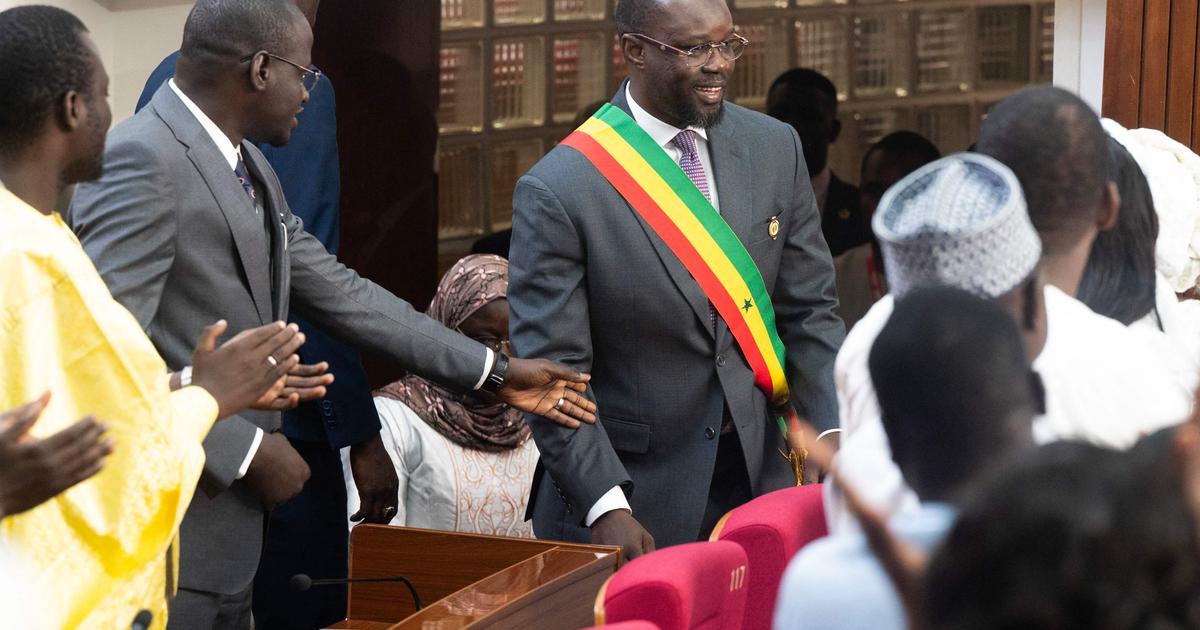
Within a matter of days, Senegal’s political scene experienced a seismic shift. On May 22, President Bassirou Diomaye Faye removed Ousmane Sonko from his position as Prime Minister. The very next day, Malick Ndiaye, then President of the National Assembly, resigned, strategically clearing the way for a new leadership. By May 25, Ahmadou Alhaminou Mohamed Lô was appointed Prime Minister. Then, on May 26, Sonko was overwhelmingly elected President of the National Assembly with 132 votes out of 165—a clear indication that he remains the undisputed leader of the Pastef party, which he founded.
This election has been described by some as historic and by others as an institutional coup. It has positioned Sonko as the principal opposition figure to President Faye, with whom he once formed a turbulent but powerful alliance. The question now looms: will the Pastef party, which voted unanimously to elect Sonko to the Assembly’s presidency, support—or even join—the new government led by the technocratic Prime Minister?
Party insiders have reportedly set conditions, including “allegiance to the 2024 victory program”—a program that Sonko himself crafted. While Sonko has signaled a willingness to pursue institutional reconciliation, he has also sent a firm message: the National Assembly will exercise its “full constitutional prerogatives.” He has further criticized the lack of consultation regarding the Prime Minister’s appointment.
Amid this institutional turbulence, international financial observers have downgraded Senegal’s sovereign credit rating from “stable” to “negative.”
the paradox of charismatic leadership
The power of charismatic leadership is undeniable. It has transformed Senegal’s political landscape. However, such leadership carries a fundamental contradiction: it thrives on strong personal embodiment while simultaneously undermining the impersonal mechanisms that sustain institutional democracy.
When supporters begin to view a single individual as the sole source of a “revolution,” when the fate of a collective project seems inseparable from one person, and when loyalty to a cause blends indistinguishably with personal devotion, the stage is set for hubris—not as a personal flaw, but as a structural risk.
For months, Senegal has grappled with a singular political ambiguity: who truly held power? Was it the elected president or the historical leader of the Pastef movement? Was it constitutional authority or the emotional authority of a charismatic figure? This duality could not endure indefinitely. Every democracy reaches a point where institutions must reclaim their primacy. A state cannot function sustainably with two competing centers of symbolic command.
Sonko’s strength did not stem solely from his role as Prime Minister. It lay in his ability to embody simultaneously the head of government, the leader of a movement, the militant reference, and the emotional symbol for a significant portion of Senegal’s youth. This is where the risk of hubris emerges: when a leader occupies not just the space of the state, but also the space of the people and the movement. The paradox is that this does not necessarily threaten democracy through overt force, but subtly erodes it by allowing institutions to fade in the shadow of a dominant personality.
Political parties remain largely structured around central figures. Parliament struggles to assert itself as a truly autonomous counter-power. While institutions resist, they remain fragile in the face of the emotional pull of major political personalities.
the institutional test ahead
The critical question today is not moral, but institutional. Can Ousmane Sonko accept that institutional legitimacy must now take precedence over charismatic legitimacy? Can he accept that the project he helped create may no longer belong solely to him? Can he evolve from being the driving force of a historic movement to becoming one actor among many within a durable institutional order?
This is perhaps the most formidable challenge for leaders of rupture. African political history is filled with movements that succeeded in opposition only to falter when confronted with the complexities of governance. Ruling requires more than mobilization—it demands arbitration, compromise, institutional hierarchy, and even the acceptance of personal sacrifice for the sake of state continuity.
The greatness of a leader is not measured solely by their ability to seize power, but by their willingness to respect the limits imposed by institutional democracy. Senegal may now be entering this trial by fire. The outcome of this tension will determine not only the future of the Pastef project, but also a significant part of the country’s democratic stability.