Diplomatic rift or strategic shift? The absence of Niamey overshadows Alliance of Sahel States talks
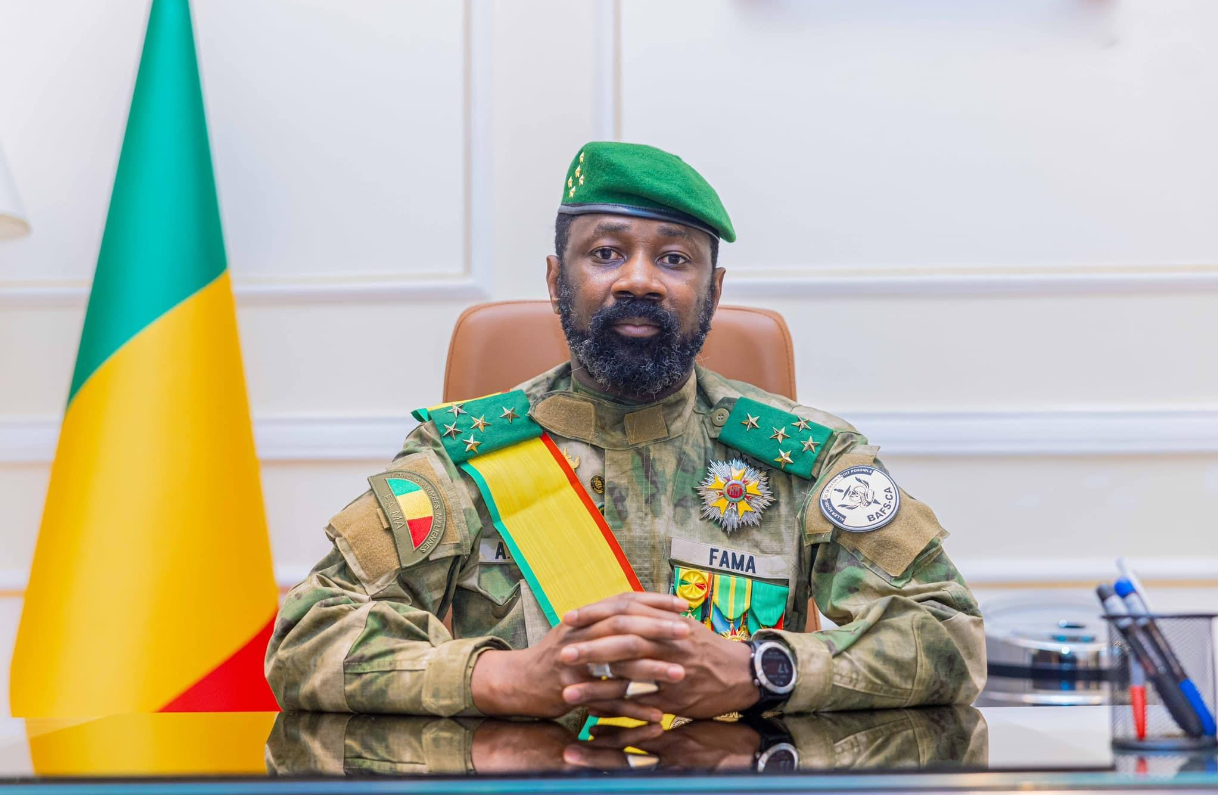
General Assimi Goïta, Mali’s head of state, landed in Ouagadougou this week for a high-profile working visit aimed at consolidating the warm ties between Bamako and Ouagadougou. Yet the conspicuous absence of Niger’s president, Abdourahamane Tiani, has cast a shadow over the proceedings and raised urgent questions about the cohesion of the Alliance of Sahel States (AES).
As Burkina Faso’s protocol authorities confirm the Malian leader’s arrival, anticipation builds around what the talks may yield. But the missing seat at the negotiating table has shifted focus from partnership to the very foundation of the three-nation bloc that emerged from the Sahel’s shifting sands.
This unexpected gap comes at a moment when the AES is being watched more closely than ever by regional partners and global observers alike.
An alliance built on shared threats and ambitious goals
The Alliance of Sahel States, which evolved into a full Confederation just last year, was forged in the crucible of escalating security threats and political turbulence. Burkina Faso, Mali and Niger committed to deepening military, economic and diplomatic cooperation to counter the advancing influence of armed groups across the Sahel.
In this volatile landscape, Ibrahim Traoré and Assimi Goïta meet as natural allies. Both countries share a vision of regional sovereignty, rejecting external interference while bolstering cross-border security mechanisms. Their meeting is therefore far more than a courtesy call—it is a strategic checkpoint in the fight against instability.
Yet the symbolism of Niger’s missing president cannot be ignored. In an alliance explicitly designed to operate as a triad, the absence of the third head of state risks misinterpretation. Is this a deliberate sidestepping of Niamey, or merely a logistical coincidence? Only Ouagadougou’s corridors can answer that question.
Bilaterals vs. confederation-wide coordination
The AES was not created to function through ad-hoc encounters between two of its three members. Its charter emphasizes regular, three-way consultations to set the strategic direction of the bloc. When such meetings occur without all signatories present, they risk being interpreted as preferential pathways rather than as institutional actions.
Recent history shows that the three capitals have cooperated closely. In mid-October, foreign ministers from Burkina Faso, Mali and Niger convened in Ouagadougou to advance joint positions on regional issues. This ministerial follow-up demonstrates that the institutional machinery of the AES remains operational.
Nevertheless, the optics of this week’s one-on-one summit are challenging. Diplomacy thrives on visibility and inclusion; when a founding member abstains, the narrative shifts from unity to division.
What’s really at stake for Sahel stability?
Behind the diplomatic dance lie real-world stakes—security, trade corridors and humanitarian access hang in the balance. The three AES members are locked in a shared struggle against transnational extremist networks that do not recognize borders. Intelligence sharing, coordinated patrols and joint counter-terrorism operations depend on trust established at the highest level.
Beyond counter-insurgency, the AES must also present a unified front in engagements with West African regional blocs, international donors and neighboring states. Fragmentation would dilute bargaining power and hinder access to development funding desperately needed to rebuild conflict-affected communities.
Niamey’s silence and the clock ticking toward crisis
No official reason has been given for President Tiani’s absence, leaving observers to speculate. Is it a matter of scheduling, sovereignty concerns or a deeper dissonance within the alliance? Thus far, silence reigns from Niamey, and with it grows the risk that perceptions of division will harden into reality.
The AES leadership must decide soon how to reclaim the narrative. If the Bamako-Ouagadougou discussions yield tangible outcomes—such as new defense accords or economic pacts—will Niger be formally briefed and invited to endorse the outcomes? Or will the bloc drift quietly into a two-tier structure that weakens its original mandate?
Looking ahead: Can the AES survive without one of its pillars?
An alliance of three can function with two, but it cannot thrive. The cohesion of the AES hinges not on bilateral pacts but on a shared vision articulated by all three presidents. When one is absent from a defining moment, the credibility of the entire project is tested.As the dust settles on this week’s visit, the international community will be watching closely. Partners ranging from regional blocs to multilateral development banks gauge the bloc’s reliability through the consistency of its decision-making. A divided AES would struggle to secure the support it needs to turn strategy into tangible results on the ground.
For now, one truth stands clear: the Sahel’s future cannot be charted by two capitals alone. It demands all three—together, consistently, and without ambiguity.