N’Djamena’s youth grapples with precarity through sand trade labor
In Chad’s capital, young people turn to grueling sand transport as informal work to escape endemic joblessness and poverty.
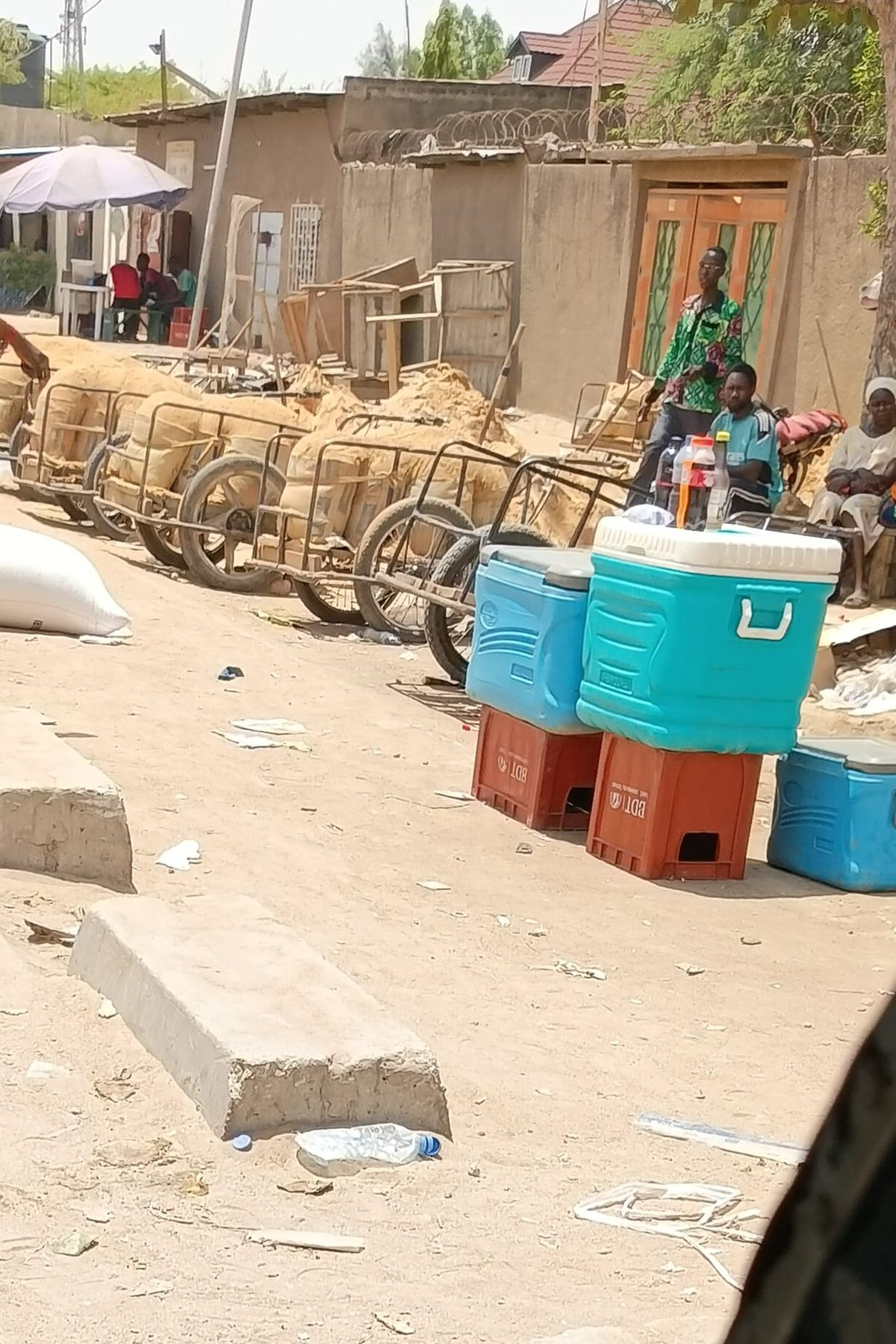
Exhausted and desperate, young people in N’Djamena are reshaping the city’s economic landscape one sack of sand at a time. In the 7th arrondissement’s Emtoukoui market, dozens of men navigate the harsh realities of survival, their backs bent under the weight of 50-kilogram loads. Far removed from the promise of white-collar jobs, this is the new face of labor in Chad’s capital.
Macroeconomic forecasts paint a grim picture: the World Bank projects that extreme poverty will engulf 45.4% of Chad’s population, equating to roughly 9.5 million people struggling to meet basic needs. These statistics aren’t just numbers—they’re the daily reality for families in N’Djamena, where job opportunities are scarce and competition for survival is fierce.
Under the relentless sun along the main road of Emtoukoui, the scene is unchanged day after day. Loaded wheelbarrows line the pavement, their handlers staring blankly ahead, waiting for a flicker of interest from passersby. This isn’t commerce—it’s survival. The exchange is simple: lift and carry, sweat and strain, for a few thousand francs.
Chad’s youth unemployment crisis reveals stark disparities. Official data indicates that 30.3% of young adults aged 15 to 24 are without work, while the broader age range of 15 to 30 faces a 22% unemployment rate. For those who’ve invested in education, the odds are even worse—over 60% of unemployed youth hold diplomas, a glaring mismatch between skills and available opportunities.
Survival through sheer physical labor
For these young workers, the sand trade isn’t a choice but a necessity. The process is grueling: sand is shoveled into heavy bags, hoisted onto shoulders or wheeled through neighborhoods in makeshift carts. Each trip is a battle against time, distance, and exhaustion. The payoff? A meager 2,000 to 5,000 CFA francs per delivery, barely enough to cover a day’s meals.
« We don’t do this by choice, but because we have no other option, » admits one laborer, his face etched with fatigue. « The hunger is real, and we’ll do whatever it takes to keep going. » Many of these workers have limited education, their dreams of stable employment dashed by an economy that offers no alternatives.
A fragile lifeline in an unforgiving economy
The sand trade is a testament to the resilience of N’Djamena’s youth, but it’s also a stark reminder of systemic failures. The informal sector, while providing a lifeline, offers no safety nets—no healthcare, no pensions, no guarantees. The work is inconsistent, the pay unpredictable, and the future uncertain. Yet, for those who have no other options, it’s the only path forward.
In Emtoukoui and across the city, these young laborers stand as silent pillars of the local economy. Their hands build the foundations of N’Djamena, yet their struggles remain largely invisible. They don’t ask for charity—they ask for a chance. Until that chance arrives, they’ll keep waiting, their wheelbarrows full and their resolve unbroken.