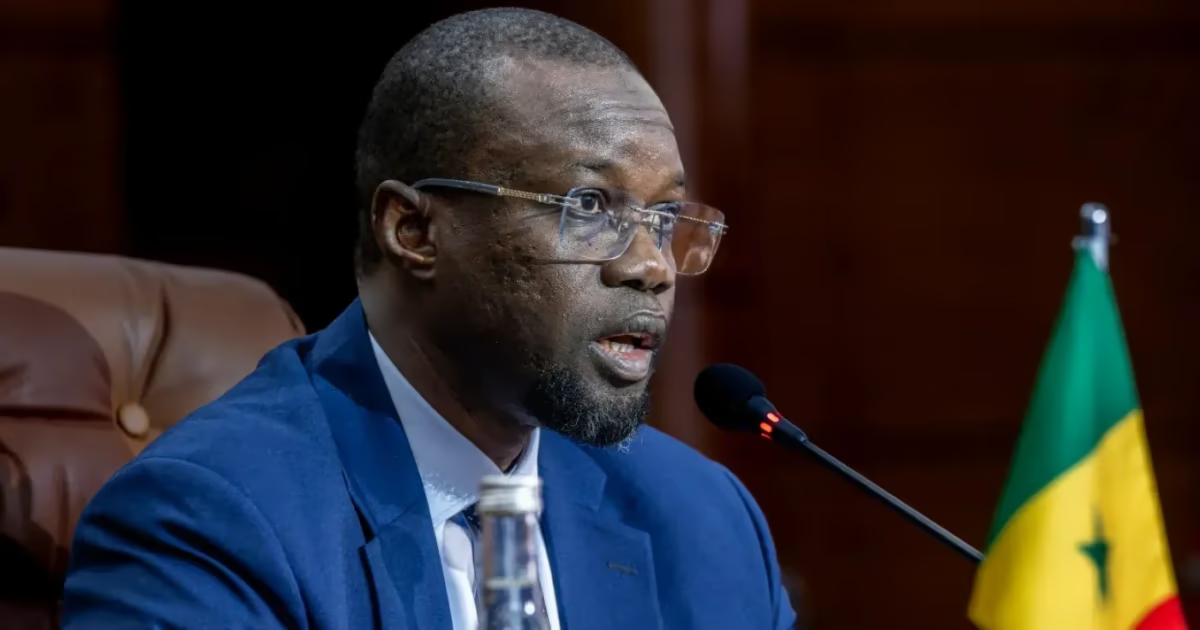
Ousmane Sonko, President of the National Assembly, has delivered a candid assessment of Africa’s football landscape following the continent’s early exits at the 2026 World Cup.
The expansion of the World Cup has not masked the systemic weaknesses plaguing African football, Sonko argues. While more African nations participated than ever before, the continent’s early departures from the tournament have exposed deeper issues in management, team administration, and discipline—areas he insists must be urgently addressed.
What the World Cup revealed about African football
Sonko emphasized that the increased number of African teams in the tournament was not a special concession but a direct result of FIFA’s decision to broaden the competition. He cautioned against attributing Africa’s lackluster performances to luck or external factors, stressing instead that the continent’s challenges are rooted in internal structural shortcomings.
« The 2026 World Cup has served as a stark reminder of the persistent weaknesses in African football, » Sonko stated. « We cannot continue to blame the system when our own shortcomings in organization and leadership hold us back. » He pointed to the case of Senegal, a team with undeniable talent, as an example of how poor preparation and internal disorganization can derail even the most promising squads.
Beyond talent: the missing pieces
While Sonko acknowledged the competitive spirit of the victors, he remained firm on his critique of African football’s broader struggles. « Some of the teams still in the tournament today are no stronger than the African sides that fell early, » he noted. « The difference lies in our inability to harness our potential effectively. »
The leader of Pastef/Les Patriotes called for a complete overhaul in how football is managed across the continent, urging stakeholders to prioritize professionalism, accountability, and strategic planning. His remarks come at a critical juncture, as African football grapples with the dual pressures of high expectations and limited progress.