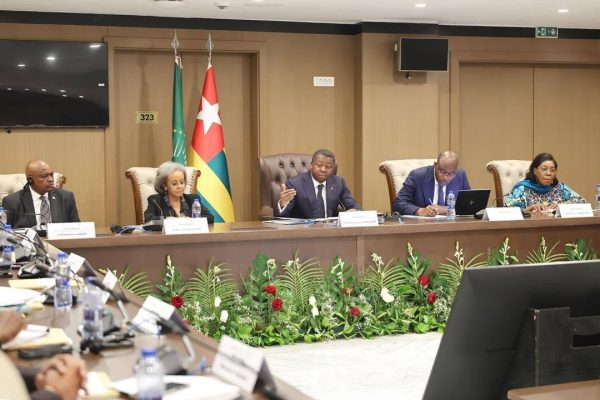
Lomé hosted a pivotal high-level gathering on June 8, 2026, bringing together key African and international stakeholders to address the escalating crisis in eastern Democratic Republic of the Congo (DRC) and the broader Great Lakes region. Chaired by Faure Essozimna Gnassingbé, the African Union’s appointed mediator, the meeting focused on a critical objective: streamlining fragmented peace initiatives into a cohesive, unified strategy.
The roundtable convened African Union facilitators alongside representatives from the United Nations, Eastern African Community (EAC), Economic Community of Central African States (ECCAS), Southern African Development Community (SADC), International Conference on the Great Lakes Region (ICGLR), and the International Committee of the Red Cross (ICRC). Their collective presence underscored the intricate web of regional frameworks, institutional mandates, and parallel diplomatic endeavors woven into the Congolese conflict.
A structured mediation framework takes shape
This biannual meeting followed an earlier session held in Lomé in January 2026, where participants laid the groundwork for a more coherent mediation architecture. Gnassingbé highlighted measurable progress since then, particularly in organizing the mediation structure internally. The shift in focus is clear: moving beyond the sheer volume of initiatives to ensuring they are clearer, more aligned, and more impactful on the ground.
This reframing addresses a persistent challenge in prolonged crises: overlapping efforts by multiple actors often lack sufficient coordination, diluting the effectiveness of diplomatic interventions. The Lomé talks reinforced the need to streamline these processes, eliminating redundancy while preserving the integrity of each stakeholder’s role.
Championing African solutions for lasting stability
Gnassingbé reaffirmed his commitment to advancing the mediation agenda, stressing the urgency of sustained collective action to stabilize eastern DRC. With armed violence and civilian suffering persisting, he championed an inclusive dialogue as the cornerstone of his approach—a strategy rooted in African-led solutions but open to collaboration with broader international initiatives.
The mediator’s stance aims to prevent duplication of efforts and bolster the credibility of the peace process. Participants praised his leadership, noting that it fostered renewed trust among actors and harmonized their approaches. Success, they agreed, hinges on a transparent architecture, clearly defined responsibilities, and rigorous tracking of commitments.
Actionable roadmap for the next six months
The Lomé deliberations yielded tangible outcomes. Delegates agreed to deepen coordination between the Mediator’s Office, the facilitators’ panel, the African Union Commission, and the independent joint secretariat. A key priority emerged: strengthening Africa’s structured contribution to parallel peace processes, including those in Washington and Doha, to enhance regional ownership and implementation.
Additionally, states and organizations were urged to intensify cooperation within the framework agreed upon in Lomé on January 17, 2026. A concrete action plan is now expected within two weeks, translating these resolutions into measurable steps.
Lomé emerges as a diplomatic hub for regional peace
The summit reinforced Lomé’s growing prominence as a diplomatic hub for DRC-related discussions. The Togolese capital is increasingly positioned as a convergence point for negotiations aimed at restoring peace in the Great Lakes.
Yet the true test lies ahead: whether this renewed commitment to coordination will translate into tangible progress on the ground. In a crisis as volatile as this one, the true measure of mediation success isn’t found in declarations—but in its ability to keep stakeholders engaged, aligned, and advancing toward a shared vision.