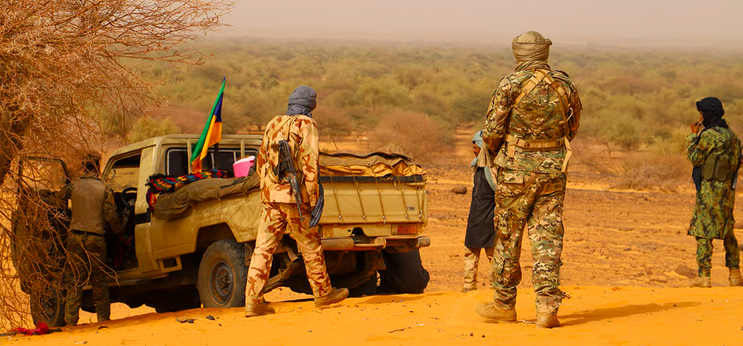
In late 2025, a staggering $50 million ransom payment—orchestrated to secure the release of foreign hostages in Mali—has emerged as a turning point in the financing strategies of Al-Qaïda-linked militants across the Sahel. According to a confidential United Nations report dated August 10, 2026, the funds not only fueled the rapid expansion of the Jama’at Nusrat al-Islam wal-Muslimin (JNIM) but also channeled resources back to the group’s central command in the Maghreb and its Yemeni affiliate.
The exact identity of the hostages and the payers remains undisclosed. However, regional intelligence sources confirm that the transaction involved the liberation of three individuals—an Emirati national, a Pakistani, and an Iranian—all held by JNIM-affiliated factions. While United Arab Emirates officials declined to comment on the specifics, they reiterated their commitment to combating terrorism and disrupting extremist financing networks.
The UN report highlights that the majority of the funds were distributed among Sahelian katibas—local units operating under the JNIM umbrella. Investigators note that these resources played a pivotal role in financing the group’s intensified military campaigns across Mali, where JNIM now commands an estimated 3,500 to 4,000 fighters. In April 2026, militants launched a bold assault on the capital, Bamako, resulting in the death of the country’s Defense Minister. Just two months later, the group publicly offered millions of euros for information leading to the capture of the Malian President.
Security analysts suggest that typical ransom demands for foreign hostages in the region range between $4 million and $6 million. The UN report underscores how JNIM exploits kidnappings not only as a lucrative revenue stream but also as a psychological weapon to erode public trust in state security institutions. By leveraging these tactics, the group continues to pose a formidable challenge to regional stability and international counterterrorism efforts.