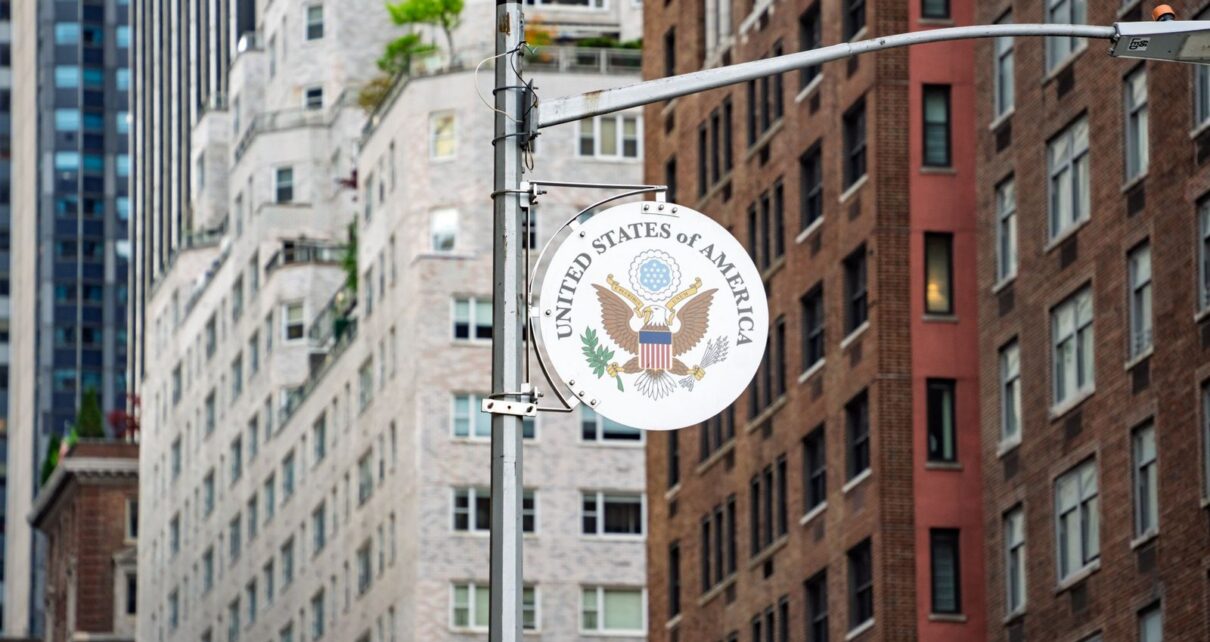
Securing a US visa from Bamako is no longer a straightforward process. American consular authorities have shifted the issuance of visas for Malian applicants to Dakar, making Senegal’s capital the mandatory transit point for those seeking entry to the United States. This change follows months of strained diplomatic relations between Washington and Mali’s ruling junta, reshaping consular flows across West Africa.
Regional impact of the consular shift
Malian applicants must now travel to Dakar for biometric data collection and interviews. The US consular section in Senegal will handle the increased workload, absorbing a surge of applications from its neighboring Sahelian country. This decision aligns with a broader recalibration of American diplomatic presence in West Africa, where several embassies have scaled back operations following recent coups in Mali, Burkina Faso, and Niger.
The financial burden on Malian applicants is twofold. Travel costs—whether by air or road—accommodation during processing, and standard consular fees add up. This economic hurdle risks deepening social disparities in mobility, effectively limiting access to the US to wealthier or well-connected individuals. Students, researchers, and business professionals are among the most affected by this enforced procedural shift.
Dakar emerges as a strengthened diplomatic hub
The decision to route Malian visa applications through Dakar is deliberate. Senegal remains one of the few West African diplomatic posts where the United States maintains a robust operational footprint, complete with reliable consular services and secure infrastructure. As a long-standing US partner and recipient of development aid, Senegal reinforces its position as a regional diplomatic hub. The city already hosts multiple consular missions handling cross-border services for European and Asian countries.
This centralization in Dakar underscores Senegal’s role as a Western anchor in a shifting West Africa. It coincides with the growing alignment of the Sahel States Alliance—comprising Mali, Burkina Faso, and Niger—away from traditional partnerships and toward Moscow. The diplomatic divide now extends to the bureaucratic pathways traveled by ordinary citizens.
Politically driven mobility constraints
Washington cites security and service quality as key reasons for relocating visa processing. Since Bamako’s political crises, Western embassies have reduced non-essential staff or suspended certain functions. Visa processing is often one of the first operations to be relocated when security or diplomatic conditions deteriorate. This approach, previously tested in other African contexts, is becoming standard practice in the subregion.
For the Malian diaspora in the United States—estimated in the tens of thousands—this decision complicates family reunification and travel back home. Remittances from North America form a vital economic lifeline for Mali, and any reduction in mobility flows directly impacts this channel. Bilateral economic actors, particularly in trade and digital services, also fear a slowdown in the movement of skilled professionals.
The coming months will reveal whether Dakar’s consular section can handle the increased demand without significant delays. For Malians, the US visa process has quietly become a barometer of the ongoing geopolitical realignment across the Sahel. The new system is already fully operational for all affected visa categories.