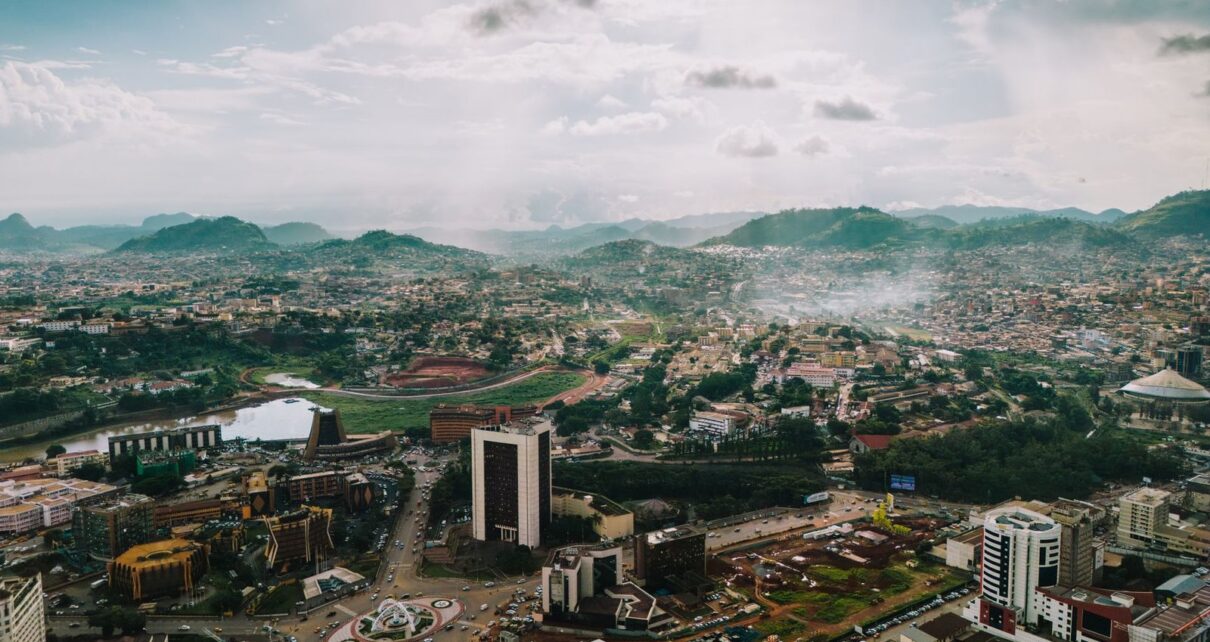
The extended quietude surrounding Paul Biya, Cameroon’s head of state since 1982, continues to dominate the political discourse in Yaoundé. The silence emanating from the Étoudi Palace regarding the president’s activities, coupled with a notable reduction in his public appearances, fosters an atmosphere of uncertainty. This unease now extends beyond political circles, with social media, news outlets, and diplomatic missions all repeatedly asking the same fundamental question: where is the president, and in what capacity is he performing his duties?
A nonagenarian head of state shrouded in persistent opacity
At 91 years old, Paul Biya has accumulated over four decades at the helm of the Cameroonian state apparatus. His remarkable longevity, often lauded by supporters as a guarantee of stability, now confronts a biological reality that the presidential entourage struggles to conceal. Whispers concerning his health, a recurring theme in recent years, intensified significantly during his most recent extended stays abroad, particularly in Europe. The brief official statements issued have done little to quell public curiosity.
The infrequency of official presidential engagements presents a tangible institutional challenge. The functionality of Cameroon’s executive branch is characterized by an extreme centralization of power around the president, who serves as the ultimate arbiter for major administrative, security, and budgetary decisions. Without the president’s signature, segments of the state machinery experience significant delays. Local observers note that several crucial economic and diplomatic files are currently awaiting decisions that are slow to materialize.
Public opinion gripped by doubt
Within Cameroonian society, apprehension is no longer confined to opposition factions. Even members of the ruling Cameroon People’s Democratic Movement (RDPC) privately acknowledge their bewilderment regarding the absence of a clear, guiding presidential address. The government, compelled to manage the aftermath in silence, has repeatedly attempted to refute the most alarming rumors, yet it has struggled to establish credible communication about the head of state’s daily affairs.
This pervasive opacity fuels intense speculation concerning a potential transition. Cameroon’s Constitution, amended in 2008, stipulates that in the event of a presidential vacancy, the interim leadership falls to the Senate President, currently Marcel Niat Njifenji, himself an octogenarian. This scenario, while legally outlined, remains politically sensitive given the delicate equilibrium among various factions within the regime. Supposed contenders for succession, positioned within administrative and military circles, are proceeding with extreme caution.
A regional stake for Central Africa
Beyond Cameroon’s borders, the uncertainty surrounding Paul Biya directly concerns neighboring capitals. Cameroon serves as the economic engine of the Central African Economic and Monetary Community (CEMAC), making a substantial contribution to the sub-region’s gross domestic product. Any destabilization in Yaoundé would have immediate repercussions on the Central African CFA franc, on critical trade routes supplying Chad and the Central African Republic, and on vital security cooperation efforts against Boko Haram in the Lake Chad Basin.
International partners, notably France, the United States, and China, are observing the situation with discreet but persistent attention. Paris, historically aligned with the regime, views Cameroon as a cornerstone of its remaining African policy. Beijing, for its part, has invested significantly in the country’s port and energy infrastructure, including the deep-water port of Kribi. These long-term commitments render Yaoundé’s institutional stability inseparable from broader external strategic interests.
Domestically, the Anglophone crisis in the North-West and South-West regions, which began in 2016, remains unresolved. The ongoing conflict with separatist movements, coupled with tensions in the Far North and persistent economic fragilities, demands consistent political oversight. The visibly absent head of state intensifies the perception of a government operating on autopilot, vulnerable to an incident that could accelerate unfolding events.
The crucial question remains: how long can this status quo persist without triggering an open crisis? The coming months could prove pivotal for Cameroon’s political trajectory and, by extension, for the entire sub-region. Paul Biya’s prolonged absence continues to generate widespread questions and apprehension within Cameroonian public opinion.