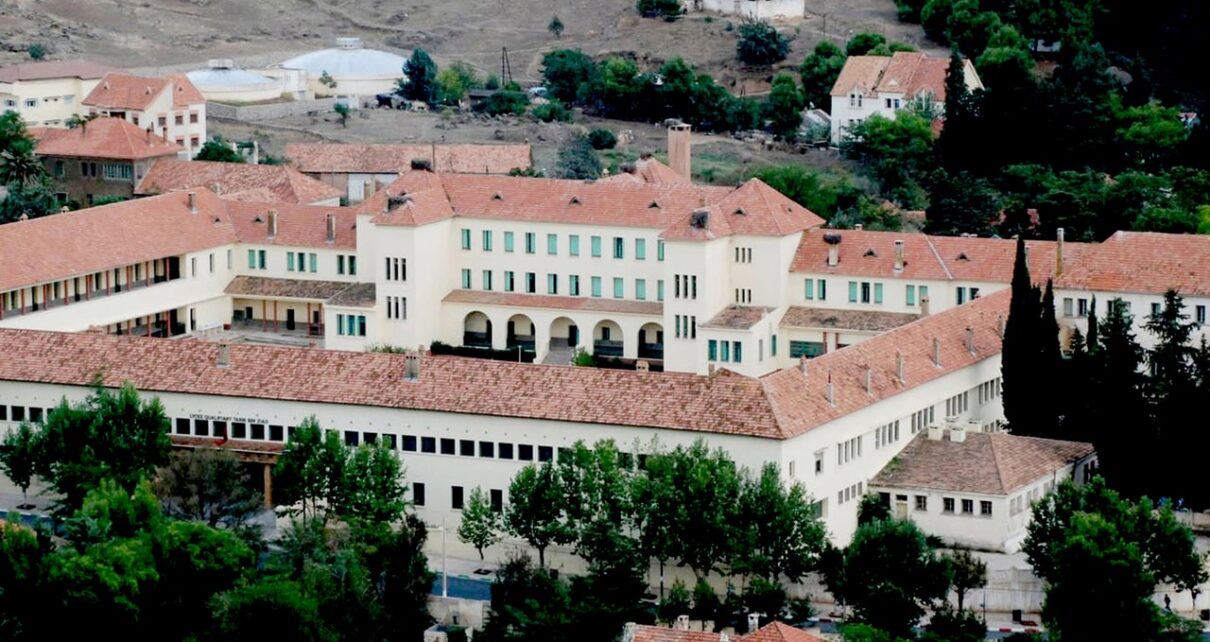
Nestled in the heart of the Middle Atlas, the town of Azrou has long stood as a silent witness to Morocco’s cultural and political transformations. But its most enduring legacy lies in the halls of a single institution: the former Collège Berbère d’Azrou. Established under French colonial rule, this school was designed to cultivate a francophone Amazigh elite—one that would serve the administration, the military, and the protectorate’s strategic interests. What unfolded, however, was a story far richer and more complex than its architects ever envisioned.
From colonial blueprint to nationalist cradle
The French Protectorate launched the Collège Berbère d’Azrou in 1927 with a clear objective: to create a cadre of educated Amazigh leaders who would remain distant from the nationalist fervor brewing in cities like Fès and Rabat. The curriculum emphasized French language fluency, technical skills, and loyalty to the colonial administration. Yet, the irony of history would soon reveal itself.
By the 1950s, many graduates had evolved from obedient students into ardent nationalists. Figures such as future ministers, magistrates, and high-ranking military officers emerged from its classrooms. Among them were thirteen generals who would later play pivotal roles in Morocco’s post-independence era—some serving King Mohammed V, others aligning with his successor, Hassan II. Their journey from colonial subjects to stewards of a sovereign nation underscores a profound shift in power dynamics.
A school that defied its own purpose
In Le collège d’Azrou: une élite berbère civile et militaire au Maroc, 1927-1959, scholar Mohamed Benhlal meticulously reconstructs the institution’s paradoxical legacy. Through interviews with alumni and archival research, Benhlal highlights how the school’s graduates became instrumental in shaping modern Morocco—despite the protectorate’s original intent.
The institution’s alumni list reads like a who’s who of Morocco’s political and military elite. Some graduates were directly involved in the 1971 and 1972 coups, reflecting the turbulent transitions of power during that era. Others rose to prominence in governance, contributing to the nation’s development as ministers, governors, and judges. Their careers spanned decades, leaving an indelible mark on the country’s institutions.
The enduring influence of Azrou’s alumni
The impact of Azrou’s graduates extends beyond politics and the military. Many became educators, engineers, and diplomats, embedding their experiences into Morocco’s social fabric. Their stories reveal a paradox: a school built to serve colonial interests inadvertently became a crucible for national consciousness and leadership.
The Collège Berbère d’Azrou’s transformation from a colonial tool to a forge of national identity is a testament to the unpredictability of history. Its legacy challenges simplistic narratives about education under foreign rule, illustrating how institutions can outgrow their original purposes to shape the future of a nation.
Today, the former college stands as a symbol of Morocco’s complex colonial past and its resilient path to sovereignty. Its halls, once filled with the echoes of French instruction, now resonate with the achievements of those who turned their education into a force for change.