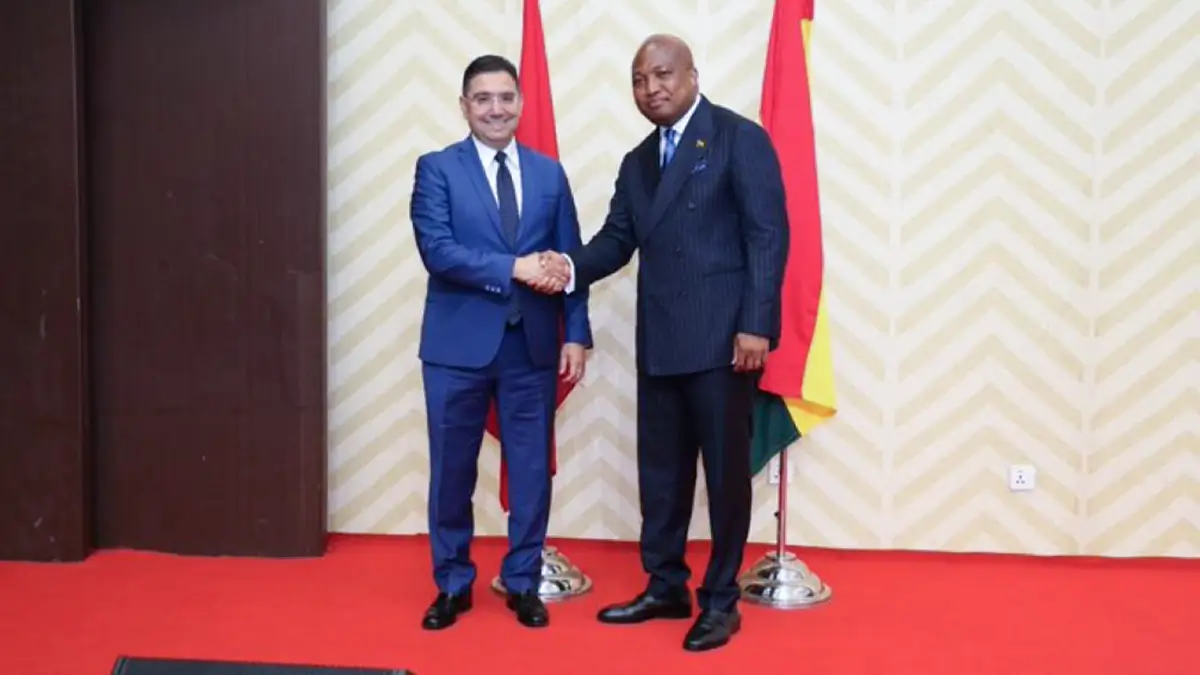
Bénin and Ghana reinforce support for Morocco’s Sahara autonomy plan
- Morocco’s Foreign Minister Nasser Bourita secured strong backing from Benin and Ghana during bilateral meetings to uphold Morocco’s territorial integrity.
- Both countries endorsed UN Security Council resolution 2797, aligning with Morocco’s autonomy proposal as the credible path to resolving the Western Sahara dispute.
In a series of high-level diplomatic engagements in Cotonou and Accra, Morocco’s top diplomat Nasser Bourita successfully rallied Bénin and Ghana to endorse the kingdom’s autonomy initiative for the Sahara region.
The Moroccan Foreign Minister held bilateral talks with his counterparts from both nations, emphasizing the need to preserve Morocco’s territorial sovereignty over the entire Sahara territory. The discussions culminated in formal declarations of support for the autonomy plan, which Rabat presents as the only realistic and sustainable solution to the decades-long conflict.
Both Bénin and Ghana reaffirmed their backing for UN Security Council Resolution 2797, which recognizes the Moroccan autonomy plan under Moroccan sovereignty as the foundation for a fair and lasting resolution.
Bénin
The seventh session of the Morocco-Bénin Joint Cooperation Commission, held in Cotonou on July 21, concluded with a joint statement in which the Republic of Bénin reiterated its unwavering support for Morocco’s territorial integrity and sovereignty, including over the Sahara region.
Foreign Minister Corinne Amori Brunet, leading Bénin’s delegation, praised the adoption of Resolution 2797, calling it a decisive step toward a mutually acceptable solution. She also announced plans for an upcoming visit to Dakhla to assess the region’s economic and social progress and explore partnership opportunities.
The next session of the joint commission is scheduled to take place in Dakhla, signaling a deepening of bilateral ties between Rabat and Cotonou.
Ghana
During the second session of the Morocco-Ghana Joint Cooperation Commission in Accra, Ghana formally aligned itself with the growing international recognition of Morocco’s sovereignty over the Western Sahara and endorsed the Moroccan autonomy plan as the most viable path to ending the nearly five-decade conflict.
Foreign Minister Samuel Okudzeto Ablakwa confirmed Ghana’s shift in policy, noting that Accra had withdrawn its support for the self-proclaimed Sahrawi Arab Democratic Republic (SADR) in January 2025 and now fully backs Morocco’s initiative. He described the autonomy plan as “the only realistic and durable basis” for resolving the dispute.
Ghana’s endorsement is particularly significant, as it had previously maintained ties with the Polisario Front. The move reflects Africa’s broader support for Morocco’s proposal, which has already gained backing from 116 countries—over 60% of UN member states.
Beyond political alignment, the talks in Accra underscored the potential for enhanced economic cooperation. Both countries agreed to promote trade missions, business forums, and sector-specific trade fairs to boost bilateral commerce and strengthen Ghana’s trade balance. A Morocco-Ghana Economic and Investment Forum was also announced, with meetings to alternate between the two nations.
Agriculture emerged as a key area of collaboration, with Moroccan fertilizer exports from the OCP Group expected to improve Ghana’s cocoa yields and bolster food security. Ghana, in turn, reaffirmed its support for Morocco’s Atlantic Initiative, aimed at facilitating Sahelian countries’ access to global markets via the Atlantic Ocean, as well as its continued participation in the Nigeria-Morocco Atlantic Gas Pipeline project.