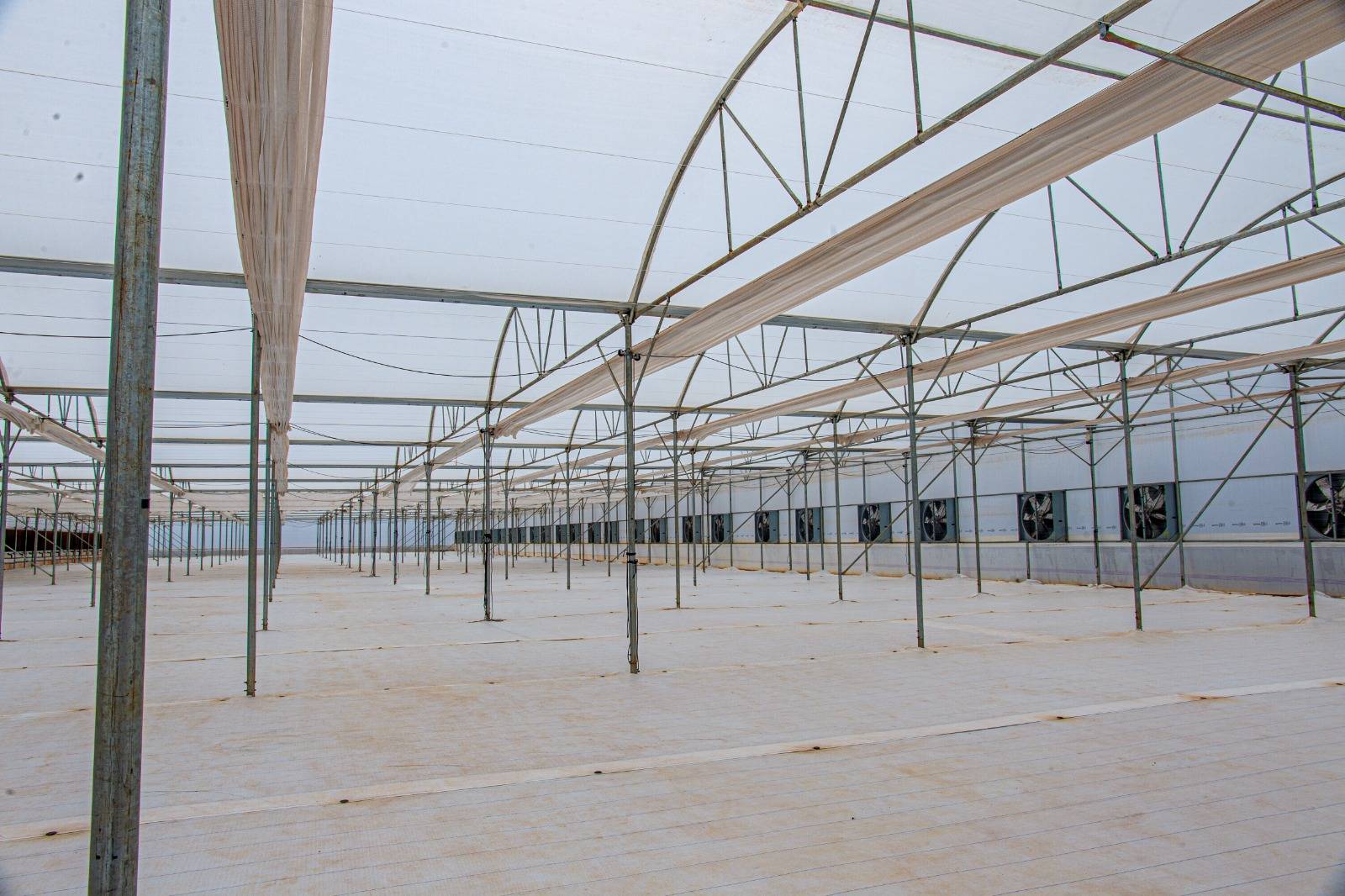
The Bénin government, led by President Romuald Wadagni, is revolutionizing its agricultural export sector through bold investments in high-tech seed production and advanced logistics. Two flagship projects—an industrial vitroplant facility in Glo-Djigbé and a state-of-the-art fruit terminal at Cotonou International Airport—are reshaping the country’s fruit export value chain while reinforcing economic sovereignty.
From subsistence farming to agro-industrial powerhouse
For decades, Bénin’s agricultural sector thrived on tradition but lagged in technology and efficiency. Exports primarily consisted of unprocessed, low-value produce, while post-harvest losses and logistical bottlenecks drained potential profits. Today, a strategic pivot is underway. By focusing on high-demand fruits like pineapple, cashew, and mango, the government is targeting lucrative global markets with stringent quality standards.
The shift is more than agricultural—it’s industrial. Through the Projet d’Appui à la Compétitivité des Filières Agricoles et à la Diversification des Exportations (PACOFIDE), Bénin is transitioning from subsistence farming to a competitive agro-industry capable of capturing added value at every stage. The goal: higher export revenues, sustainable farmer incomes, and skilled job creation in technologically advanced infrastructure.
Glo-Djigbé: Africa’s next high-tech seed production hub
At the heart of this transformation lies the Glo-Djigbé Special Economic Zone (SEZ), home to a cutting-edge vitroplant production unit nearing completion. With an annual capacity of 13.5 million disease-resistant, high-yield plants, this facility redefines agricultural innovation in West Africa.
Why it matters:
- For farmers: Access to certified, uniform, and high-performance planting material, eliminating the unpredictability of traditional seeds. These vitroplants are engineered for resistance to pests and diseases while meeting international quality benchmarks.
- For the economy: Increased yields per hectare without expanding farmland, reducing production costs and boosting competitiveness against regional rivals.
To ensure seamless adoption, 1,000 hectares of the former Glo-Djigbé airport site are being developed into elite demonstration fields. Here, new pineapple varieties undergo rigorous testing before mass distribution, guaranteeing farmers maximum return on investment and reinforcing confidence in the technology.
Cotonou’s fruit terminal: the cold chain breakthrough
Even the finest produce loses value if it spoils before reaching global markets. Recognizing this, the PACOFIDE initiative includes the construction of a modern fruit terminal at Cotonou’s Bernardin Gantin International Airport. This logistical marvel features refrigerated storage, freezing units, and customs processing zones—all designed to handle up to 736 pallets of fresh fruit simultaneously.
The terminal’s impact is immediate:
- Reduced spoilage: By maintaining the cold chain from farm to flight, post-harvest losses plummet, ensuring fruits like sugar loaf pineapple and leafy vegetables arrive in European and Asian markets with peak freshness.
- Higher profitability: Superior quality allows Bénin to command premium prices, strengthening its position in premium export segments.
A model of economic sovereignty in action
Minister of Agriculture, Livestock, and Fisheries Adin Yeton Bloukounon Goubalan recently oversaw a supervisory visit, confirming that both projects are on track. His remarks underscored the strategic vision behind these investments: « Seed technology is the bedrock of agricultural transformation. By mastering this sector, Bénin secures its competitiveness and reclaims control over its economic future. »
This integrated approach—bridging scientific research with end-to-end logistics—addresses decades of structural weaknesses. It also signals to international investors that Bénin is no longer just a supplier of raw materials but a reliable, high-tech partner in global agri-food chains.
Laying the foundation for a resilient, export-driven economy
The synergy between Glo-Djigbé’s high-tech seed production and Cotonou’s refrigerated logistics infrastructure marks a turning point. By controlling seed quality and cold-chain efficiency, Bénin ensures that the wealth generated by its land stays within national borders. This bold industrial and scientific leap is not just about increasing volumes—it’s about structurally transforming the economy. The green revolution in Bénin is not a distant promise; it’s an unfolding reality backed by technology, precision, and ambition.