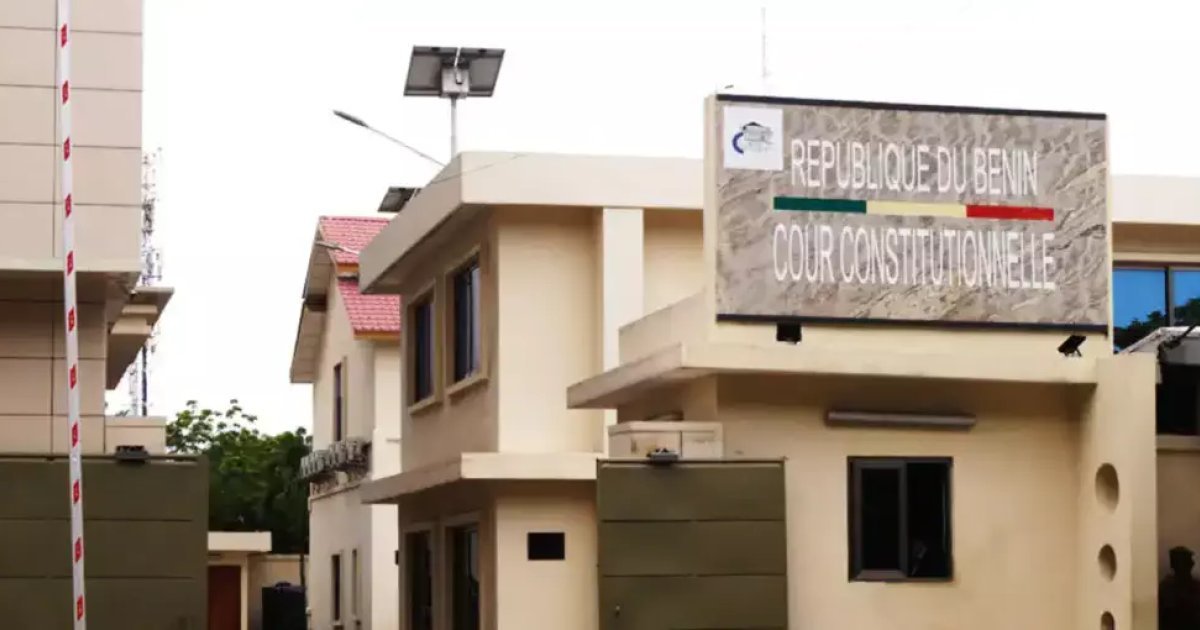
Constitutional Court examines lessons from April presidential vote
Five days of intensive analysis concluded Friday in Agoué as the Constitutional Court of Bénin wrapped up its post-election assessment of the April 12 presidential ballot.

The high-level gathering brought together constitutional judges and electoral experts to dissect every phase of the presidential election. Participants identified strengths in the process, pinpointed operational challenges, and mapped out concrete improvements for future voting cycles.
Vice-President of the Court, Nicolas Assogba, chaired the closing ceremony in place of President Dorothé Sossa, who was unable to attend. Assogba praised the depth and rigor of the discussions, declaring the workshop’s objectives fully met. He emphasized the necessity of systematic evaluation to enhance institutional performance, quoting management thinker Peter Drucker: “What cannot be measured cannot be improved.”
Key outcomes and next steps
Following days of deliberation, participants formulated targeted recommendations aimed at strengthening electoral procedures and solidifying the Court’s jurisprudential framework. Assogba announced the imminent creation of a dedicated committee to examine these findings in detail.
Once endorsed by the Court’s General Assembly, the recommendations will be incorporated into an updated electoral procedures manual. This document will serve as the definitive reference for all upcoming ballots in Bénin, ensuring greater consistency and legal certainty.
Commitment to transparency and citizen trust
In his closing remarks, Assogba urged the assembled judges to maintain their momentum of innovation and continuous improvement. He stressed that such efforts are vital to bolstering the Court’s credibility and reinforcing public confidence in the electoral system. By embracing these principles, the Constitutional Court is taking decisive steps to prepare for future elections with unwavering transparency and robust legal safeguards.