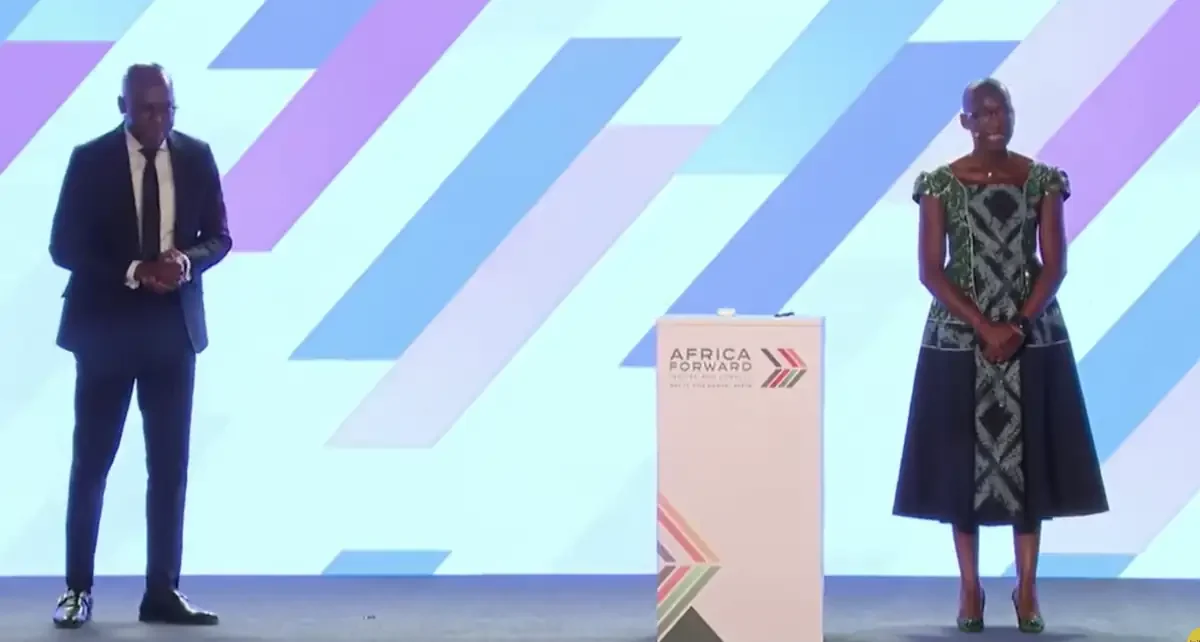
The Chief Executive Officer of SIPI-BENIN S.A, Létondji Beheton, and the Managing Director of CDC Bénin, Maryse Lokossou, took the stage at Africa Forward | Inspire & Connect to unveil Benin’s industrial and financial blueprint for global investors. The event, backed by key French and African institutions, provided a platform to highlight investment prospects in Benin’s growing economy.
During the forum, the two Beninese leaders outlined a strategy centered on local raw material processing, industrialization, and long-term capital mobilization. A focal point of their presentation was the Glo-Djigbé Industrial Zone (GDIZ), a flagship project in Benin’s economic transformation agenda.
GDIZ: the backbone of Benin’s industrial rise
Létondji Beheton shared insights into his career in international finance before returning to Benin in 2016 to contribute to improving the business climate and spearheading industrial projects. He emphasized the rapid expansion of the GDIZ, a special economic zone spanning 1,640 hectares. With over 20 operational factories and an estimated 25,000 jobs created, the zone is already making a tangible impact.
The SIPI-BENIN S.A CEO acknowledged ongoing challenges in African industrialization, including energy costs, limited access to competitive financing, and logistical infrastructure gaps. To address these hurdles, Benin is channeling investments into industrial, energy, and logistics infrastructure to boost local processing of agricultural commodities like cotton and cashew nuts—both of which are key export products for the country.
CDC Bénin mobilizes long-term capital for economic transformation
Maryse Lokossou, leading CDC Bénin, described the state-backed sovereign wealth fund’s mission to finance strategic projects. Established in 2018, the institution plays a pivotal role in mobilizing long-term capital to support sustainable economic growth in Benin.
She highlighted the fund’s investments in cotton and cashew processing, which have already increased the share of locally processed raw materials before export. Recent data shows that 13% of Benin’s raw cotton is now processed domestically, while nearly half of exported cashew nuts undergo local transformation. These efforts are expected to create more job opportunities for youth and strengthen industrial skills across the country.
Calling for global partnerships in industrial development
The Beninese delegation urged international investors to seize opportunities in Benin’s industrial and infrastructure sectors. Maryse Lokossou stressed CDC Bénin’s readiness to mitigate investment risks for project developers, while Létondji Beheton called for faster capital inflows to accelerate the country’s industrial ambitions.
Both leaders underscored the existence of a robust ecosystem combining industrial infrastructure, financial support, and strong government backing. By participating in this event, Benin aims to enhance its visibility among foreign investors and attract fresh capital into key sectors such as industrial processing, energy, and infrastructure development.