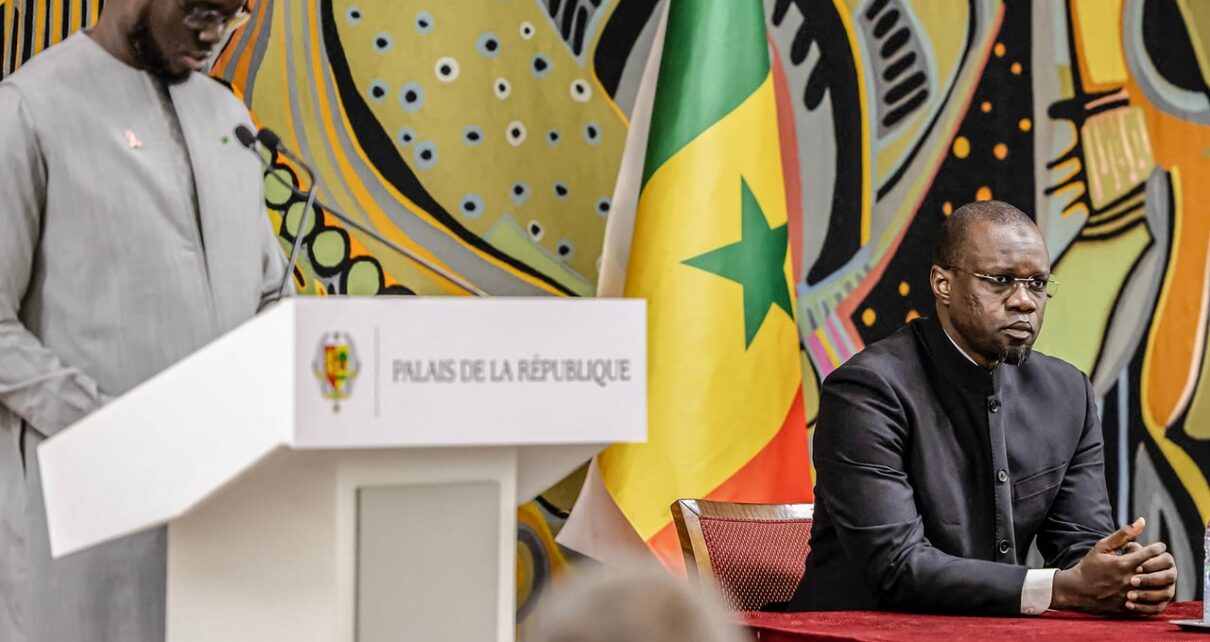

In a bold move reshaping Senegal’s political landscape, President Bassirou Diomaye Faye has vowed to redistribute executive powers through sweeping constitutional reforms. His declarations, made during a press briefing on National Day last year, signaled a clear intent to shift authority away from the presidency toward strengthened institutions—including a powerful Prime Minister, reinforced ministers, and independent directors-general. Yet political observers argue these changes could inadvertently bolster the influence of Ousmane Sonko, a key opposition figure and former presidential candidate.
Speaking on April 4, 2025, President Faye emphasized his commitment to avoiding a concentration of power under a single office. “I want strong directors-general, strong ministers, a super-strong Prime Minister. I don’t want to be the kind of president who holds all the power,” he stated. While the reforms aim to create a more balanced governance structure, analysts suggest they may inadvertently pave the way for Sonko’s Pastef party to exert greater control over critical institutions.
Why the reforms favor Ousmane Sonko’s rise
The proposed constitutional amendments are expected to decentralize decision-making, granting Parliament and independent bodies greater autonomy. This shift could allow opposition leaders like Sonko—who remains a prominent but polarizing figure—to leverage institutional influence in ways previously constrained by centralized authority.
Key areas of advantage for Sonko
- Enhanced parliamentary influence: With a stronger Prime Minister role, Sonko’s party could gain leverage in shaping policy agendas, particularly if the opposition secures key legislative positions.
- Control over governance appointments: The reforms may open doors for Sonko’s allies to occupy influential director-general and ministerial roles, traditionally reserved for presidential appointees.
- Institutional legitimacy: By reducing the presidency’s dominance, the reforms could legitimize opposition-led initiatives, giving Sonko’s movement a platform to implement its agenda through formal channels.
Critics warn that while decentralization promotes transparency, it also risks fragmenting governance, potentially empowering figures like Sonko who have historically challenged the establishment. His Pastef party, already a dominant force in Senegal’s political discourse, could emerge as a central player in the new institutional framework.
As Senegal navigates this transformative period, the balance of power hangs in the balance. Will these reforms truly democratize governance, or will they create new avenues for opposition figures like Sonko to consolidate influence? The answer may redefine the country’s political future.