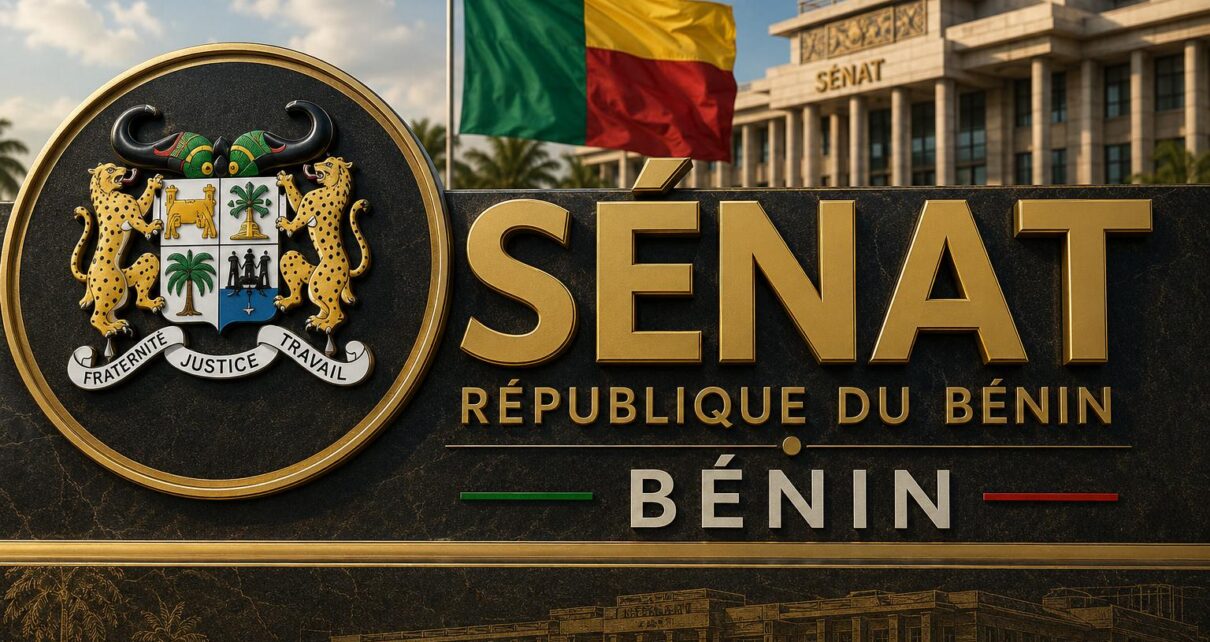
The digital sphere in Benin has been abuzz with speculation following the election of former President Patrice Talon as head of the Senate. While some voices suggest a hidden continuation of influence, a closer look at the constitutional framework reveals a different reality: a strict separation of powers where the Executive retains full authority over a strengthened Legislative branch.
Public discourse often accelerates when a prominent figure assumes a key institutional role. The appointment of an ex-head of state to lead the upper house of Parliament has triggered a wave of interpretations and rushed conclusions. To separate fact from fiction, it’s essential to ground the analysis in constitutional law and observe the mechanics of national governance with precision.
Leadership transition: the unchallenged authority of the Executive
At the heart of the debate lies a fundamental truth: the transfer of power at the highest level of the State has been complete and irreversible. According to the Constitution, the elected head of state now holds sole responsibility for executing all executive functions. This includes defining and implementing national policy, appointing government members, assigning their duties, and overseeing public administration.
Former President Patrice Talon’s transition to the Senate does not imply any lingering control over governance. The sitting president remains the head of the Council of Ministers, commander-in-chief of the armed forces, and guarantor of public administration. Major policy decisions, administrative oversight, and public project execution remain firmly within the remit of the current head of state.
The Senate: a legislative body, not a second executive
A common misconception is to view the Senate president as a co-decision maker within the Executive. This perception is incorrect. The Senate functions exclusively as a legislative and representative body, with no executive powers whatsoever.
The Senate president does not participate in cabinet meetings or influence the drafting of implementing decrees. While Parliament approves the national budget, the Senate president has no authority over its execution or public spending. The chamber’s role is confined to legislative work, oversight of government actions, second readings of bills, and representing local authorities. Its president leads legislative sessions—not ministerial decisions or executive directives.
Presidential vs. parliamentary systems: Benin is not Togo
Another recurring comparison draws parallels between Benin’s institutional reforms and those in neighboring countries like Togo. This analogy, however, falls short under legal scrutiny.
In Togo, constitutional changes have shifted the country toward a parliamentary system where the Prime Minister—drawn from the majority in the Assembly—holds de facto executive power. Benin, in contrast, remains firmly rooted in a presidential system. The head of state derives legitimacy from direct universal suffrage and retains exclusive executive authority. The introduction of the Senate strengthens the bicameral legislative process but does not alter the regime’s nature or the balance of power in favor of the Legislature.
The Senate as a pillar of democratic maturity
Beyond the noise of political interpretation, the creation of the Senate responds to a pressing need for democratic depth. Its members—comprising former senior officials, seasoned politicians, and qualified experts—form an institution of temperance and constitutional reflection.
In a political landscape often swayed by electoral fervor, the Senate serves as an institutional forum for reasoned debate. It brings elevated scrutiny to legislative proposals, safeguards national unity, and provides a permanent regulatory framework at the apex of the State. By contributing his experience to this body, former President Patrice Talon assumes a role focused on guidance, counsel, and preservation of republican values—distinct from the day-to-day management of public affairs.
A milestone in institutional consolidation
The establishment of the Senate and the clear delineation of roles it entails mark a significant step in Benin’s democratic consolidation. Far from the rumors of overlapping functions, the constitutional reality affirms a clean separation: executive leadership rests with the President of the Republic, while the Senate embodies legislative wisdom and republican vigilance. It is through this constitutional rigor that public debate gains clarity and serenity.