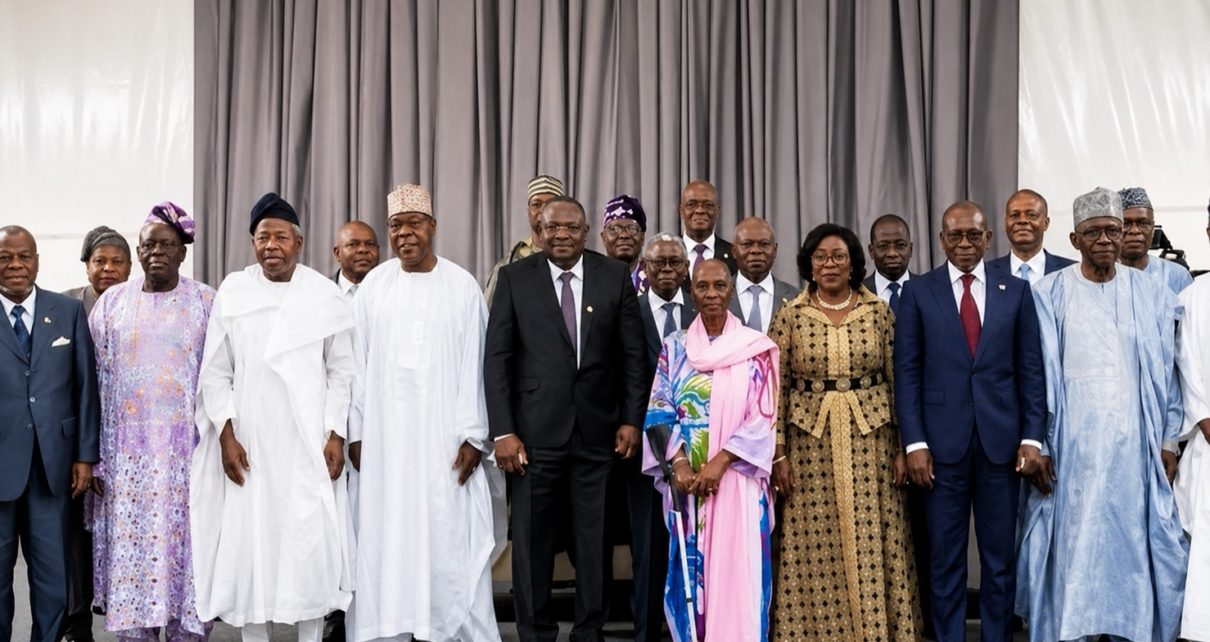
The official establishment of Benin’s first Senate on July 30, 2026, followed by the election of former President Patrice Talon as its president on August 6, marks a pivotal moment in the country’s institutional evolution. Born from the constitutional revision of December 17, 2025, this second parliamentary chamber introduces a new dynamic to Benin’s political architecture.
Institutional reality versus political speculation
While some critics portray the Senate as a mere extension of Patrice Talon’s influence a ‘shadow government’ enabling him to retain power beyond his presidency this interpretation warrants closer examination against constitutional provisions. Political influence does not equate to institutional power, nor does it transform a legislative body into an executive one.
A constitutionally anchored institution
The Senate is not a personal creation of Patrice Talon but a direct product of the 2025 constitutional amendment. The revised Constitution explicitly establishes a bicameral Parliament, defining the Senate’s composition, functions, and operational framework. Its existence hinges on constitutional mandate, not individual personalities.
This distinction is critical: while debates on the Senate’s utility, structure, or powers remain valid, framing it as a tool for ex-President Talon to govern from behind the scenes lacks legal basis. The Constitution outlines clear boundaries for the Senate’s authority.
The Senate’s powers, while substantial, are meticulously delineated. It does not assume executive functions, nor does it replace the presidency or government. The 2025 reforms maintain a strict separation of powers, with the presidency retaining executive authority and the Senate operating within the legislative sphere.
Legislative oversight with defined limits
The Constitution grants the Senate significant legislative oversight, particularly for constitutional laws, electoral statutes, and political party regulations. These texts require the Senate’s non-objection before enactment. However, this power is not absolute: objections require a two-thirds majority, and legislative silence within a set period is interpreted as tacit approval. Additionally, the Senate may request a second review of certain laws, excluding finance bills or program laws, further emphasizing its role as a deliberative body rather than a governing one.
A chamber of experience and mediation
Unique among Beninese institutions, the Senate’s composition includes ex-officio members from high-ranking institutional backgrounds and former defense/security officials. When necessary, additional members are appointed to meet the constitutional minimum of 25 senators. This structure positions the Senate as a potential forum for crisis prevention, dialogue, and consensus-building complementing the majoritarian dynamics of the National Assembly.
Its mandate to safeguard national unity, democratic stability, and political ethics underscores its role as a regulatory body, not an alternative government. The Senate’s function is to refine legislation and mediate tensions, not to execute policy or administer the state.
The paradox of influence: politics versus constitutional authority
Critics argue that Patrice Talon’s presidency of the Senate grants him ongoing political influence a valid point, given his extensive experience and networks. However, conflating political influence with constitutional authority distorts reality. The Senate’s powers derive from the Constitution, not from its president’s past role.
The relevant question is not whether Talon wields influence, but whether the Senate’s structure or actions enable him to circumvent the separation of powers. The answer, grounded in constitutional text, is a definitive no. The presidency, government, and Senate each operate within distinct, legally defined spheres.
Continuity without institutional capture
The transition from Patrice Talon to Romuald Wadagni as president in May 2026 reflects political continuity, with Wadagni securing over 94% of the vote in April’s election. While this continuity may invite political critique, it does not constitute institutional capture. Democracies often experience policy continuity across leadership changes, provided institutions function within their constitutional bounds.
The true test for the Senate lies in its daily operations: Does it exercise its oversight role without becoming a rubber-stamp body? Can it foster constructive dialogue with the National Assembly and government? Will it deploy its second-review power judiciously? Most critically, will its members uphold the constitutional obligation of political neutrality, avoiding partisan activism?
Beyond speculation: evaluating institutional performance
The Senate’s legacy will be determined by its actions, not assumptions. Its legitimacy hinges on whether it enhances legislative quality, stabilizes political processes, and prevents institutional crises all while respecting the Constitution. Patrice Talon’s presidency of the Senate does not redefine his role; it merely reflects his continued engagement in Benin’s public life within a new institutional framework.
The separation of powers remains intact: the presidency leads the executive, the government implements policy, and the Senate legislates and regulates. The Senate’s success or failure will be measured by its adherence to this division not by the prominence of its president.