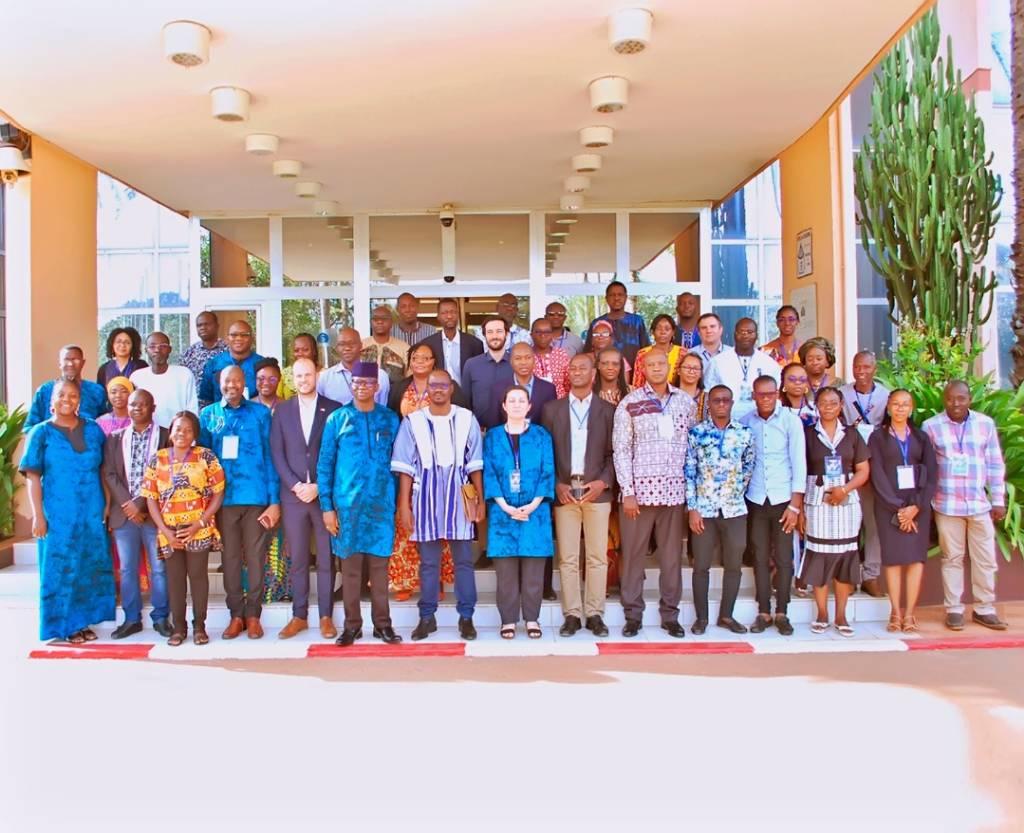

Burkina Faso research partnership site
Essential facts about Burkina Faso’s research partnership
The Burkina Faso research partnership primarily involves the Muraz Centre of the National Institute of Public Health (INSP) in Bobo-Dioulasso and the International Research Centre for Health (CRIS/UO) at Joseph Ki-Zerbo University in Ouagadougou.
- Key stakeholders: Burkina Faso Ministry of Health, Muraz Centre/INSP, CRIS, PCCEI UMR 1058 Montpellier, French Embassy in Burkina Faso, ANRS MIE
- Core activities: strengthening national and international collaborations, supporting young researchers, assisting Burkinabè teams in responding to project calls, and enhancing Muraz Centre/INSP and CRIS capabilities
- Research priorities: HIV, viral hepatitis, human papillomavirus, tuberculosis, Covid-19, and arboviral diseases
In brief
Established
2001
Leaders
Dr Dramane Kania (Burkina Faso Coordinator), Prof. Nicolas Nagot (France Coordinator)
Partnership headquarters
Muraz Centre/INSP, Bobo-Dioulasso, and CRIS/UO, Ouagadougou, Burkina Faso
Partnership origins
Franco-Burkinabè collaborations in health research began as early as 1999. The formal partnership was established in 2001 and officially recognized in 2006 through a framework agreement between ANRS and Burkina Faso’s Ministry of Health, centered around the Muraz Centre in Bobo-Dioulasso.
Collaboration later expanded to include the International Research Centre for Health (CRIS/UO) at Joseph Ki-Zerbo University (UJKZ) in Ouagadougou.
In recent years, the Burkina Faso partnership site has broadened its focus to include emerging and re-emerging infectious diseases, aligning with national and regional public health priorities. Research is conducted using the One Health approach within a global health context.
Muraz Centre and CRIS
The Muraz Centre in Bobo-Dioulasso is a technical division of the National Institute of Public Health (INSP). Its mission encompasses research, training, and expertise across four key areas: infectious diseases, epidemic-prone diseases, sexual and reproductive health, and health systems policy and management. The Centre features advanced laboratories for infectious disease diagnosis and innovation, as well as a methodological and data management research centre.
The International Research Centre for Health (CRIS/UO) is a research and training unit within Joseph Ki-Zerbo University (UJKZ) in Ouagadougou. Its mission is to establish an international health research platform at UJKZ and train young health professionals in medical research. Research activities address public health challenges related to HIV/AIDS and global health.
Key milestones in the Franco-Burkinabè partnership

Partnership governance and team
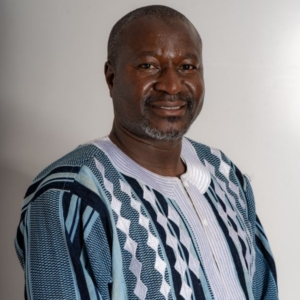
Burkina Faso Coordinator: Dr Dramane Kania
Muraz Centre/INSP, Bobo-Dioulasso, Burkina Faso

France Coordinator: Prof. Nicolas Nagot
PCCEI/UMR1058, Inserm, EFS, University of Montpellier, University of the Antilles, France

Deputy Coordinator: Dr Désiré Dahourou
Institute for Research in Health Sciences (IRSS), Bobo-Dioulasso, Burkina Faso

Honorary Coordinator: Prof. Nicolas Meda
CRIS/UO, Ouagadougou, Burkina Faso
The partnership was previously led by Prof. Nicolas Meda (Burkina Faso Coordinator) and Prof. Philippe Van de Perre (France Coordinator).
Collaborators (non-exhaustive list)
Numerous partners including universities, NGOs, ministries, research institutions, health facilities, and community organizations collaborate with the Muraz Centre and CRIS through the Burkina Faso partnership site. Additional institutional, financial, and project-specific partnerships also exist.
Main partnership activities
- Engagement with patient associations, health system actors, and policymakers during the development of new research projects to facilitate knowledge production and transfer
- Scientific engagement: organizing exchange days with research and health actors on specific themes aligned with Burkina Faso’s and the region’s priorities
- Expanding and strengthening collaborations at the national level (IRSS Nanoro, Nouna, CNRFP, CORUS, LCR, ONSP, etc.) and internationally with ANRS MIE’s international network, WHO, and others
- Continuing training and capacity building for young researchers and teams (project writing, policy notes, knowledge transfer, article writing)
- Supporting Burkinabè research teams in responding to project calls and implementing initiatives
- Enhancing the Muraz Centre/INSP’s technical platform to maintain high-quality research and upgrading CRIS infrastructure to provide adequate space for research coordination
Evolving research priorities
HIV, STIs, and co-infections with tuberculosis and viral hepatitis research
Since the 1990s, Franco-Burkinabè health research collaborations have focused on HIV prevention, diagnosis, and management.
Therapeutic trials have been conducted and continue today on mother-to-child transmission prevention (Kesho-Bora, Promise PEP, PREVENIR PEV, TRI MOM); treatment adherence and antiretroviral therapies (THILAO, MOBIDIP, 2LADY); tuberculosis diagnosis in children living with HIV (PAANTHER).
Research on HIV and STI prevention among key populations (Yérelon cohorts for sex workers and CohMSM for MSM) has evaluated the feasibility and operational effectiveness of behavioral and biomedical strategies.
Social sciences have explored the lived experiences of patients and access to care for women living with HIV.
Biological research has analyzed HIV transmission (sexual and mother-to-child), treatment resistance, viral genetic diversity, and the impact of HIV-tuberculosis co-infection.
Studies on viral hepatitis have revealed high prevalence of HBV and HCV with heterogeneous distribution across the country, leading to proposals for targeted intervention strategies (REVERSO).
Emerging infectious diseases (EID) research
New research priorities have emerged more recently, including arboviral diseases (ARBOFASO) and Covid-19, with studies evaluating treatments (COVERAGE Africa), diagnostics, understanding the virus’s impact, and adopting a One Health approach.
Current research priorities
Research activities supported by the Burkina Faso partnership site and its collaborators focus on HIV, viral hepatitis, human papillomavirus (HPV), tuberculosis, Covid-19, and arboviral diseases. Various research domains are engaged, including innovation, diagnostics, clinical research, fundamental research, public health, and social sciences. Specific areas include:
- Clinical research: therapeutic simplification strategies, cervical cancer diagnosis and management in people living with HIV, emerging disease treatment (Covid-19), diagnostic innovation (HBV)
- HIV across the life course: prevention of mother-to-child transmission, adolescence and transition to adulthood, aging
- Vulnerable populations: MSM*, sex workers, street children, drug users
- Hepatitis: epidemiology of hepatitis C and E, environmental impact (HBV and aflatoxin)
- Quadruple elimination of mother-to-child transmission (HIV, HBV, syphilis, Chagas disease)
- Emerging infectious diseases: dengue and other arboviral diseases, Covid-19, and epidemic preparedness
* men who have sex with men
** pre-exposure prophylaxis
*** sexually transmitted infections
Impact of the Burkina Faso partnership site
The partnership has strengthened the research capabilities of the Muraz Centre and other Burkinabè research teams, fostering scientific innovation, young researcher training, health policy development, and community engagement.
The partnership has strengthened the Muraz Centre, leading to its national recognition and integration in 2018 as a technical research division of the National Institute of Public Health (INSP). ANRS MIE has supported its equipment, including a cohort welcome facility, a P2 molecular virology laboratory, an immunology laboratory, and a computing centre.
In 2021, thanks to the partnership site, the Muraz Centre joined the AFROSCREEN network for SARS-CoV-2 and other pathogen variant sequencing, establishing a genomics platform and acquiring an Illumina MiniSeq sequencer.
The site has also enabled the creation of CRIS/UO, facilitating research coordination in Ouagadougou.
The Burkina Faso partnership collaborates with Nazi Boni University (UNB) and UJKZ to support master’s and PhD student training. This support has fostered the emergence of young researchers who are key drivers of infectious disease research and policy guidance in Burkina Faso.
Associated researchers participate in various national and international technical groups to develop recommendations. These include national committees for SARS-CoV-2 variant surveillance and HIV testing algorithm validation, as well as WHO working groups on HIV/hepatitis/STI therapies and breastfeeding.
The partnership also supports associations and community committees working against HIV and viral hepatitis in Burkina Faso. These actors contribute to scientific engagement and research projects, particularly those targeting vulnerable populations.
Despite geopolitical challenges, the partnership continues to unite research actors, highlight research achievements, and explore new opportunities for Burkina Faso and the region.