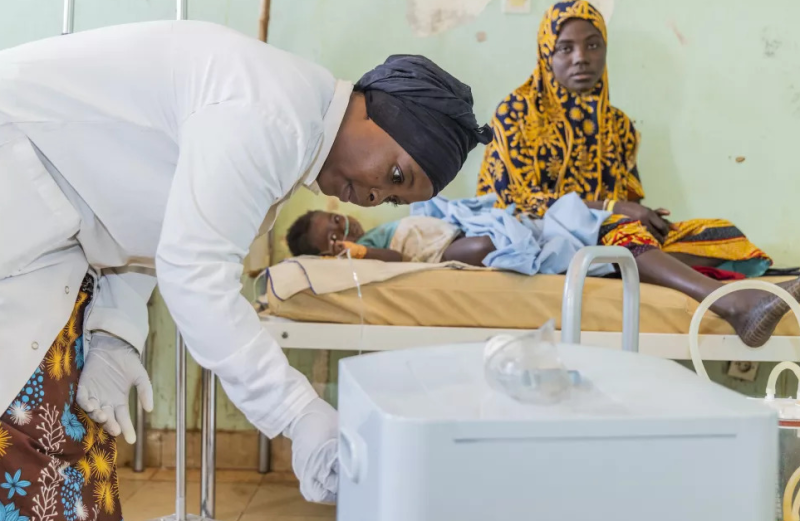
The Republic of Niger is advancing its healthcare system by establishing an integrated digital ecosystem, backed by a significant bilateral agreement with the United States. This landmark partnership, valued at $179.3 million over five years, combines American funding with local resource mobilization to enhance public health outcomes across the country.
a strategic investment in health security
Under this agreement, Washington will contribute $107.4 million to support critical health initiatives in Niger. The funding will target malaria eradication, maternal and child health improvements, and the strengthening of epidemiological surveillance and emergency response systems. The Nigerien government, in turn, has committed $71.9 million of its own funds, demonstrating a shared commitment to sustainable health development.
Beyond immediate health interventions, the partnership includes a $5 million allocation for global health security. This will enable the deployment of a comprehensive digital health ecosystem, featuring six interconnected information systems designed to streamline healthcare delivery. These systems will cover electronic medical records, laboratory and pharmacy management, epidemiological monitoring, health product inventory tracking, and the establishment of a national data warehouse.
early detection and rapid response
The initiative aims to bolster Niger’s capacity to detect and respond to health threats swiftly. By integrating these digital tools, health authorities can identify outbreaks early and implement containment measures before they escalate into larger crises. This proactive approach aligns with global best practices in epidemic preparedness and response.
a model for global health partnerships
Niger is not the only beneficiary of this U.S. strategy. A similar agreement, totaling $60.8 million, has been signed with the Dominican Republic. This parallel effort focuses on HIV/AIDS prevention and the implementation of a “7-1-7” surveillance system—a framework designed to detect and report health threats within seven days of identification, initiate investigations within one day, and complete responses within seven days.
Together, these agreements represent a combined investment of over $240 million, blending international support with domestic contributions. Such collaborations underscore the importance of global health security and the role of technology in safeguarding populations against emerging health risks.
key takeaways
- Total funding: $179.3 million over five years, combining U.S. and Nigerien resources.
- Focus areas: Malaria control, maternal and child health, epidemiological surveillance, and emergency response.
- Digital integration: Six systems for electronic health records, lab management, and data analytics.
- Global impact: Similar partnerships in other countries highlight a broader strategy for health security.