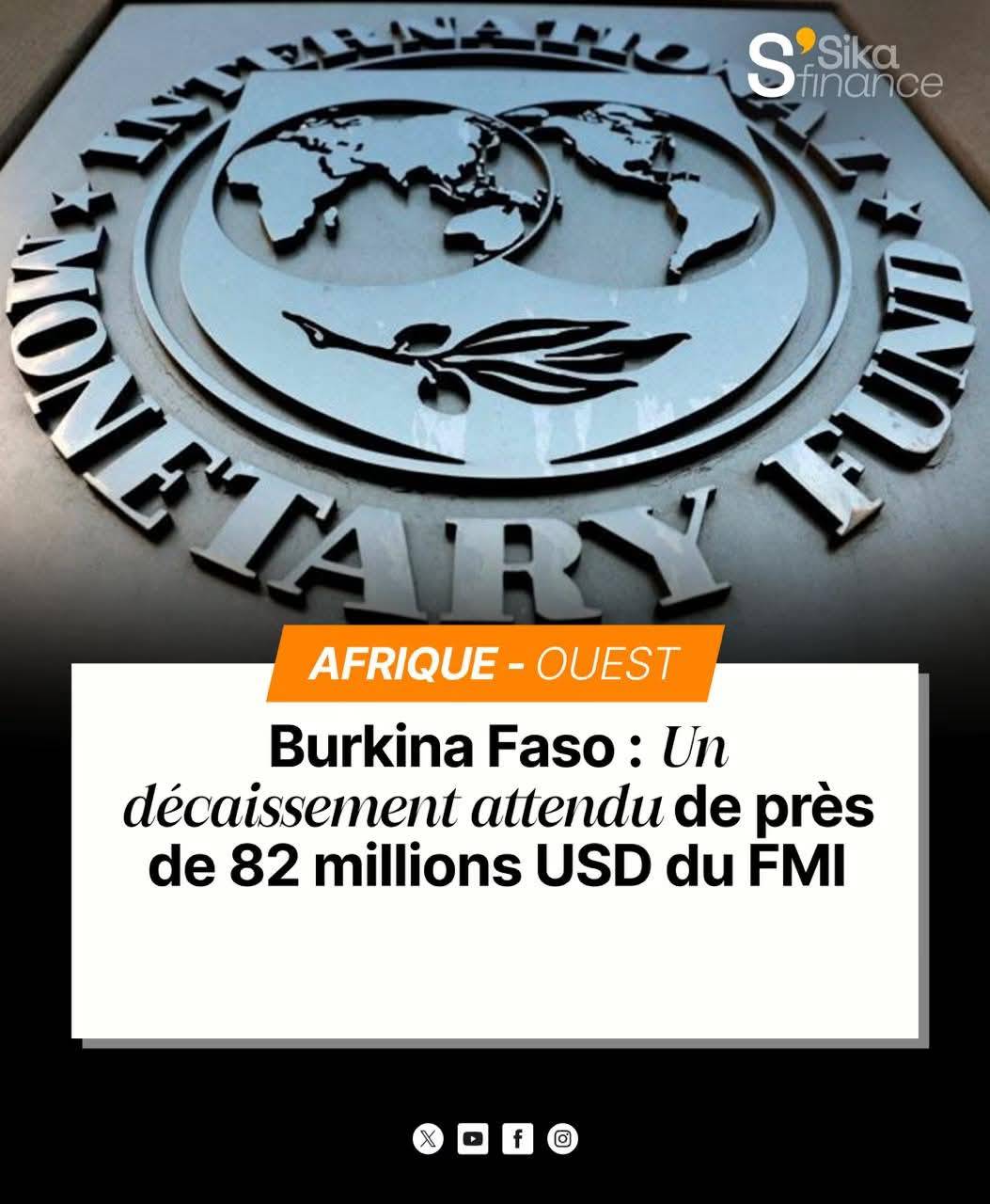
Despite assertive declarations of distancing itself from traditional Western partners, Burkina Faso’s transitional authorities in Ouagadougou are poised to receive a crucial financial lifeline from a cornerstone of international multilateralism. Following a technical mission, the International Monetary Fund (IMF) has announced a provisional agreement for the disbursement of nearly 82 million dollars. This return to the Washington-based institution underscores a formidable political paradox, particularly as the national economy grapples with the immense pressure of a suffocating security crisis.
A technical agreement awaiting Washington’s final approval
The communique issued by the IMF is explicit: the staff-level agreement reached with the institution marks a pivotal step, yet it remains non-final. For the 82 million dollars (approximately 46.21 billion CFA francs) to be effectively deposited into the Burkinabè state coffers, the proposal must still secure formal validation from the Fund’s Executive Board.
This standard procedure serves as a reminder that nothing is guaranteed in the realm of high-stakes international finance. The review by IMF directors will assess the viability of the commitments made by Ouagadougou. This disbursement falls under the Extended Credit Facility (ECF), a program designed to assist nations facing severe and protracted balance of payments difficulties.
The sovereignty paradox versus budgetary realities
The decision to seek this financing exposes a glaring contradiction within the current political agenda of Burkina Faso’s leadership. Since the advent of the military transition, the government has championed an uncompromising vision of national sovereignty. Bridges have been cut with France, cooperation with the European Union scaled back to a bare minimum, and the nation has conspicuously pivoted towards new geopolitical allies, notably Russia.
However, when faced with the imperative of balancing the national budget and stabilizing an overheating economy, theories of self-sufficiency reveal their limitations. The IMF, frequently criticized by African sovereignist movements as an instrument of Western hegemony, re-emerges as the lender of last resort. The stark realities of public finance appear to impose a pragmatism that sharply contrasts with the rhetoric of complete rupture articulated on the public stage, offering a compelling insight into Sahel politics.
The devastating toll of insecurity on the economic fabric
The transitional government’s resolution to seek international assistance stems from an alarming internal situation. The core of the problem remains the pervasive security crisis. For nearly a decade, the country has endured relentless attacks from non-state armed groups, which now control a significant portion of its territory.
This widespread instability has crippled the nation’s economic momentum. Transport routes are disrupted, access to agricultural zones is severely restricted, and the mining sector—a crucial economic engine for the country—is operating at a reduced capacity. A direct consequence of this precariousness is the forced closure or relocation of dozens of businesses to more stable neighboring countries. Technical unemployment is escalating, depriving the state of essential tax revenues and suffocating the local private sector, a key area for Burkina Faso analysis.
The IMF’s ‘diktats’: reforms under close scrutiny
To secure these 46.21 billion CFA francs, Burkinabè authorities had no alternative but to adhere to the financial institution’s rigorous demands. Access to the funds is contingent upon the signing of numerous agreements and commitments to structural reforms.
The IMF traditionally mandates strict budgetary consolidation. For Burkina Faso, this translates into an obligation to enhance domestic revenue mobilization (particularly through more effective taxation) and to rationalize public expenditures. Energy subsidies and the public sector wage bill are regular targets for the institution. The transitional authorities must, therefore, navigate rigorous technical oversight, accepting periodic reviews of their economic performance that starkly contrast with the ideal of interference-free governance publicly espoused by the regime.
The path towards the disbursement of these 82 million dollars illustrates the complexity of managing a state during a profound crisis. Between the political necessity of projecting an image of absolute sovereignty and the vital need to finance public services and the war effort, Ouagadougou’s room for maneuver is exceedingly narrow. Should the IMF Executive Board approve this loan, the authorities will gain indispensable financial respite. Nevertheless, this support underscores an immutable truth: until the security challenge is structurally resolved, the Burkinabè economy will remain dependent on the very international financial institutions it ideologically confronts.