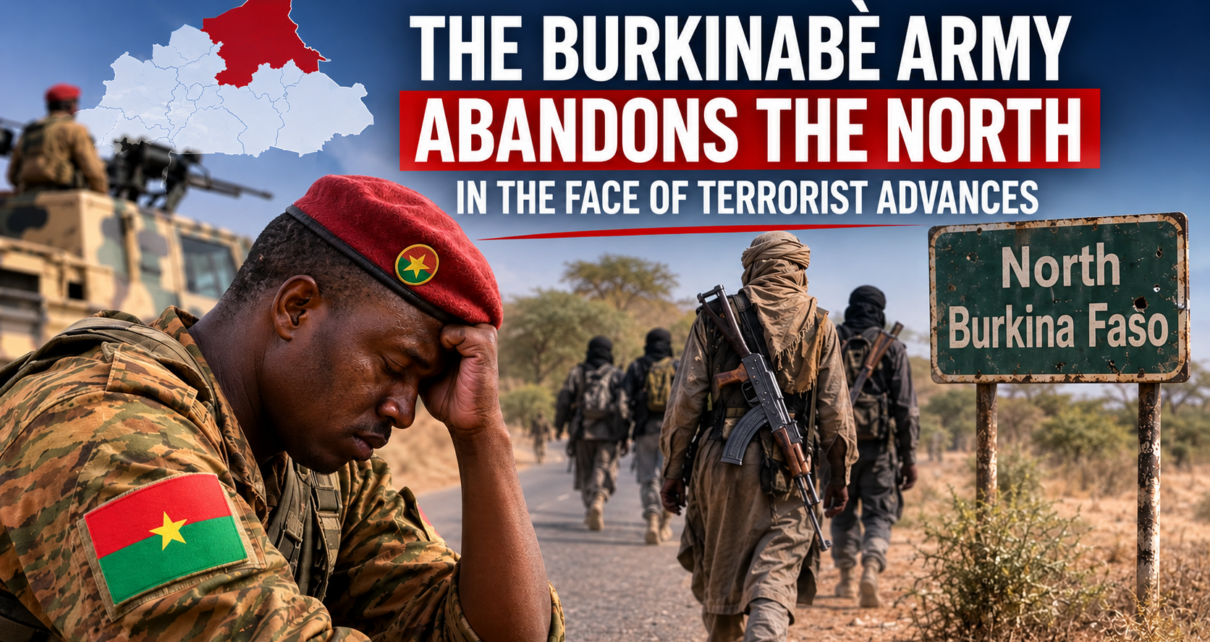
Despite the prominent display of substantial military resources and the proliferation of offensive operations announced by authorities, the security situation across northern Burkina Faso remains acutely fragile. Armed groups, far from disappearing, have instead adapted their methodologies. They largely eschew direct confrontations, opting instead for a protracted war of attrition characterized by high mobility, persistent harassment, and sustained pressure on civilian populations.
This evolving dynamic significantly complicates the interpretation of the conflict. A single military operation might temporarily reclaim an area, dismantle a stronghold, or neutralize a number of combatants, yet it offers no guarantee that the territory will remain under enduring state control.
A conflict that shifts, rather than vanishes
One of the primary challenges confronting Burkinabè forces lies in the very nature of their adversary. Armed groups typically do not seek to maintain fixed positions, which would render them easily identifiable and targetable. Instead, they favor smaller, highly mobile units that are inherently difficult to pinpoint.
Following a military engagement, some combatants may disperse into remote rural areas, only to resurface elsewhere, capitalizing on opportunities and weaknesses within the security framework. This strategy transforms the conflict into a series of movements rather than a conventional struggle for territorial dominance. Consequently, the destruction of a camp or the temporary recapture of a locality does not automatically signal the eradication of the underlying threat.
Vulnerable transit routes persist
Control over key transportation routes serves as a vital indicator of the prevailing security landscape. Across the northern regions, the movement of people, goods, and security forces remains vulnerable to attacks, ambushes, and improvised explosive devices (IEDs).
This relentless pressure on road networks creates repercussions that extend far beyond the military sphere. When travel becomes arduous or perilous, local markets stagnate, essential supplies become prohibitively expensive, and certain communities find themselves progressively isolated from major urban centers. Therefore, the security of a town cannot be solely assessed by the mere presence of soldiers within its perimeter. An urban area may appear relatively secure, yet remain fundamentally vulnerable if its access roads, agricultural zones, and supply chains endure constant pressure.
The true test: holding ground post-offensive
This aspect likely represents one of the most decisive elements of the conflict. While a military offensive can succeed in recapturing a position, the fundamental question revolves around the duration of that control. When security forces withdraw from an area without the simultaneous re-establishment of a sufficiently robust administrative, police, and judicial apparatus, the risk of re-infiltration remains high. Armed groups can then exploit these vacant spaces to gradually re-establish their networks.
Military reconquest must, therefore, be immediately followed by a comprehensive stabilization phase. This involves ensuring civilian safety, facilitating the reopening of schools and health centers, enabling farmers to return to their lands, and restoring essential administrative services. Without this crucial second stage, any military victory risks remaining merely temporary.
Civilian populations at the heart of the impasse
Beyond the statistics of operations conducted, combatants neutralized, or positions destroyed, lies a reality far more challenging to quantify: the daily lives of populations grappling with pervasive insecurity. Forced displacements, the disruption of agricultural activities, the closure of public services, and the paralysis of commerce further destabilize communities already contending with poverty.
This situation engenders a vicious cycle. The more economically and socially vulnerable populations become, the more susceptible they are to pressures exerted by various armed actors. And the more the state struggles to maintain a consistent presence, the more the void left behind can be exploited by insurgent groups.
Communication alone is insufficient
In this complex environment, military communication can play a significant role in bolstering troop morale and informing the public. However, it cannot substitute for an objective assessment of the situation on the ground. The sheer number of operations conducted or combatants neutralized does not, in itself, constitute a sufficient measure of success. The true indicators also include the freedom of movement for populations, the sustainable reopening of roads, the restoration of public services, the resumption of economic activities, and the state’s capacity to uphold its authority in reconquered areas. Thus, a series of tactical victories can coexist with an overarching strategic situation that remains deeply concerning.
A conflict demanding more than a military response
Burkina Faso’s predicament stems precisely from this transformation of a military problem into a multidimensional crisis. While the use of force remains indispensable against armed groups, it cannot, by itself, constitute a viable strategy for exiting the crisis. The durable stabilization of the country’s northern regions necessitates a combination of several strategic levers: intelligence gathering, securing critical axes, protecting civilians, reinstating administration, ensuring access to social services, supporting displaced populations, and rebuilding local economies.
It is equally crucial to prevent the security response from inadvertently exacerbating existing fractures between communities. In a conflict where information, rumors, and accusations wield considerable influence, fostering trust between populations and institutions also emerges as a critical security imperative.
The peril of a premature victory declaration
The ultimate danger would be to conflate military pressure with the actual resolution of the conflict. Armed groups can suffer casualties, temporarily abandon certain areas, and endure significant strikes, yet still retain a considerable capacity for harm. Their inherent ability to disperse, alter tactics, and exploit weaknesses within the state apparatus allows them to transform tactical setbacks into mere phases of strategic retreat.
The core question, therefore, is not simply how many positions have been retaken or how many operations have been conducted. It is about determining whether the Burkinabè state possesses the capability to sustainably retain reconquered territories and re-establish a semblance of normal life there. As long as this stabilization capacity remains inadequate, announcements of military victories risk obscuring a more complex reality: that of a conflict that continuously transforms, shifts, and entrenches itself over the long term. True success will not be merely to temporarily repel armed groups, but to render their return permanently impossible by simultaneously restoring security, public authority, and the fundamental living conditions for the populations.