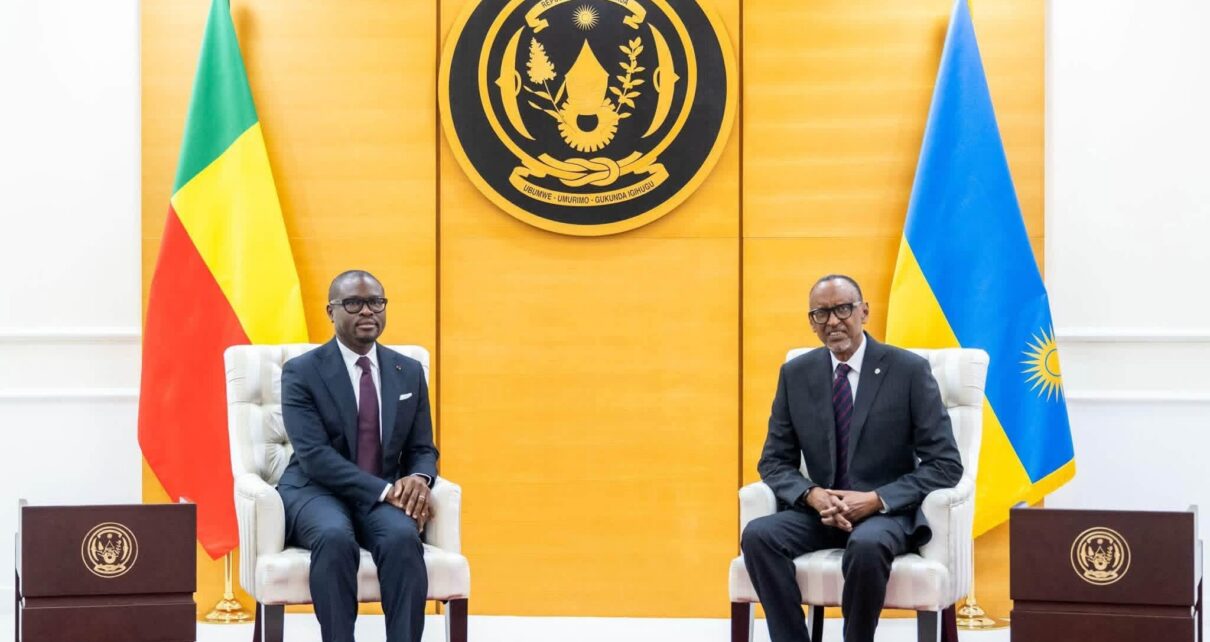
When Romuald Wadagni touched down in Kigali for a 48-hour working visit, it was his first official trip abroad since taking office in May. The question hanging over the trip was simple: is the Benin-Rwanda partnership a durable strategic alliance or a diplomatic gesture that fades once the cameras leave? The answer, emerging from two days of talks in the Rwandan capital, points toward continuity — and something more concrete.
What was really at stake in the Kigali talks?
This was not a routine courtesy call. Wadagni’s meeting with President Paul Kagame at Village Urugwiro carried the weight of a broader bet: that Cotonou can turn a bilateral relationship into a model for African cooperation. For a president with a financial and economic background, the stakes were as much about credibility as about diplomacy.
Security cooperation: from shared threats to shared tools
At the top of the agenda sat security. Benin and Rwanda already operate a close partnership focused on regional stability and intelligence-sharing. Both leaders reaffirmed their commitment to technical and logistical assistance, particularly for protecting border areas. The message was clear: the security file is not symbolic — it is operational.
Rwanda’s administrative model as a case study
The Benin delegation showed a marked interest in how Rwanda attracts foreign direct investment and digitizes public services. Wadagni stressed the need for practical synergies between Cotonou and Kigali, especially to boost intra-African trade. For a country looking to modernize its public management, Rwanda’s systems offered a working blueprint rather than abstract theory.
The Gisozi memorial and the weight of memory
Following the tradition observed during official visits to Kigali, Wadagni also visited the Gisozi Genocide Memorial. He laid a wreath in tribute to the victims of 1994, honoring the resilience of the Rwandan people and their ability to rebuild a prosperous, united nation. The gesture underscored a dimension of the relationship that goes beyond economics.
What the visit signals for the road ahead
The trip confirms that the Cotonou-Kigali axis remains a central pillar of Benin’s foreign policy, built around economic development, technological innovation, and shared security. But the deeper question persists: can this momentum survive changes in leadership and shifting regional priorities? For now, the two capitals appear committed to testing the answer together.