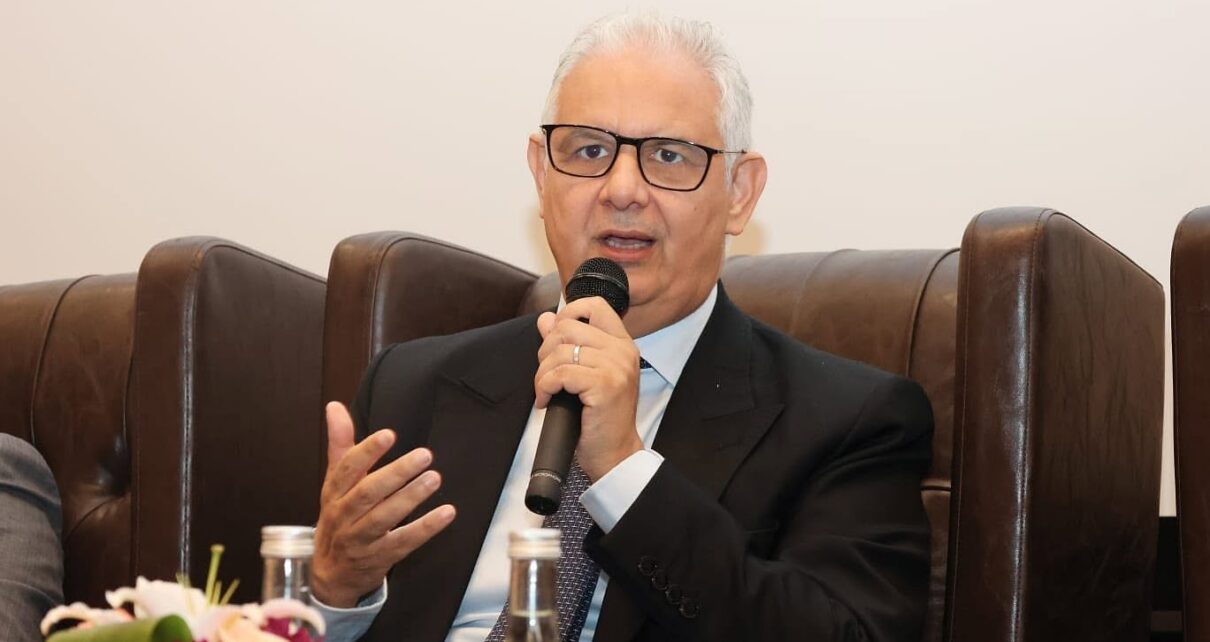
In a bold address to the International Centrist Democratic Union, Nizar Baraka, Secretary-General of Morocco’s Istiqlal Party, urged centrist political forces to move beyond rhetoric and embrace a proactive diplomacy to tackle mounting global tensions. Speaking at the high-level gathering, he emphasized the need for a strategic shift—one that aligns with Morocco’s longstanding priorities in Africa and the Sahara.
Diplomacy with purpose: Morocco’s centrist vision
Baraka’s call to action comes amid escalating international disputes, where he argues that centrist movements must play a decisive role in shaping a more stable world order. His vision extends beyond traditional negotiation tables, advocating for concrete measures that address economic disparities, security challenges, and geopolitical fractures. At the heart of his message lies Morocco’s commitment to fostering African solidarity and reinforcing its diplomatic influence on the continent.
Youth and women at the forefront of change
The Moroccan leader underscored the critical role of young leaders and women in driving this new diplomatic agenda. By integrating these groups into policy-making and international forums, Baraka believes centrist parties can inject fresh perspectives into global governance. His push for inclusivity reflects Morocco’s broader social and political reforms, which have increasingly positioned the country as a champion of youth empowerment and gender equality in North Africa.
Saharan sovereignty and Morocco’s strategic priorities
Central to Baraka’s discourse was the Sahara issue, a cornerstone of Morocco’s foreign policy. He reiterated the kingdom’s unwavering stance on its territorial integrity while advocating for a peaceful, negotiated solution that respects international law. Morocco’s approach, he argued, is not merely about asserting sovereignty but about building mutually beneficial partnerships with African nations and global partners alike.
The speech resonated with delegates from across the centrist spectrum, many of whom echoed Baraka’s concerns about rising protectionism and the erosion of multilateralism. His emphasis on action-oriented diplomacy—rather than passive engagement—has sparked discussions on how centrist movements can reclaim their relevance in an era of polarizing global politics.
A call to reinvent centrist diplomacy
Baraka’s proposals are not just theoretical; they reflect Morocco’s recent diplomatic initiatives, including its hosting of high-profile summits and mediation efforts in regional conflicts. By positioning itself as a bridge-builder between divergent blocs, Morocco aims to demonstrate that centrist values—compromise, pragmatism, and cooperation—can offer viable alternatives to today’s fractured geopolitical landscape.