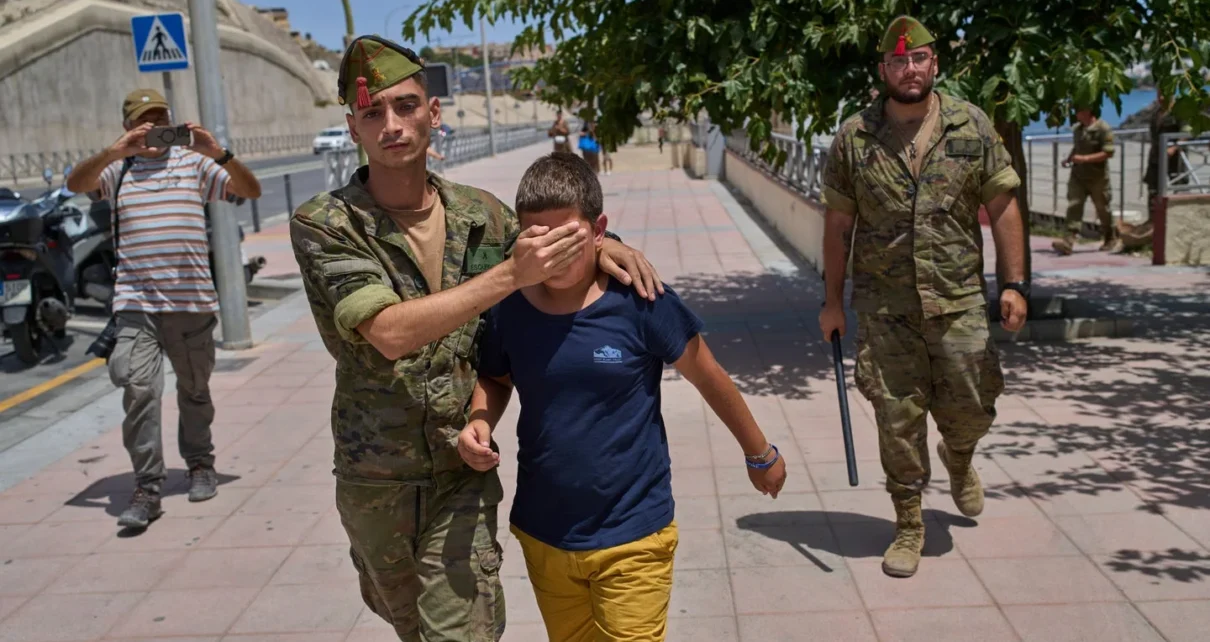
The Moroccan Minister of Justice, Abdellatif Ouahbi, has urged for the repatriation of Moroccan minors currently in Spain, including those who arrived in Ceuta during the most recent migration surge. This directive aligns with instructions from the Moroccan monarchy to streamline the identification and return process for these young individuals.
However, the exact number of minors involved remains uncertain. Spanish authorities reported a total of 1,527 unaccompanied minors in Ceuta following the crisis, as of the latest data available. It is important to note that this figure does not solely represent those who arrived on July 30 and 31, as some were already present in the enclave prior to the migration wave.
An existing agreement between Morocco and Spain
Contrary to some assumptions, the repatriation of Moroccan minors is not prohibited under Spanish law. Since 2007, Rabat and Madrid have maintained a bilateral agreement focused on preventing irregular migration of unaccompanied minors, safeguarding their rights, and facilitating their “coordinated return.” The agreement outlines cooperation between the two nations to trace the minors’ families and, when feasible, arrange their return to their relatives or transfer them to Moroccan authorities.
Yet, this agreement does not permit mass or automatic repatriations. Spanish law mandates an individual assessment for each minor to ensure their return aligns with their best interests. Authorities must gather details about the child’s family situation, consult with Moroccan counterparts, and allow the minor to express their views. The public prosecutor’s office also plays a pivotal role in this process.
These strict procedural requirements explain why minors could not be treated the same as adults during the immediate pushback operations. Their irregular entry into Spain does not negate their status as minors under the protection of Spanish authorities.
A cautionary tale from 2021
The events of August 2021 serve as a stark reminder of the consequences of hasty repatriation. Following a massive influx of migrants into Ceuta, Spanish authorities organized the return of several hundred minors to Morocco. However, the Spanish judiciary later ruled this operation illegal in January 2024, citing the failure to comply with legal safeguards, particularly the lack of sufficient individual assessments for each minor.
This legal precedent now poses a significant hurdle for any collective repatriation efforts. While Morocco seeks the return of its nationals and Spain aims to prevent Ceuta from remaining indefinitely overcrowded, Spanish authorities must ensure that each repatriation adheres to the legal protections in place.
Exploring alternative solutions: redistributing minors within Spain
In the interim, Spain faces an immediate challenge: the overcrowding of Ceuta. To address this, the government has activated mechanisms to transfer some unaccompanied minors to other autonomous communities. This approach does not preclude the possibility of repatriation to Morocco; rather, it involves two separate processes.
This issue has already sparked political tensions in Spain. The central government advocates for redistributing minors across regions to alleviate Ceuta, while the opposition Popular Party insists on prioritizing repatriation to Morocco. Juan José Imbroda, the President of Melilla, has also urged the implementation of the 2007 agreement with Rabat.
The current situation reflects less a refusal by Spain to return minors to Morocco and more a legally binding process that must be followed. Morocco has requested their return and insists it is prepared to receive them. Spain can agree to these repatriations but must handle them on a case-by-case basis.
The coming weeks will be critical in determining whether cooperation between the two countries enables swift family identification and the fulfillment of conditions necessary for repatriation. The 2021 legal precedent underscores the risks of rushed collective operations, which could expose Spanish authorities to further legal challenges.